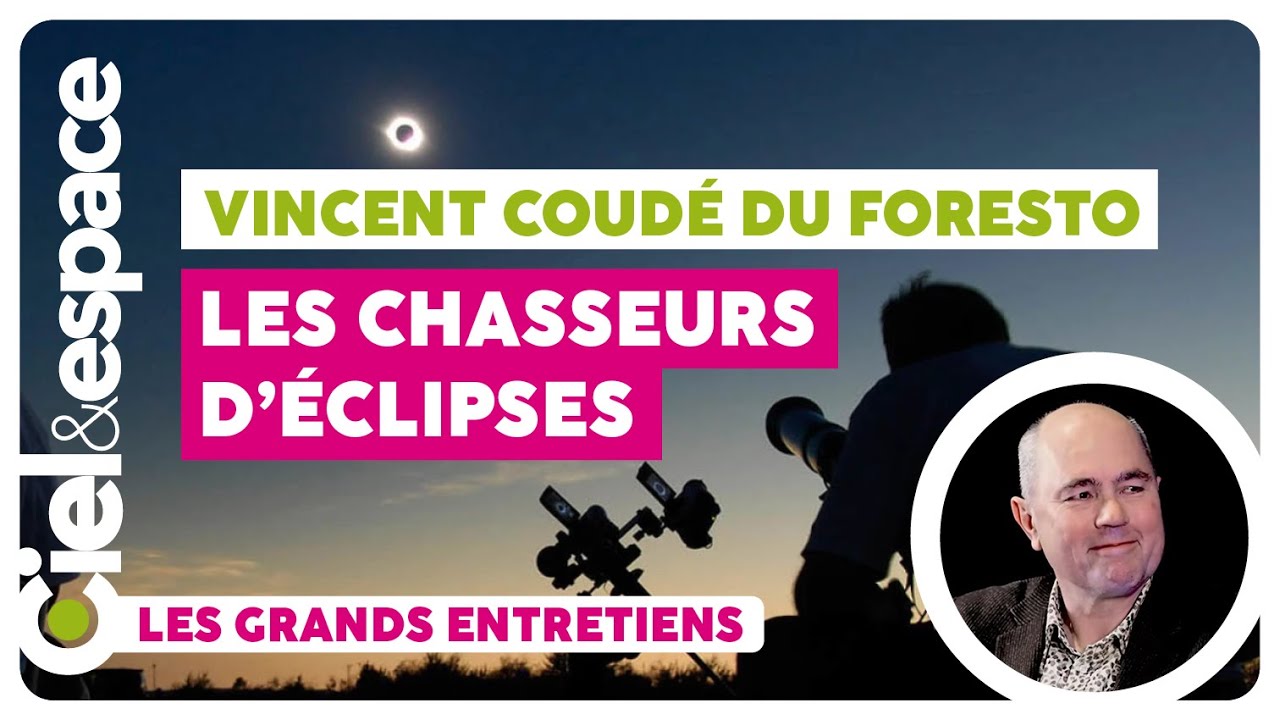
2026 : l'année de l'éclipse !
Keywords
Summary
169 words
Critical Evaluation
The video is a valuable resource for understanding the phenomenon of total solar eclipses from both a scientific and experiential perspective. Vincent Coudé du Foresto, an astronomer at the Paris Observatory, brings credibility and depth to the discussion. His personal stories, such as his first eclipse in Chile, effectively illustrate the transformative power of the event. The scientific explanations are accurate and accessible, covering the chromosphere, corona, and the geometry of eclipses. The emphasis on the difference between partial and total eclipses is well-argued and helps viewers appreciate why eclipse chasers travel great distances. The content is well-structured, with a natural flow from personal experience to scientific context and future predictions. However, the video is primarily an interview and lacks visual aids or animations that could enhance understanding of the phenomena described. The discussion is somewhat informal and anecdotal, which may not suit viewers seeking a more rigorous scientific treatment. The title accurately reflects the content, focusing on the 2026 eclipse. The sources cited are not explicitly mentioned, but the guest’s expertise and the mention of the Observatoire de Paris lend credibility. Overall, the video is informative and engaging, offering a unique blend of personal passion and scientific knowledge.
199 words
Title / Content Match
The title accurately reflects the content, which focuses on the upcoming total solar eclipse of 2026 and the experiences of eclipse chasers.
Quality & Reliability
8/10
The video features a professional astronomer (Vincent Coudé du Foresto) sharing personal experiences and scientific context about solar eclipses. The information is accurate and well-explained, but it is primarily anecdotal and not a formal scientific study.
Key Moments
Markers derived by PSI from the transcript: the creator did not define chapters.
- Introduction of guest Vincent Coudé du Foresto and his background.
- Discussion of the first eclipse experience in Chile in 1994.
- Explanation of the difference between partial and total eclipses.
- Description of the sensory experience of totality, including the corona and chromosphere.
- Mention of the 1999 eclipse in France and its impact.
- Details about the upcoming 2026 eclipse and where to observe it.
- Discussion of the science of eclipses and historical discoveries.
- Anecdotes about eclipse chasing and the community of enthusiasts.
Contribution & Novelties
The video provides a personal and passionate perspective on solar eclipses, highlighting the emotional and sensory impact of totality. It offers practical insights for those planning to observe the 2026 eclipse, such as the importance of being in the path of totality. The discussion also touches on the scientific value of eclipses, including historical discoveries and modern research.
Pour aller plus loin :
- Total solar eclipse — General overview of solar eclipses.
- Solar corona — Information about the Sun’s corona.
- Chromosphere — Details on the chromosphere and prominences.
- Eclipse chasing — Community and practice of eclipse chasers.
97 words
Radar Profile
The radar profile shows high scores in quality of information and reliability, reflecting the expert guest and accurate content. The quantity of information is moderate, and the technical level is accessible, making it suitable for a general audience interested in astronomy.