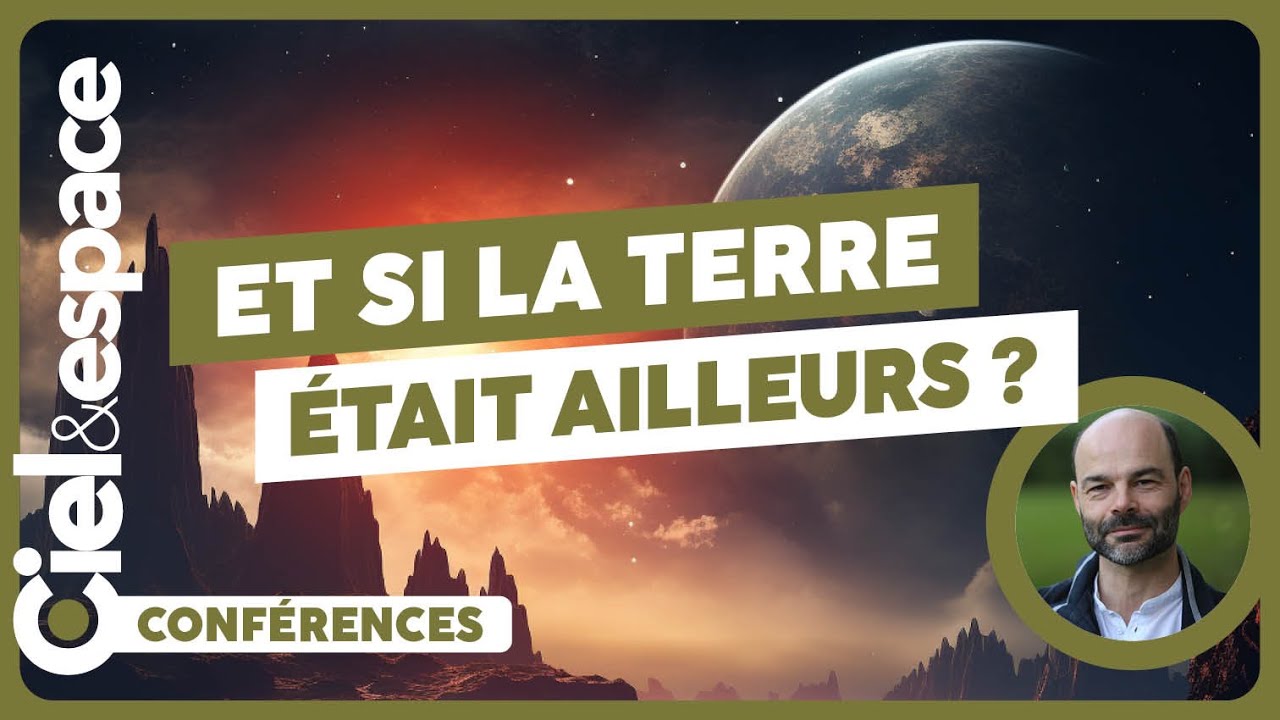
Roland Lehoucq : que serait devenue l'humanité sur un monde extraterrestre ?
Keywords
Summary
209 words
Critical Evaluation
Value of the Information & Strength of the Argument
The talk provides valuable insights into how science fiction can be used to explore scientific concepts. Lehoucq demonstrates a rigorous approach by checking the internal consistency of fictional planets against physical laws, such as calculating surface gravity from mass and radius. He also explains the implications of different gravity on planetary features like mountain heights. The argumentation is solid, as he uses clear examples and calculations to support his points. However, the talk is more of a popular science lecture than a deep scientific analysis, and some concepts are simplified for a general audience.
Scientific Rigor, Source Quality, Title Accuracy
The speaker is a credible scientist, and the content is scientifically accurate. He references several science fiction works and explains the physics behind them, but he does not cite specific scientific papers or sources. The title accurately reflects the content, as the talk is indeed about how humanity might have developed on an alien world. The talk is well-structured and the scientific explanations are rigorous, though it is not a formal scientific review.
182 words
Title / Content Match
The title accurately reflects the content: a speculative exploration of how humanity might develop on an alien world, based on scientific principles.
Quality & Reliability
8/10
The speaker is a research director at CEA, and the talk is grounded in established physics (gravity, orbital mechanics). The content is coherent and well-explained, though it is a popular science lecture without formal citations.
Key Moments
Markers derived by PSI from the transcript: the creator did not define chapters.
- Introduction: using science fiction as a thought experiment.
- Analysis of Jack Vance's planet: checking gravity and density.
- Discussion of Hal Clement's Mesklin: gravity variation due to rotation.
- Maximum mountain heights on different planets.
- Planets with two suns: Tatooine and orbital stability.
- Helliconia: a planet with extreme seasons and its orbital mechanics.
- The Three-Body Problem and chaotic orbits.
Cited Sources
- Ciel & Espace — Magazine and conference organizer.
Concurring Sources
- Ciel & Espace — The conference is part of Ciel & Espace's events.
Contribution & Novelties
The talk offers a unique perspective on using science fiction to teach physics, particularly in the context of exoplanets and gravity. It provides concrete examples of how fictional worlds can be analyzed for scientific consistency, which is an original approach.
Pour aller plus loin :
- Exoplanet — Overview of exoplanets, relevant to the discussion of habitable worlds.
- Gravity — Fundamental physics behind the talk’s calculations.
- Binary star — Context for planets with two suns.
- Thought experiment — The methodological basis of the talk.
83 words
Radar Profile
The radar profile shows high scores in information quantity, quality, and reliability, with a moderate technical level. This indicates a well-informed and credible talk that is accessible to a general audience, but not overly technical.
💬 Sur les 0 commentaires analysés, aucune tendance n'est disponible.