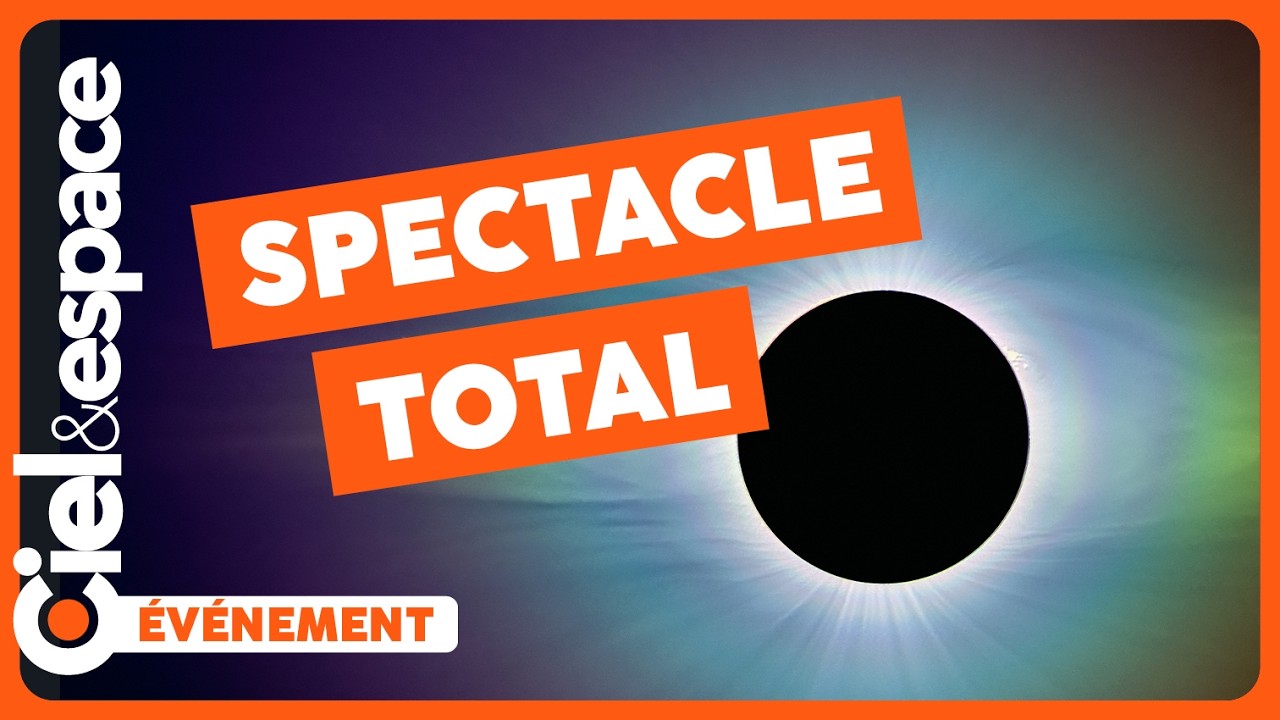
Pourquoi CETTE éclipse est IMMANQUABLE
Keywords
Summary
176 words
Critical Evaluation
The video is a well-crafted piece of science communication that effectively conveys the scientific and experiential significance of total solar eclipses. The information is accurate and presented in an engaging manner, with clear explanations of the phenomena involved. The expert’s personal anecdotes, such as observing the 1999 eclipse and a recent one in Chile, add credibility and illustrate the points being made. The video correctly emphasizes the stark difference between a partial and total eclipse, a point often misunderstood by the public. The scientific explanations, such as the sudden temperature drop and the eclipse wind, are grounded in physical principles. The historical references, including the Concorde chase and the balloon escape during the Paris Commune, enrich the narrative. However, the video has a promotional segment towards the end, which is clearly a commercial for the magazine’s special issue. This does not detract from the scientific content but is a noticeable shift in tone. The video does not cite specific scientific sources, but it is based on well-established astronomical knowledge. The title is appropriate and the content matches expectations. Overall, the video is a reliable and informative resource for anyone interested in solar eclipses.
193 words
Title / Content Match
The title accurately reflects the content, which explains why the upcoming total solar eclipse is a must-see event.
Quality & Reliability
8/10
The video is produced by a reputable science magazine (Ciel & Espace) and features an expert (likely an astronomer) providing accurate information about solar eclipses. The content is well-structured, explains scientific concepts clearly, and includes historical and practical details. The main limitation is the promotional nature towards the end, but it does not compromise the scientific accuracy.
Key Moments
Markers derived by PSI from the transcript: the creator did not define chapters.
- Introduction: Why total solar eclipses are fascinating.
- The rarity of totality at a given location (375 years on average).
- The narrowness of the path of totality (max 270 km).
- The difference between 99% partial and total eclipse.
- Recollection of the 1999 total eclipse in France.
- Phenomena during totality: temperature drop, eclipse wind, animal behavior.
- Observing the corona and prominences with binoculars.
- Promotion of the special issue and upcoming eclipse on August 12, 2026.
Cited Sources
- Ciel & Espace Hors-Série Éclipse — The video promotes this special issue of Ciel & Espace magazine, which includes eclipse glasses and detailed information about the upcoming eclipse.
Concurring Sources
- NASA - Solar Eclipses — NASA provides authoritative information on solar eclipses, including paths and timings, consistent with the video's content.
Contribution & Novelties
The video provides a compelling synthesis of why total solar eclipses are scientifically and experientially unique, emphasizing the stark contrast between partial and total phases. It offers practical advice for observation and highlights historical anecdotes that illustrate the cultural and scientific importance of eclipses.
Pour aller plus loin :
- Solar eclipse - Wikipedia — General overview of solar eclipses, types, and phenomena.
- Total solar eclipse of August 12, 2026 - Wikipedia — Specific details about the upcoming eclipse.
- Corona - Wikipedia — The Sun’s corona, visible during totality.
- Eclipse of 1999 - Wikipedia — Details about the 1999 total eclipse in Europe.
102 words
Radar Profile
The radar profile shows high scores in information quantity, quality, and reliability, with a slightly lower technical level, indicating that the video is accessible to a general audience while maintaining scientific accuracy.