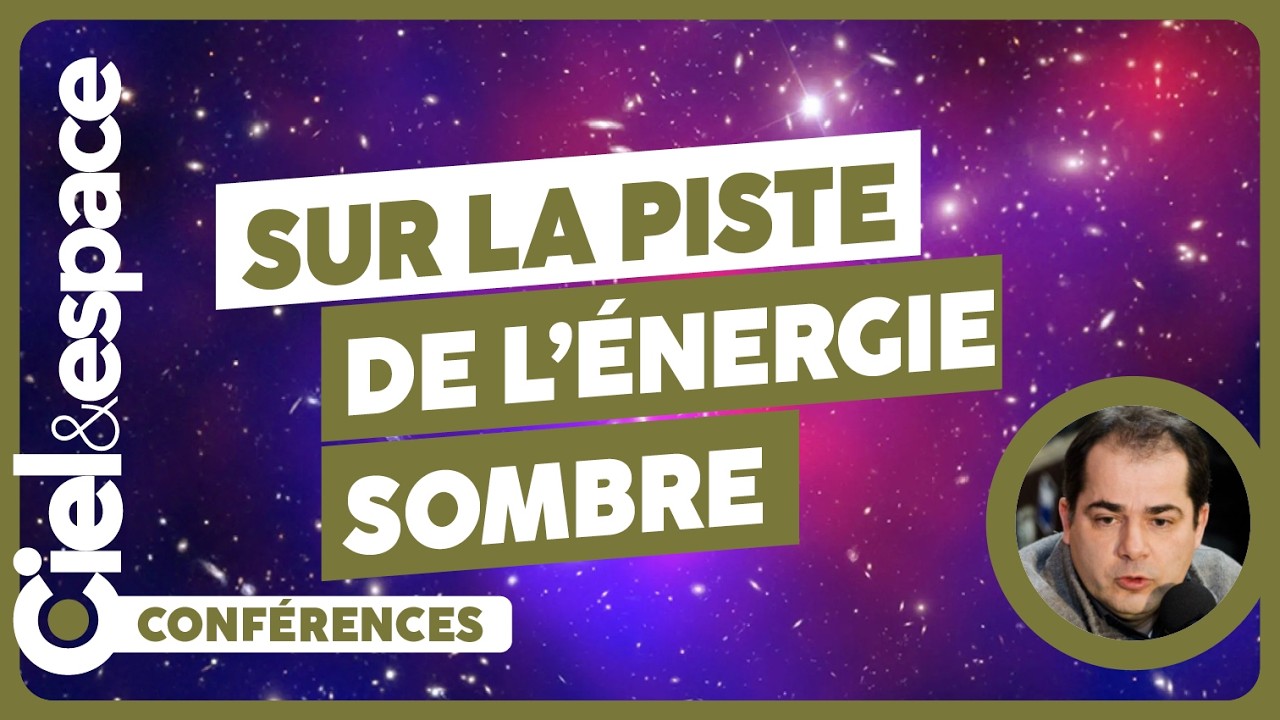
Le plus grand défi de la cosmologie
Keywords
Summary
188 words
Critical Evaluation
The presentation by Francis Bernardeau is a well-structured and informative overview of the dark energy problem, a central issue in modern cosmology. The speaker, a recognized expert, provides a clear historical context, from Hubble’s discovery of cosmic expansion to the unexpected acceleration revealed by type Ia supernovae. The argumentation is solid, relying on established observational evidence and theoretical frameworks. The use of supernovae as standardizable candles is explained clearly, and the speaker appropriately acknowledges potential systematic uncertainties, though he argues that the evidence is robust. The talk also touches on complementary probes such as the cosmic microwave background and baryon acoustic oscillations, which strengthen the case for dark energy. However, the presentation could be criticized for not delving deeply into alternative theories or the ongoing debates within the community. The speaker mentions that even the best theorists are puzzled, but he does not elaborate on the various proposed solutions beyond the cosmological constant and a brief mention of modified gravity. This might leave the audience with an incomplete picture of the scientific landscape. Additionally, the talk includes a promotional segment for the Ciel & Espace magazine, which, while not affecting the scientific content, is a minor distraction. Overall, the information is accurate and well-presented, making it a valuable resource for those interested in cosmology. The title accurately reflects the content, and the talk successfully conveys the significance of the dark energy challenge.
232 words
Title / Content Match
The title accurately reflects the content, which focuses on the challenge of understanding dark energy in cosmology.
Quality & Reliability
8/10
Presentation by a recognized cosmologist (IAP), based on established observational evidence (supernovae, CMB, BAO) and theoretical frameworks (Friedmann equations, cosmological constant). The content is accurate and well-structured, though it does not delve into alternative theories in depth.
Key Moments
Markers derived by PSI from the transcript: the creator did not define chapters.
- Introduction to the talk and the mystery of dark energy.
- Explanation of how astronomers map the universe using imaging and spectroscopy.
- Discussion of Hubble's law and the discovery of cosmic expansion.
- Introduction of Friedmann equations and the expectation of decelerating expansion.
- Description of type Ia supernovae as standardizable candles and the discovery of acceleration.
- Discussion of the age of the universe and the need for a cosmological constant.
- Evidence from the cosmic microwave background and baryon acoustic oscillations.
- Theoretical problems with the cosmological constant: fine-tuning and coincidence.
- Alternative theories: modified gravity and dynamical dark energy.
- Future surveys and prospects for understanding dark energy.
Cited Sources
- Ciel & Espace magazine subscription — Promotional link mentioned in the video description.
Concurring Sources
- Supernova Cosmology Project — One of the teams that discovered cosmic acceleration.
- High-Z Supernova Search Team — The other team that independently discovered cosmic acceleration.
Dissenting Sources
- Modified gravity theories — Alternative explanations for cosmic acceleration that do not require dark energy, such as f(R) gravity, are not discussed in detail.
Contribution & Novelties
The talk provides a clear and accessible synthesis of the dark energy problem, emphasizing the observational evidence and theoretical challenges. It is particularly valuable for its historical perspective and its explanation of how supernovae, CMB, and BAO converge on the existence of dark energy.
Pour aller plus loin :
- Dark energy (Wikipedia) — Overview of the concept and evidence.
- Cosmological constant (Wikipedia) — Detailed explanation of the simplest model.
- Type Ia supernova (Wikipedia) — The standard candles used in the discovery.
- Baryon acoustic oscillations (Wikipedia) — Another key probe of dark energy.
92 words
Radar Profile
The radar profile shows high scores in quantity and quality of information, with a moderate technical level, indicating a well-balanced presentation suitable for a general audience with some scientific background. The overall reliability is high, reflecting the expertise of the speaker and the solid observational basis.