Genome wide association studies (GWAS) part 1: Historical overview
Keywords
Summary
162 words
Critical Evaluation
Value of the Information & Strength of the Argument
The lecture provides valuable insights into the evolution of GWAS, emphasizing the shift from candidate gene studies to hypothesis-free approaches. The argumentation is solid, supported by historical examples and key studies. The speaker effectively explains why candidate gene studies failed and how GWAS overcame these limitations. The discussion of linkage disequilibrium and haplotypes is clear and well-illustrated. The lecture also highlights the importance of large sample sizes and the role of biobanks, providing a strong rationale for current practices. The argumentation is logical and evidence-based, making it a valuable resource for understanding the foundations of GWAS.
Scientific Rigor, Source Quality, Title Accuracy
The lecture demonstrates scientific rigor by referencing landmark studies and projects, such as the Human Genome Project, HapMap, 1000 Genomes, and UK Biobank. The speaker accurately describes the historical timeline and key findings. The title accurately reflects the content, which is a historical overview. The sources cited are credible and well-known in the field. The lecture also acknowledges limitations, such as the difficulty in studying rare variants and the need for even larger sample sizes for certain traits. Overall, the scientific rigor is high, and the content is reliable.
200 words
Title / Content Match
The title accurately reflects the content, which focuses on the historical development and foundational concepts of GWAS.
Quality & Reliability
8/10
The lecture is given by a researcher in statistical genetics, likely with expertise in the field. It provides a historical overview with accurate references to key studies and concepts. The content is well-structured and aligns with established knowledge in genetics. However, as a lecture, it may not include all nuances and relies on the speaker's interpretation.
Key Moments
Markers derived by PSI from the transcript: the creator did not define chapters.
- Introduction to GWAS and comparison with linkage studies
- Limitations of candidate gene studies and examples
- Human Genome Project and cost reduction
- Explanation of SNPs and linkage disequilibrium
- Haplotypes and reference panels like HapMap
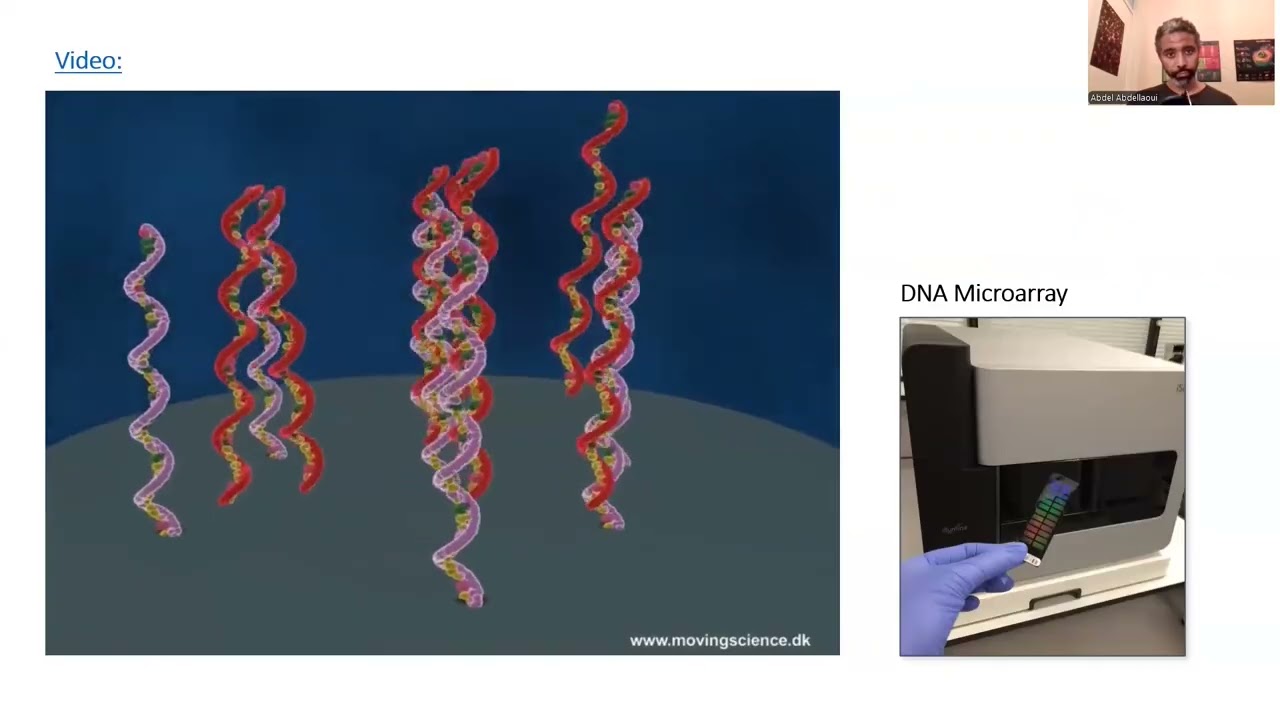
- DNA microarrays and how they work
- First GWAS in 2005 and subsequent growth
- Lessons learned about genetic architecture
- SNP-based heritability and challenges
- Future directions and conclusion
Cited Sources
- Human Genome Project — Mentioned as the starting point for genome sequencing
- HapMap Project — Reference panel for haplotypes
- 1000 Genomes Project — Reference panel for genetic variation
- UK Biobank — Large biobank enabling GWAS
- Risch & Merikangas (1996) — Proposed genome-wide association studies
Concurring Sources
- Visscher et al. (2017) — Review on 10 years of GWAS
- Yengo et al. (2022) — Saturated map of common genetic variants for height
Contribution & Novelties
This lecture provides a clear and concise historical overview of GWAS, synthesizing key concepts and milestones. It is particularly valuable for its explanation of why candidate gene studies failed and how GWAS emerged as a hypothesis-free approach. The lecture also highlights the importance of large sample sizes and biobanks, and discusses the challenges of explaining SNP-based heritability.
Pour aller plus loin :
- GWAS Catalog — A comprehensive database of GWAS studies and findings.
- Linkage disequilibrium — Detailed explanation of LD and its role in genetics.
- Polygenic risk scores — Related concept for using GWAS results in prediction.
97 words
Radar Profile
The radar profile shows high scores across all dimensions, indicating a well-rounded and informative lecture. The strongest aspects are the quantity and quality of information, with a slightly lower but still solid technical level. The reliability is high, reflecting the credibility of the content.