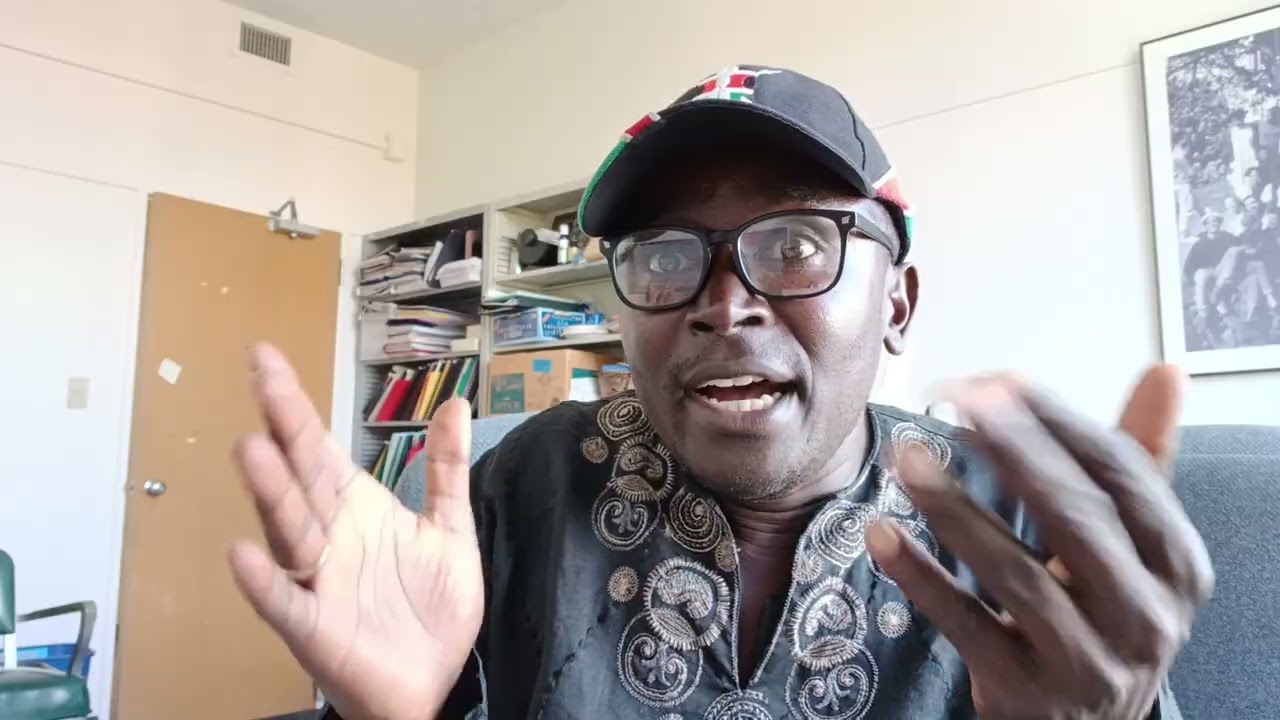
Gender, Language, and Communication in Africa - Lecture #6
Keywords
Summary
139 words
Critical Evaluation
Value of the Information & Strength of the Argument
The lecture provides valuable insights into the intersection of gender and language in Africa, drawing on diverse examples from different regions. It effectively argues that language is not neutral but carries cultural and gendered meanings. The argumentation is coherent, moving from general principles to specific case studies, and then to contemporary shifts. However, the lecture could be strengthened by more direct engagement with the cited academic sources and by providing more concrete evidence for some claims.
Scientific Rigor, Source Quality, Title Accuracy
The lecture references a range of academic sources in the description, which adds to its credibility. However, during the talk, these sources are not explicitly cited, which reduces the perceived rigor. The title accurately reflects the content, and the lecture stays on topic throughout. The use of proverbs and examples from various African cultures enriches the discussion, but the lack of in-text citations is a limitation.
157 words
Title / Content Match
The title accurately reflects the content, which focuses on the intersection of gender, language, and communication in African contexts.
Quality & Reliability
7/10
The lecture is based on established academic references and provides a balanced overview of the topic. However, it lacks direct citations during the talk and relies on anecdotal examples, which slightly reduces its scholarly rigor.
Key Moments
Markers derived by PSI from the transcript: the creator did not define chapters.
- Introduction to the topic: gender, language, and communication in Africa.
- Discussion on grammatical gender in African languages, with examples from Swahili and Yoruba.
- Case study on the Akan people of Ghana: men's dominance in political oratory and women's influence through proverbs.
- Case study on Zulu praise poetry (izibongo) and women's entry into this traditionally male-dominated genre.
- Case study on urban youth language in Nairobi and Dar es Salaam: code-switching and gender-bending slang.
- Discussion on gender, power, and politics: colonial influence and contemporary female leaders.
- Role of media and digital platforms in reshaping gendered communication.
- Recap and conclusion with an Ethiopian proverb about women's tongues building houses.
Cited Sources
- Achebe, C. (1994). African proverbs and their relevance to contemporary society. — Referenced in the video description as a source for the discussion on proverbs.
- Aboh, E., & Smith, N. (2009). Complex processes in new languages. — Referenced in the video description, likely related to language evolution.
- Bodomo, A. (2010). The African diaspora and language: Global dimensions. — Referenced in the video description, possibly relevant to language and diaspora.
- Gaidzanwa, R. (1993). Bourgeois theories of gender and feminism and their shortcomings with reference to southern African literature. — Referenced in the video description, relevant to gender and feminism in Africa.
- Kamwangamalu, N. M. (2016). Language policy and economics: The language question in Africa. — Referenced in the video description, relevant to language policy.
- Mazrui, A. A., & Mazrui, A. M. (1998). The power of Babel: Language and governance in the African experience. — Referenced in the video description, relevant to language and governance.
- Nfah-Abbenyi, J. M. (1997). Gender in African women’s writing: Identity, sexuality, and difference. — Referenced in the video description, relevant to gender in African literature.
- Obeng, S. G. (1996). Language and politics: Indirectness in political discourse. — Referenced in the video description, relevant to language and politics.
- Okonjo, K. (1991). The dual-sex political system in operation: Igbo women and community politics in midwestern Nigeria. — Referenced in the video description, relevant to gender and politics.
- Omoniyi, T., & White, G. (2006). The sociolinguistics of identity. — Referenced in the video description, relevant to sociolinguistics.
- Oyěwùmí, O. (1997). The invention of women: Making an African sense of Western gender discourses. — Referenced in the video description, relevant to gender and African discourses.
- Philips, S. U., Steele, S., & Tanz, C. (1987). Language, gender, and sex in comparative perspective. — Referenced in the video description, relevant to language and gender.
- Sheldon, K. (2017). African women: Early history to the 21st century. — Referenced in the video description, relevant to African women's history.
- Tamale, S. (2020). Decolonization and Afro-feminism. — Referenced in the video description, relevant to decolonization and feminism.
- Trudell, B. (2008). Language choice, education and community identity. — Referenced in the video description, relevant to language and education.
Concurring Sources
- Oyěwùmí, O. (1997). The invention of women: Making an African sense of Western gender discourses. — Supports the argument that gender categories are not universal but culturally constructed.
- Tamale, S. (2020). Decolonization and Afro-feminism. — Aligns with the lecture's emphasis on decolonizing gender discourses.
Dissenting Sources
- No discordant sources identified — The lecture does not present conflicting viewpoints, and the cited sources are generally supportive of its arguments.
Contribution & Novelties
The lecture provides a comprehensive overview of the intersection of gender, language, and communication in Africa, drawing on diverse examples from different regions. It highlights the complexity of gender in African languages, which often lack grammatical gender but still carry gendered meanings through cultural practices. The lecture also discusses contemporary shifts, such as the role of digital media and urban youth slang in challenging traditional gender norms. This contributes to a nuanced understanding of how language both reflects and shapes gender dynamics in African societies.
Pour aller plus loin :
- Sociolinguistics — Provides foundational concepts for understanding language and society.
- Gender and language — Explores the relationship between language and gender.
- African languages — Overview of the linguistic diversity in Africa.
- Swahili language — Details on a key language discussed in the lecture.
- Yoruba language — Information on another language mentioned.
- Zulu praise poetry — Background on the genre discussed.
- Sheng slang — Information on the urban slang from Nairobi.
- Lugha ya Mtaa — Details on the Tanzanian slang.
- Bring Back Our Girls — Context on the social media campaign mentioned.
181 words
Radar Profile
The radar profile shows a balanced performance with relatively high scores in information quantity and quality, moderate technical level, and good reliability. This suggests the lecture is informative and credible but not highly technical, making it accessible to a general audience.
💬 No comments were provided for analysis.