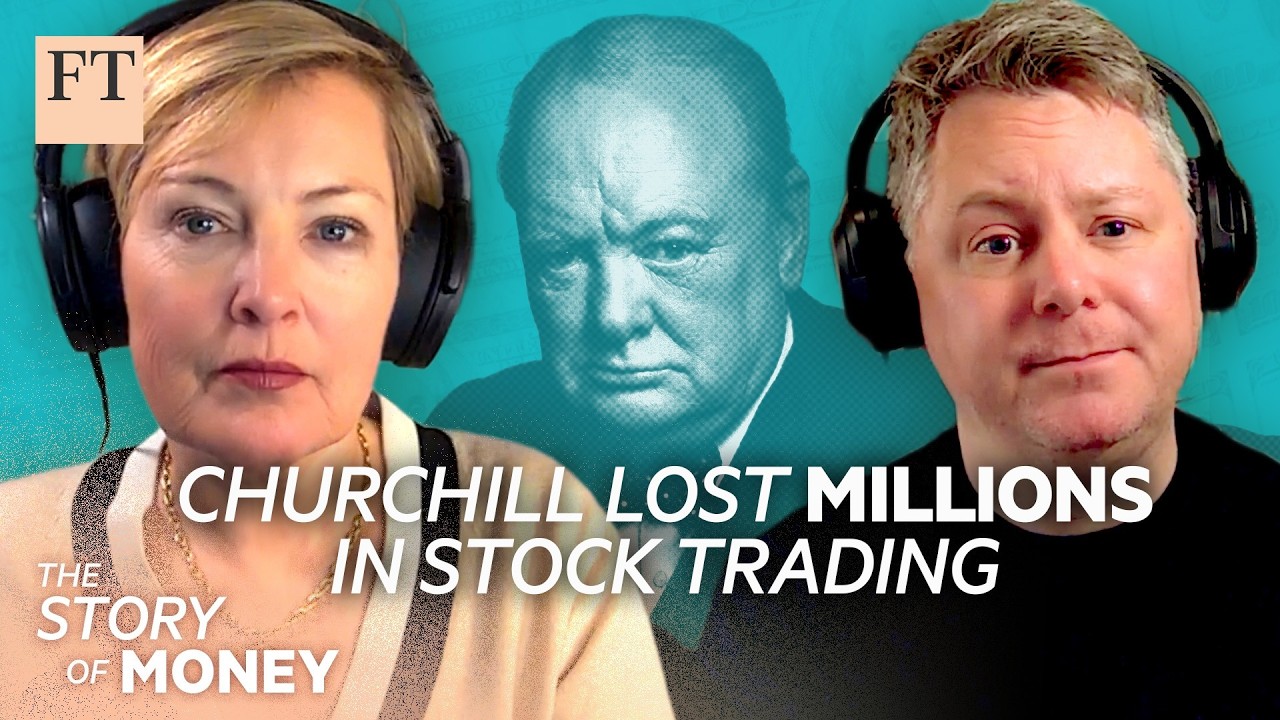
They are history’s geniuses. But were they any good at investing? | The Story of Money Podcast
Keywords
Summary
154 words
Critical Evaluation
The podcast provides a compelling and well-structured analysis of the investment behaviors of historical figures, drawing on documented financial records and academic research. The hosts and guest, Toby Nangle, demonstrate a strong command of the subject, effectively weaving historical anecdotes with financial insights. The argumentation is solid, as they rely on specific examples and data, such as Newton’s trading during the South Sea Bubble and Churchill’s losses, to illustrate broader points about human behavior in financial markets. The inclusion of sources like David Lough’s book on Churchill and academic papers on Keynes adds credibility. However, the episode is primarily an opinion piece rather than a rigorous academic study, and some claims are based on interpretations of historical records that may be incomplete. The discussion could benefit from a more critical examination of the limitations of the data, such as the challenges of adjusting historical wealth for inflation or GDP. Additionally, the focus on a narrow set of mostly white, male figures is acknowledged but not deeply explored. Overall, the episode is informative and engaging, offering valuable insights into the intersection of intelligence and investing, but it should be viewed as a starting point for further research rather than a definitive analysis.
201 words
Title / Content Match
The title accurately reflects the content, which examines the investment performance of historical geniuses.
Quality & Reliability
8/10
The podcast features expert commentary from FT journalists and a guest reporter, referencing historical records and academic papers. The discussion is well-researched, with sources cited in the description, but it is primarily an opinion/analysis piece rather than a peer-reviewed study.
Key Moments
Markers derived by PSI from the transcript: the creator did not define chapters.
- Introduction to the podcast and the question of whether geniuses are good investors.
- Discussion of Isaac Newton's investments in the South Sea Company and his initial success.
- Newton's decision to cash out and then re-enter at the peak, leading to significant losses.
- Introduction of Winston Churchill's financial affairs and his speculative trading.
- Analysis of Churchill's losses and the role of overconfidence.
- Discussion of Charles Darwin's investments and his cautious approach.
- Examination of John Maynard Keynes's investment strategy and his success.
- Mention of J.M.W. Turner and Jane Austen's financial situations.
- Conclusion and reflections on the lessons for modern investors.
Cited Sources
- No More Champagne: Churchill and His Money — Referenced as a source on Winston Churchill's financial affairs.
- J.M.W. Turner: The Painter as Investor — Academic paper on Turner's investments.
- Keynes's Investment Philosophy — Academic paper on Keynes's investment approach.
- Keynes's Personal Investments — Academic paper on Keynes's personal portfolio.
- Einstein's Nobel Prize Money — Source on Einstein's financial situation.
- Jane Austen's Investments — Article on Jane Austen's financial investments.
Concurring Sources
- No More Champagne: Churchill and His Money — Supports the discussion on Churchill's financial losses.
- Keynes's Investment Philosophy — Provides academic backing for Keynes's investment approach.
Dissenting Sources
- No discordant sources identified — The episode does not present conflicting viewpoints; it is a cohesive narrative.
External References
Contribution & Novelties
The podcast offers a unique historical perspective on investing, using documented cases of famous geniuses to illustrate behavioral finance concepts. It challenges the assumption that high intelligence translates to investment success, providing concrete examples and analysis. The episode also highlights the importance of understanding historical context and the limitations of financial data.
Pour aller plus loin :
- Behavioral Finance — Overview of behavioral finance concepts relevant to the discussion.
- South Sea Bubble — Historical background on the bubble that affected Newton.
- John Maynard Keynes — Keynes’s investment philosophy and his role as an economist.
94 words
Radar Profile
The radar chart shows high scores in quantity and quality of information, with a moderate technical level. This indicates a well-researched and informative episode that is accessible to a general audience while still offering depth for finance enthusiasts.
💬 Sur les 0 commentaires analysés, aucune tendance n'a pu être identifiée.