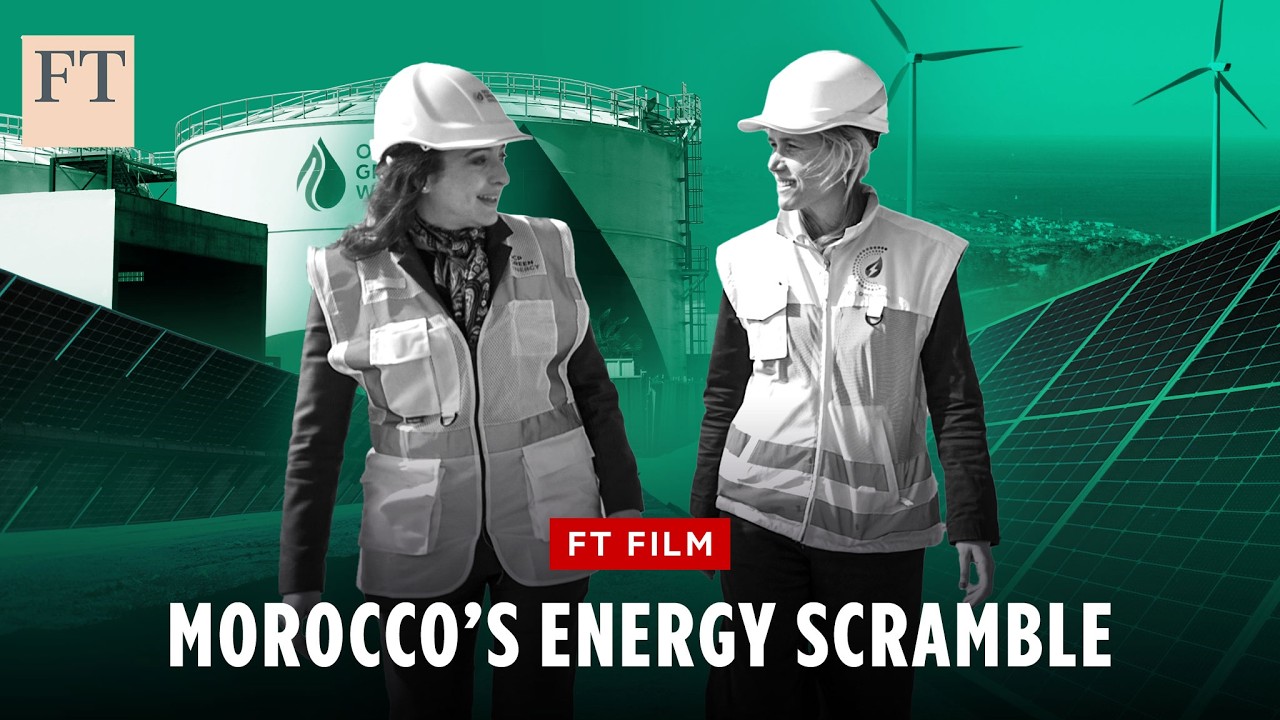
The scramble for Morocco's energy future | FT Film
Keywords
Summary
157 words
Critical Evaluation
The documentary provides a comprehensive and balanced overview of Morocco’s energy transition, effectively capturing the perspectives of various stakeholders: government officials, international investors, local workers, and critics. The reporting is grounded in on-the-ground visits to solar and wind farms, adding authenticity. The film does not shy away from controversies, such as the disputed Western Sahara projects and the questionable economic benefits for local communities. However, it could have delved deeper into the technical aspects of green hydrogen production and the specific financial models of the projects. The reliance on interviews with company representatives may introduce a promotional bias, though the inclusion of critical voices mitigates this. The documentary’s strength lies in its human-centric approach, showing the real-world implications of energy policy. The lack of detailed citations for some claims is a minor weakness, but overall, the information is reliable and well-presented.
141 words
Title / Content Match
The title accurately reflects the content, which explores the competition and tensions around Morocco's energy development.
Quality & Reliability
8/10
The documentary is produced by a reputable news organization (Financial Times) and features interviews with industry experts, government officials, and local stakeholders. It presents a balanced view, including criticisms and concerns, and relies on on-the-ground reporting. However, it does not provide detailed citations for all claims, and some data points (e.g., job numbers) are not sourced precisely.
Chapters
Cited Sources
- FT Edit — Mentioned in the description as a way to access FT journalism.
- FT Podcasts — Linked in the description for related content.
- FT Schools — Mentioned in the description for free student access.
Concurring Sources
- IRENA – Renewable Energy Prospects: Morocco — Supports Morocco's renewable energy potential and targets.
Dissenting Sources
- Human Rights Watch – Morocco: Western Sahara
Contribution & Novelties
The documentary provides an original, on-the-ground perspective on Morocco’s energy transition, highlighting the tensions between economic development, environmental goals, and social equity. It brings attention to the role of desalination in green hydrogen production and the challenges of job creation in renewable energy projects.
Pour aller plus loin :
- Green hydrogen — Overview of green hydrogen production and its role in decarbonization.
- Desalination — Background on desalination technologies and their energy requirements.
- Western Sahara conflict — Context on the disputed territory where some projects are located.
86 words
Radar Profile
The radar profile shows high scores in information quantity, quality, and reliability, with a moderate technical level. This indicates a well-researched documentary that is accessible to a general audience while still providing substantive content.
💬 Mixed but leaning positive: Many viewers appreciate the informative content and the focus on Morocco's renewable energy potential, but a significant number criticize the incorrect map of Morocco, particularly the omission of the Western Sahara region. The comments reflect a blend of enthusiasm for the country's progress and concerns about territorial representation.