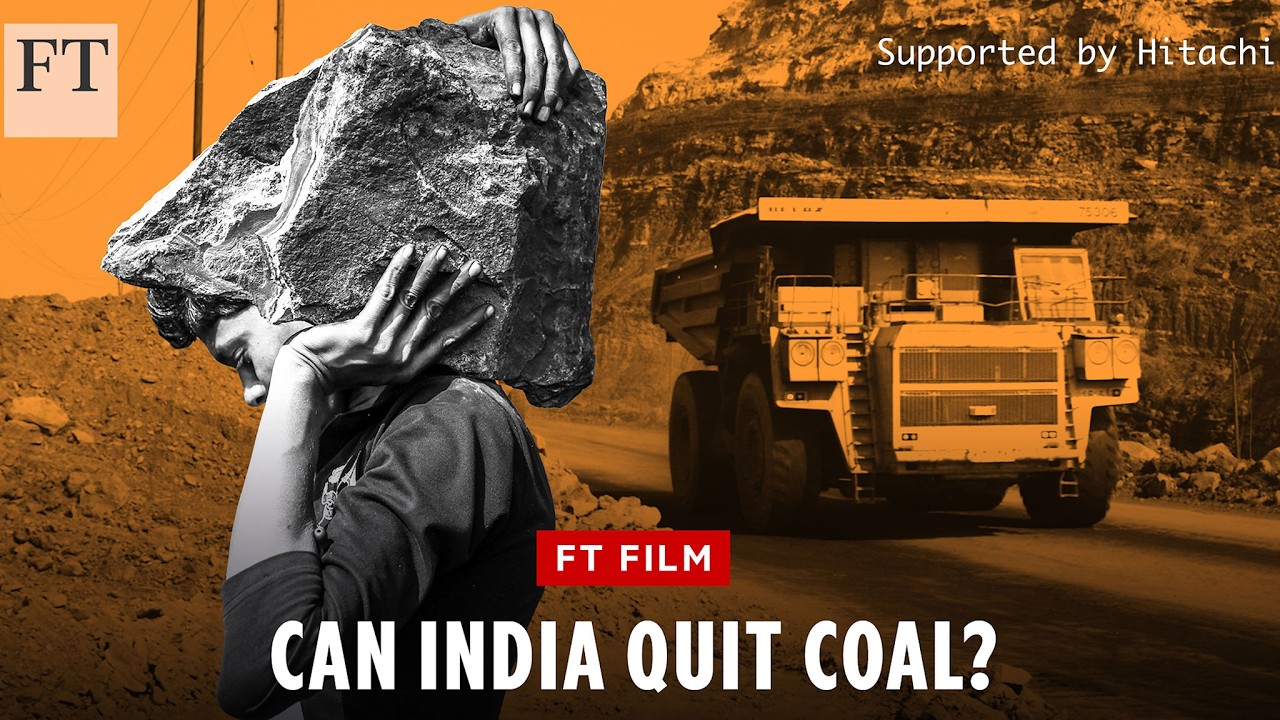
India and the true cost of coal | FT Film
Keywords
Summary
156 words
Critical Evaluation
The documentary provides a comprehensive and balanced overview of India’s coal dilemma. It successfully illustrates the deep entrenchment of coal in India’s economy and society, from the massive GRA mine to the small tea stalls that depend on coal-related industries. The interviews with diverse stakeholders—a mine official, an academic, an environmentalist, a surgeon, and a renewable energy CEO—offer multiple perspectives, enhancing the film’s credibility. The argumentation is generally solid, with clear explanations of the economic necessity of coal and the health impacts of pollution. However, the documentary could be strengthened by including more specific data and citations for claims such as the 1.5 million annual deaths attributed to air pollution. The reliance on anecdotal evidence from the surgeon, while compelling, is not as rigorous as peer-reviewed studies. The film also touches on the political and cultural dimensions of coal, but could delve deeper into the policy mechanisms and international climate negotiations. The adéquation between title and content is excellent, as the film indeed examines the ’true cost’ of coal beyond just economics. Overall, the documentary is a valuable piece of journalism that raises awareness of a critical issue, but it could benefit from more scientific rigor in its evidence presentation.
200 words
Title / Content Match
The title accurately reflects the content, which explores the multifaceted costs of coal in India, including economic, health, and environmental impacts.
Quality & Reliability
8/10
The documentary is produced by a reputable news organization (Financial Times) and features interviews with experts, including academics, environmentalists, a chest surgeon, and industry leaders. It provides a balanced view, acknowledging both the economic importance of coal and its health and environmental costs. However, some claims lack specific citations within the video, and the reliance on anecdotal evidence (e.g., the surgeon's observations) could be strengthened with more robust data.
Key Moments
Markers derived by PSI from the transcript: the creator did not define chapters.
- Introduction to coal's role in India's economy and society.
- Visit to the GRA coal mine, the second largest in the world.
- Discussion on coal's contribution to India's electricity generation (70-75%).
- Historical context of coal nationalization and the role of Coal India.
- Interview with environmentalist Bharti Chaturvedi on the health impacts of coal pollution.
- Global coal trends and India's position as a major emitter.
- Interview with chest surgeon Dr. Sudhir Shrivastava on lung damage from pollution.
- Discussion on the challenges of a just transition for coal-dependent communities.
- Renewable energy entrepreneur Sumant Sinha on India's renewable growth and future prospects.
- Conclusion: India's coal dilemma and the need for a balanced approach.
Cited Sources
- FT Edit — Promotional link for FT subscription, mentioned in the video description.
- FT Podcasts — Link to FT podcasts, mentioned in the video description.
- FT Schools — Link for free student access to FT, mentioned in the video description.
Concurring Sources
- WHO Air Pollution Data — WHO data on air pollution, consistent with the documentary's claims about health impacts.
- IEA Coal Report — IEA report on coal, supporting the documentary's statistics on coal use and emissions.
Dissenting Sources
- Coal India's environmental measures — The mine official in the documentary claims that environmental measures are being taken to reduce dust emissions, but some critics argue these are insufficient. No specific source provided.
Contribution & Novelties
The documentary provides a nuanced, on-the-ground perspective on India’s coal dependency, highlighting the human and environmental costs often overshadowed by economic growth narratives. It uniquely combines interviews with a coal mine official, a surgeon, and a renewable energy entrepreneur, offering a multifaceted view. The film underscores the complexity of a ‘just transition’ in a developing economy, a topic often oversimplified in climate discourse.
Pour aller plus loin :
- Air pollution and health in India — WHO India page on air pollution, relevant to health impacts discussed.
- Just Transition — Wikipedia article on the concept of just transition, central to the documentary’s discussion.
- Coal in India — Wikipedia article providing background on coal’s role in India, complementing the film’s content.
119 words
Radar Profile
The radar profile shows high scores in quantity and quality of information, reflecting the documentary's comprehensive coverage and reputable sources. The technical level is moderate, making it accessible to a general audience while still providing depth. The overall reliability is high, though the reliance on anecdotal evidence slightly lowers it.
💬 Sur les 30 commentaires analysés, le climat est globalement positif et équilibré, avec des éloges pour la qualité du reportage et des discussions constructives sur les défis énergétiques de l'Inde. Certains commentaires expriment des préoccupations sur la pollution et la santé, tandis que d'autres soulignent les progrès dans les énergies renouvelables.