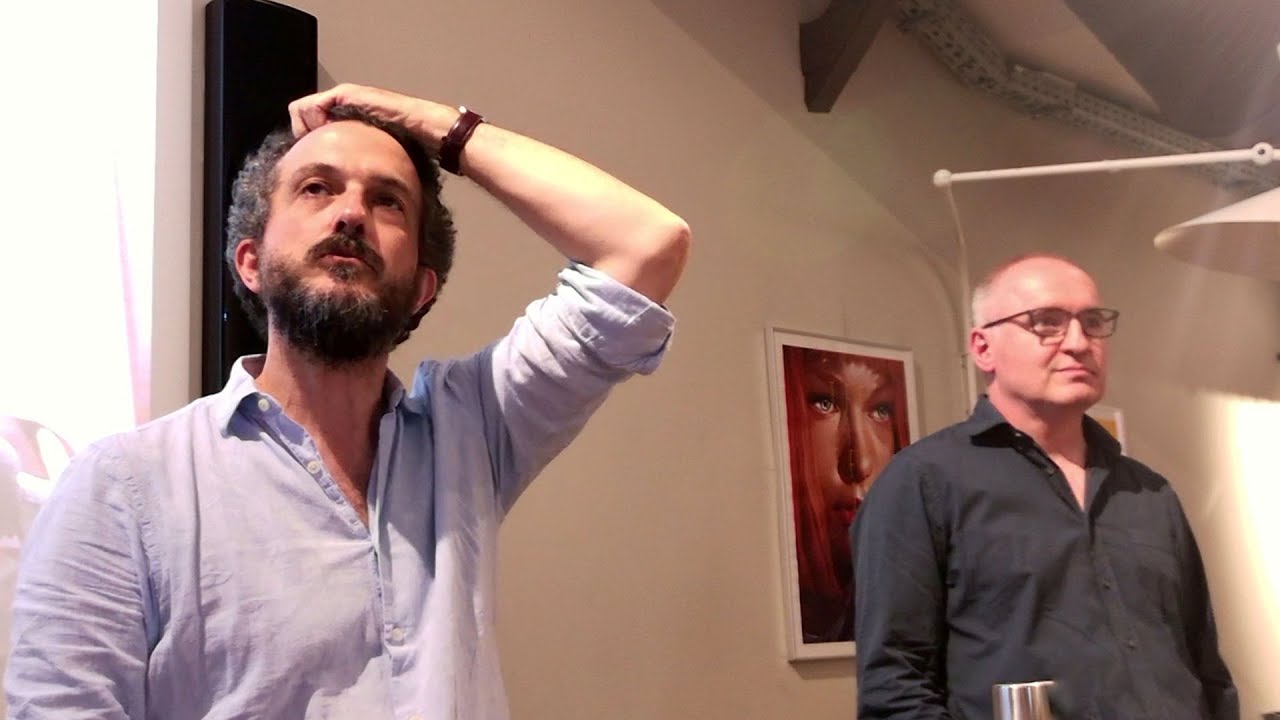
Nicolas Hubé, Steffen Lalande : Les matinales comme moment de lancement de la journée politique
Keywords
Summary
154 words
Critical Evaluation
Value of the Information & Strength of the Argument
The presentation offers valuable insights into the structure and function of morning political interviews, a relatively understudied media format. The argument is well-supported by empirical data from a systematic corpus analysis. The combination of qualitative and quantitative methods strengthens the analysis. The speakers are careful to note limitations and avoid overgeneralization. The discussion of the ‘format’ and its constraints on both journalists and politicians is particularly insightful.
Scientific Rigor, Source Quality, Title Accuracy
The presentation demonstrates scientific rigor through its detailed methodology and transparent reporting of results. The project is based on a substantial corpus and employs both manual and automatic annotation. The sources cited are primarily the project’s own data and tools, with references to relevant literature (e.g., Goffman, studies on political communication). The title accurately reflects the content. The presentation does not rely on external sources but rather presents original research.
152 words
Title / Content Match
The title accurately reflects the content, which focuses on the role of morning political interviews in setting the day's political agenda.
Quality & Reliability
8/10
The presentation is grounded in a systematic research project (OOPAIP) combining social sciences and computational methods. The speakers are established academics and researchers. The methodology is detailed, and results are presented with nuance. However, the talk is a seminar presentation, not a peer-reviewed publication, and some results are preliminary.
Key Moments
Markers derived by PSI from the transcript: the creator did not define chapters.
- Introduction by Nicolas Hubé, presenting the OOPAIP project and its focus on morning political interviews.
- Discussion of the research gap: lack of systematic analysis of interactions in morning shows.
- Presentation of the corpus: four channels (BFM, France 2, France Inter, RTL) during the 2022 campaign.
- Steffen Lalande describes the technical pipeline: automatic alignment, diarization, and transcription.
- Explanation of the annotation scheme: 130 thematic and 32 discourse categories, with multilabel annotation.
- Results on participant profiles: 74% political figures, gender imbalance, overrepresentation of certain parties.
- Discussion of the 'format': interviews are highly structured, with little variation in speaking time.
- Analysis of the most frequent guests and their political capital.
- Conclusion: morning shows serve as a 'grossiste' of information, launching the day's political agenda.
Cited Sources
- Inathèque — Mentioned as the source for the corpus and archival data.
Concurring Sources
- Inathèque — The corpus is drawn from the Inathèque archives, providing a reliable source of broadcast content.
Contribution & Novelties
This presentation contributes to the understanding of morning political interviews by combining social science and computational methods. It provides systematic empirical evidence on the format, participants, and content of these shows. The OOPAIP project’s methodology, including automatic alignment and annotation, offers a replicable framework for future research.
Pour aller plus loin :
- Goffman’s dramaturgical approach — Relevant for understanding the performative aspects of interviews.
- Speaker diarization — Technical background for the computational methods used.
- IPTC news codes — Reference for the thematic categories used in media analysis.
87 words
Radar Profile
The radar profile shows high scores across all dimensions, indicating a well-rounded presentation with strong information content, quality, technical depth, and reliability. The lowest score is in technical level, which is still high, reflecting the advanced computational methods discussed.
💬 No comments were provided for analysis.