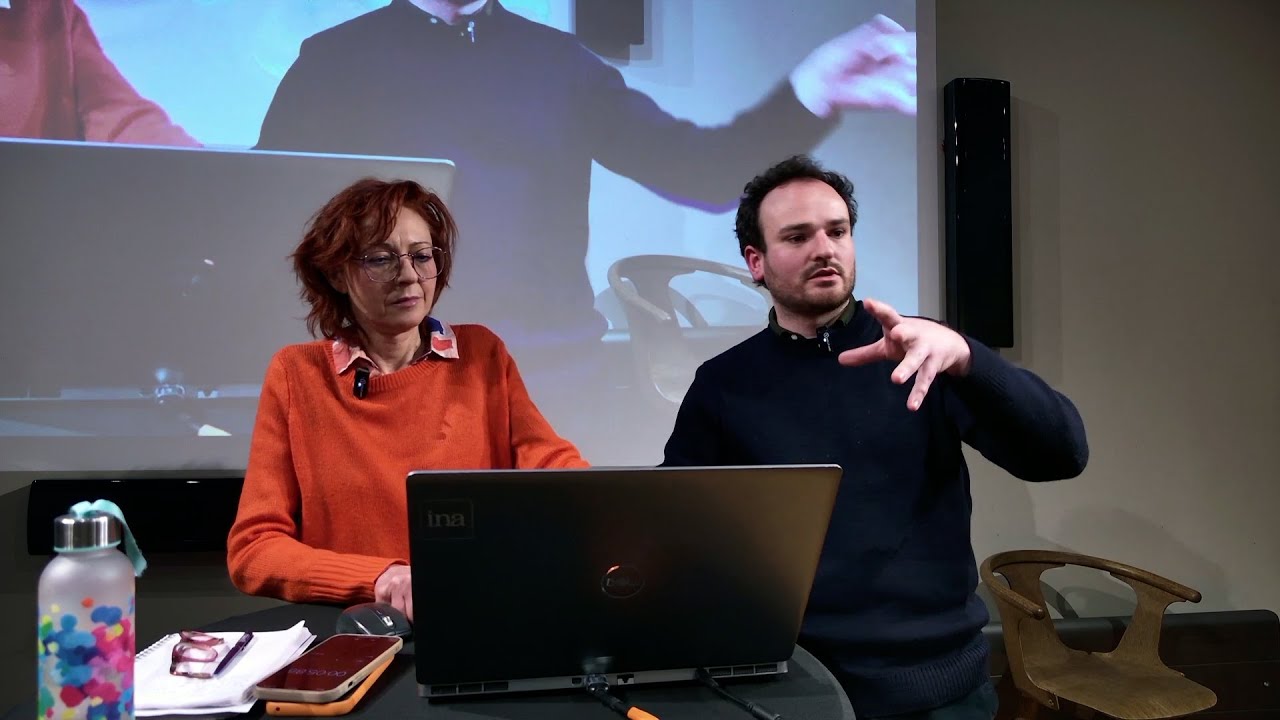
Charles Ménard et Laurence Allard : Regards croisés humains et non-humains sur le “car gaze”
Keywords
Summary
163 words
Critical Evaluation
Value of the Information & Strength of the Argument
The value of the information lies in its interdisciplinary approach, combining media studies, computer vision, and environmental concerns. The argumentation is solid, built on a clear methodological framework (ethnomethodology, car culture studies) and supported by concrete examples from the series. The reflexive stance on the research process adds depth, but the lack of detailed quantitative results and the preliminary nature of some findings limit the strength of the conclusions.
Scientific Rigor, Source Quality, Title Accuracy
The scientific rigor is moderate: the presentation references established concepts and mentions prior studies, but does not provide a systematic literature review or detailed citations. The sources cited are primarily institutional (INA, hypotheses.org) and the research is presented as ongoing. The title accurately reflects the content, which is a cross-disciplinary discussion on car culture in a specific TV series. No comments were provided for analysis.
149 words
Title / Content Match
The title accurately reflects the content: a cross-disciplinary discussion on human and non-human perspectives on car culture in the TV series Plus Belle la Vie.
Quality & Reliability
7/10
The presentation is grounded in academic research, referencing established concepts (ethnomethodology, car culture, petromasculinism) and methodological frameworks. However, it is primarily a reflexive account of ongoing work, with limited peer-reviewed citations and some reliance on personal interpretation.
Key Moments
Markers derived by PSI from the transcript: the creator did not define chapters.
- Introduction to the research project on ecological imaginaries in fiction.
- Discussion on the concept of 'profilmic' and its relevance to eco-production.
- Presentation of the car culture concept and its gendered dimensions.
- Analysis of the opening credits of Plus Belle la Vie and their evolution.
- Explanation of the algorithmic accountability approach and the use of Snoop.
- Discussion on algorithmic frugality and the environmental impact of AI.
- Presentation of results showing an increase in car presence over the series.
- Exploration of sub-corpora and the role of mirrors and visual games in car scenes.
Cited Sources
- Inathèque — Mentioned as the archive platform for French audiovisual content.
- INA le lab hypotheses — Blog of the INA research lab, hosting the seminar series.
Concurring Sources
- Inathèque — Institutional archive supporting the research.
- INA le lab hypotheses — Research lab blog documenting the seminar.
Contribution & Novelties
The presentation offers an original contribution by applying computer vision to a long-running TV series to quantify and analyze car culture, bridging media studies and environmental concerns. It introduces the concept of ‘algorithmic accountability’ and emphasizes frugal AI practices. The reflexive approach on the research process is valuable.
Pour aller plus loin :
- Ethnomethodology — Foundational concept for the accountability approach.
- Computer vision — Technical basis for the analysis.
- Car culture — Cultural studies perspective on automobiles.
- Petromasculinity — Concept linking fossil fuels and masculinity.
- Plus Belle la Vie — The TV series analyzed.
94 words
Radar Profile
The radar profile shows a balanced but moderate performance across all dimensions, with slightly higher scores in information quantity and quality, reflecting the rich content and methodological depth, while technical level and reliability are slightly lower due to the preliminary nature of the research and limited citations.