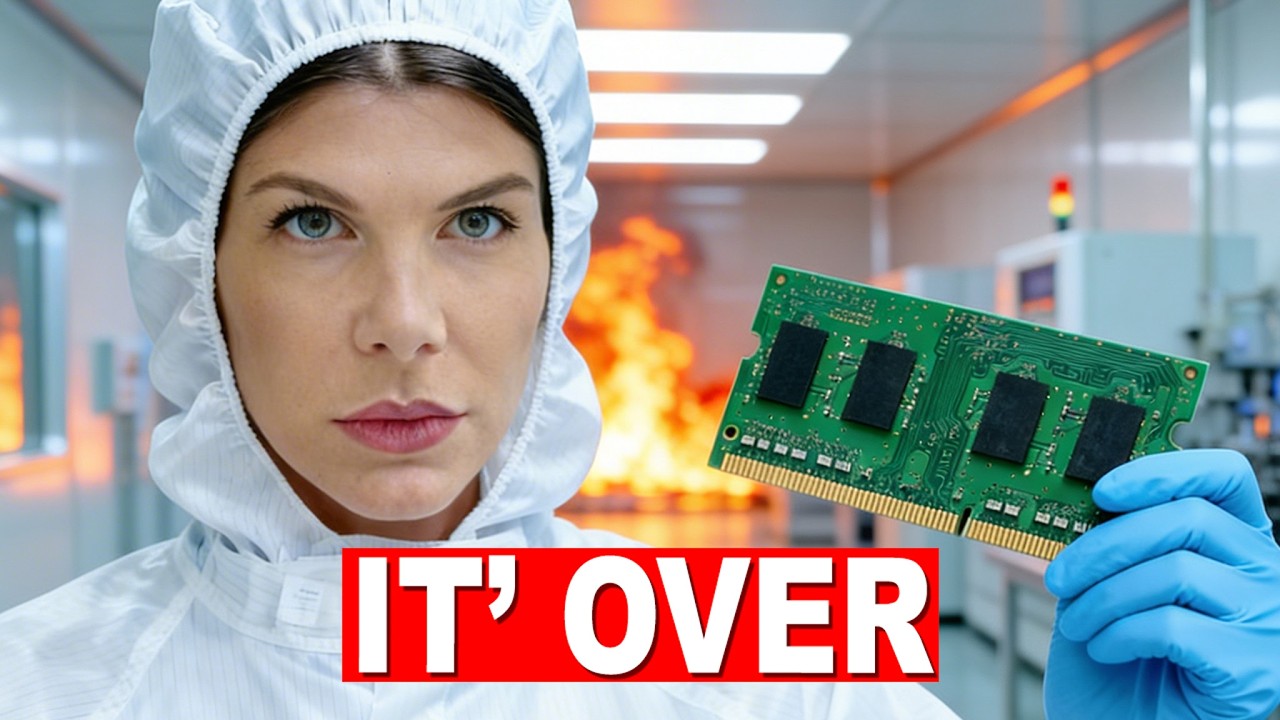
The RAM Crisis — And the Winners No One Expected
Keywords
Summary
123 words
Critical Evaluation
The video provides a comprehensive and well-structured analysis of the HBM memory crisis, offering valuable insights into the technical and economic factors driving the shortage. The creator’s background as a chip design engineer lends credibility, and the explanation of HBM manufacturing complexities is particularly strong. The use of analogies (e.g., stacking floors) makes the content accessible without oversimplifying. The argumentation is solid, with clear cause-and-effect reasoning linking HBM demand to consumer memory shortages. However, the video includes a sponsored segment for an AI tool, which, while clearly marked, may be seen as a minor distraction. The sources cited are primarily the creator’s own channels and a sponsor link, with no direct references to external studies or reports, which slightly limits the verifiability of some claims. The title accurately reflects the content, and the video delivers on its promise. Overall, it is a high-quality, informative piece that balances technical depth with broader industry context.
153 words
Title / Content Match
The title accurately reflects the content, focusing on the RAM crisis and the unexpected winners (SK Hynix) in the memory market.
Quality & Reliability
8/10
The video provides a detailed and technically accurate explanation of the HBM memory crisis, backed by industry knowledge and specific data. The creator's background as a chip design engineer adds credibility. However, the presence of a sponsored segment and lack of direct citations for some claims slightly reduce the score.
Chapters
Cited Sources
- Anastasi In Tech Newsletter — Creator's newsletter for further reading and updates.
- Deep in Tech Podcast (Apple) — Creator's podcast for extended discussions on tech topics.
- Deep in Tech Podcast (Spotify) — Creator's podcast on Spotify.
- Anastasi In Tech LinkedIn — Creator's professional profile for networking and updates.
Concurring Sources
- Gamer's Nexus Documentary on the DRAM Cartel — A commenter suggested this video as a complementary resource, indicating it fills in details about the DRAM market dynamics.
External References
Contribution & Novelties
The video offers a clear and engaging explanation of the HBM memory crisis, highlighting the strategic importance of SK Hynix and the technical challenges of HBM manufacturing. It provides a unique perspective on how a single technology bet can reshape an industry. The video also connects the HBM shortage to consumer memory price increases, offering a holistic view of the supply chain.
Pour aller plus loin :
- High Bandwidth Memory (HBM) - Wikipedia — Provides a comprehensive overview of HBM technology, its history, and specifications.
- Memory Wall - Wikipedia — Explains the concept of the memory wall, a key bottleneck discussed in the video.
- SK Hynix - Wikipedia — Offers background on the company’s history, including the 2012 fire and its recovery.
- DRAM - Wikipedia — Details the fundamentals of DRAM, essential for understanding the crisis.
- NVIDIA Rubin - NVIDIA Official — Official page for NVIDIA’s next-generation GPU platform, which relies on HBM4.
153 words
Radar Profile
The radar profile shows high scores in information quantity and quality, with a moderate technical level, indicating a well-balanced video that is both informative and accessible. The reliability score is strong, reflecting the creator's expertise and clear presentation.
💬 Très positif. Sur les 30 commentaires analysés, la majorité exprime une forte appréciation, louant la qualité de l'explication, la clarté et l'expertise de la créatrice, avec quelques suggestions de ressources complémentaires.