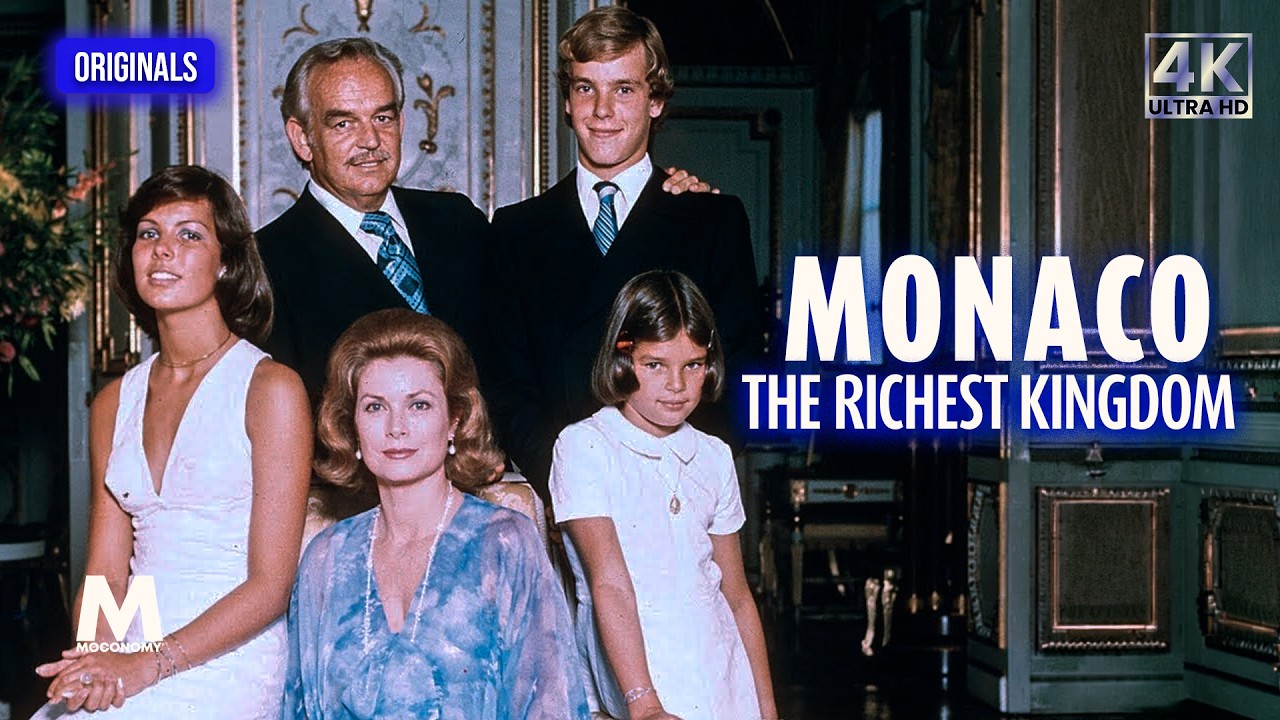
Monaco: The Grimaldi Empire | Royalty, Money and the World’s Most Expensive Land | 4K
Keywords
Summary
119 words
Critical Evaluation
The documentary offers a compelling and well-paced narrative of Monaco’s transformation from a vulnerable fortress to a global symbol of wealth. Its strength lies in its historical depth, covering seven centuries of Grimaldi rule with specific dates and events, such as the 1297 takeover, the 1641 Treaty of Péronne, and the 1962 constitution. The storytelling is engaging, using vivid descriptions and anecdotes to illustrate key moments. However, the documentary lacks rigorous sourcing; it does not cite academic references or primary documents, relying instead on a narrative style that may blend fact with dramatization. For instance, the claim that Monaco has the highest GDP per capita is plausible but not substantiated with data. The economic analysis is superficial, focusing on real estate prices and the casino’s role without delving into the broader financial mechanisms of tax havens. The documentary also omits critical perspectives on Monaco’s tax policies and their ethical implications. Despite these shortcomings, it provides a useful overview for a general audience, effectively conveying the strategic genius of the Grimaldis. The title accurately reflects the content, and the production quality is high, with beautiful visuals and a fitting soundtrack. Overall, it is an informative and entertaining documentary, but viewers should seek additional sources for a more critical and data-driven analysis.
210 words
Title / Content Match
The title accurately reflects the content, focusing on the Grimaldi dynasty and Monaco's transformation into a wealthy state.
Quality & Reliability
7/10
The documentary provides a well-structured historical narrative with specific dates and events, but lacks citations to primary sources and includes some dramatized elements. The economic data is plausible but not sourced. Overall, it is informative but should be cross-checked with academic references.
Key Moments
Markers derived by PSI from the transcript: the creator did not define chapters.
- Introduction: Monaco's paradox of wealth without resources.
- The 1297 takeover by François Grimaldi disguised as a monk.
- Honoré II's strategy of using luxury and culture to project power.
- The French Revolution and the temporary erasure of Monaco.
- Rainier III's accession and the casino-dependent economy.
- The 1962 constitution and the modernization of the monarchy.
- The role of the Société des Bains de Mer and diversification.
- Monaco's real estate market and its global brand.
Cited Sources
- World Economy Playlist — Related documentaries on world economies.
- Originals Playlist — Other original documentaries by Moconomy.
- Video: The World's Most Expensive Real Estate — Referenced as a related documentary.
- Video: Tax Havens Explained — Referenced as a related documentary.
- Video: The Business of Luxury — Referenced as a related documentary.
Concurring Sources
- Monaco - Wikipedia — Confirms Monaco's high GDP per capita and real estate prices.
- House of Grimaldi - Wikipedia — Corroborates the dynasty's history and the 1297 event.
Dissenting Sources
- Tax Justice Network — Provides critical perspectives on tax havens, which the documentary does not address.
Contribution & Novelties
The documentary provides a comprehensive historical narrative of Monaco’s transformation, emphasizing the strategic use of luxury and image. It offers a unique perspective on how a small state can leverage its limitations to create a powerful brand. The film’s contribution lies in its synthesis of political history and economic development, though it lacks original research.
Pour aller plus loin :
- Monaco - Wikipedia — Provides a factual overview of Monaco’s history and economy.
- House of Grimaldi - Wikipedia — Details the dynasty’s history and genealogy.
- Rainier III, Prince of Monaco - Wikipedia — Biography of the prince who modernized Monaco.
- Société des Bains de Mer - Wikipedia — Information on the company that operates the casino and hotels.
- Tax haven - Wikipedia — Context on Monaco’s tax policies.
128 words
Radar Profile
The radar profile shows high scores in information quantity and quality, with moderate technical depth and reliability. This indicates a well-produced documentary that is informative but not deeply analytical.
💬 No comments were provided for analysis.