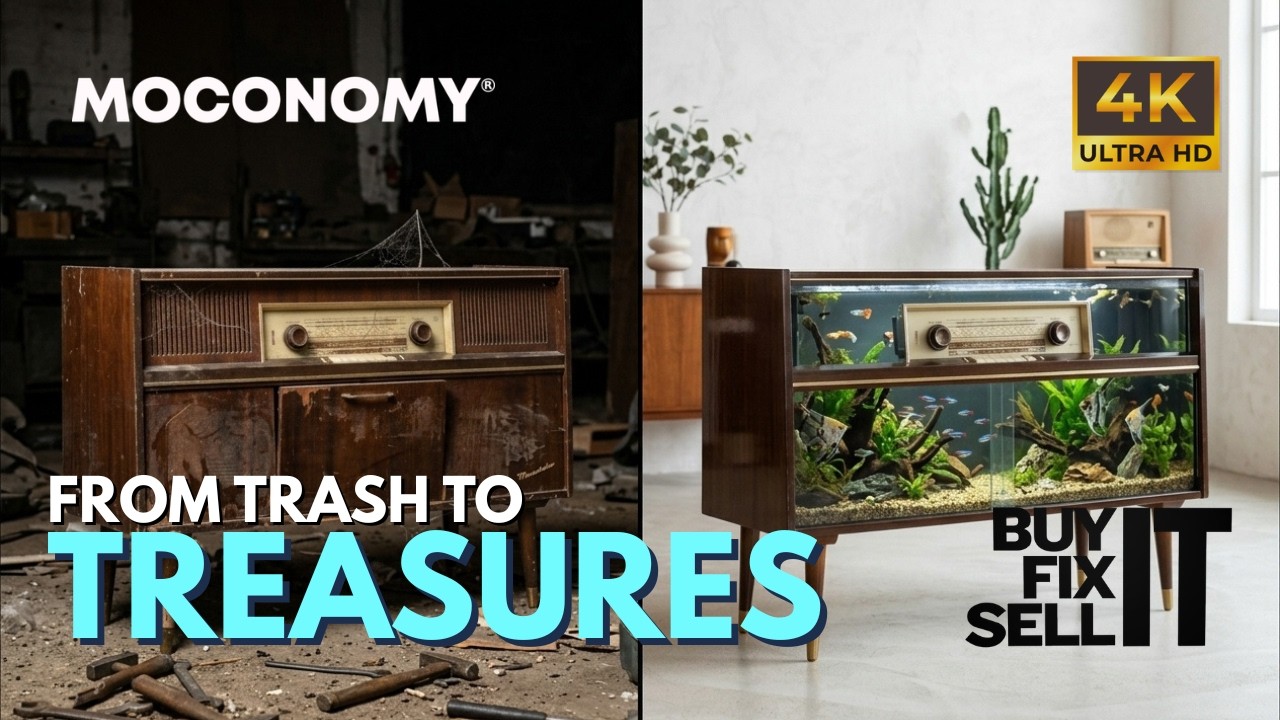
From Auction Junk to Big Money | The Competition to Turn Trash into Cash | 4K
Keywords
Summary
150 words
Critical Evaluation
Value of the Information & Strength of the Argument
The value of the information is primarily entertainment-oriented, offering insights into the world of auction flipping and creative repurposing. The argumentation is based on anecdotal evidence and personal experiences rather than systematic analysis. The show demonstrates practical techniques for upcycling and selling, but lacks depth in terms of market analysis or financial data. The competitive narrative drives the episode, but the economic claims are not substantiated with concrete numbers or comparisons. Overall, the content is engaging but not informative from a scientific or rigorous standpoint.
Scientific Rigor, Source Quality, Title Accuracy
The scientific rigor is minimal; the show does not cite any sources or provide verifiable data. The quality of sources is not applicable as it is a reality TV production. The title accurately represents the content, focusing on the competition to turn trash into cash. The episode is well-produced with clear storytelling, but it does not aim to provide factual or educational content. The public comments (if any) were not provided, so no analysis of audience reception is included.
179 words
Title / Content Match
The title accurately reflects the content: a competition among fixers to buy, restore, and sell items for profit.
Quality & Reliability
5/10
The content is a reality TV documentary focused on entertainment rather than rigorous scientific or factual reporting. It provides no citations, data, or expert analysis, and the information presented is anecdotal and subjective. The production values are decent, but the scientific reliability is very low.
Key Moments
Markers derived by PSI from the transcript: the creator did not define chapters.
- Introduction of the fixers and the auction setting.
- Bidding war over Hudson's Bay blankets between Tiffany and the Neon Brothers.
- Willy and Bob both bid on Winnebago toys, leading to a creative competition.
- Tiffany wins the blankets and plans to reupholster a trunk.
- Willy creates a wall-mounted wagon bar with hockey memorabilia.
- Neon Brothers restore a vintage pinball machine with neon accents.
- Willy sells his steering wheel chair to a car salesman for $250.
- Tiffany sells her Hudson's Bay blanket trunk for $550.
- Bob buys a Zellers sign and a handwoven carpet, planning to restore them.
- Final sales and profit summaries for each fixer.
Cited Sources
- Moconomy Originals Playlist — Playlist of original documentaries by Moconomy.
- World Economy Playlist — Playlist of world economy documentaries.
- Related Documentary 1 — Another documentary on the channel.
- Related Documentary 2 — Another documentary on the channel.
- Related Documentary 3 — Another documentary on the channel.
Concurring Sources
- Upcycling — General concept of upcycling, which aligns with the show's premise.
Dissenting Sources
- None — No conflicting sources were identified.
Contribution & Novelties
The episode provides an entertaining look at the creative process of upcycling and flipping auction finds, showcasing unique ideas and negotiation tactics. It highlights the potential profitability of repurposing items, but lacks depth in financial analysis.
Pour aller plus loin :
71 words
Radar Profile
The radar profile shows low scores across all dimensions, reflecting the entertainment-focused nature of the content with minimal scientific or informational depth.