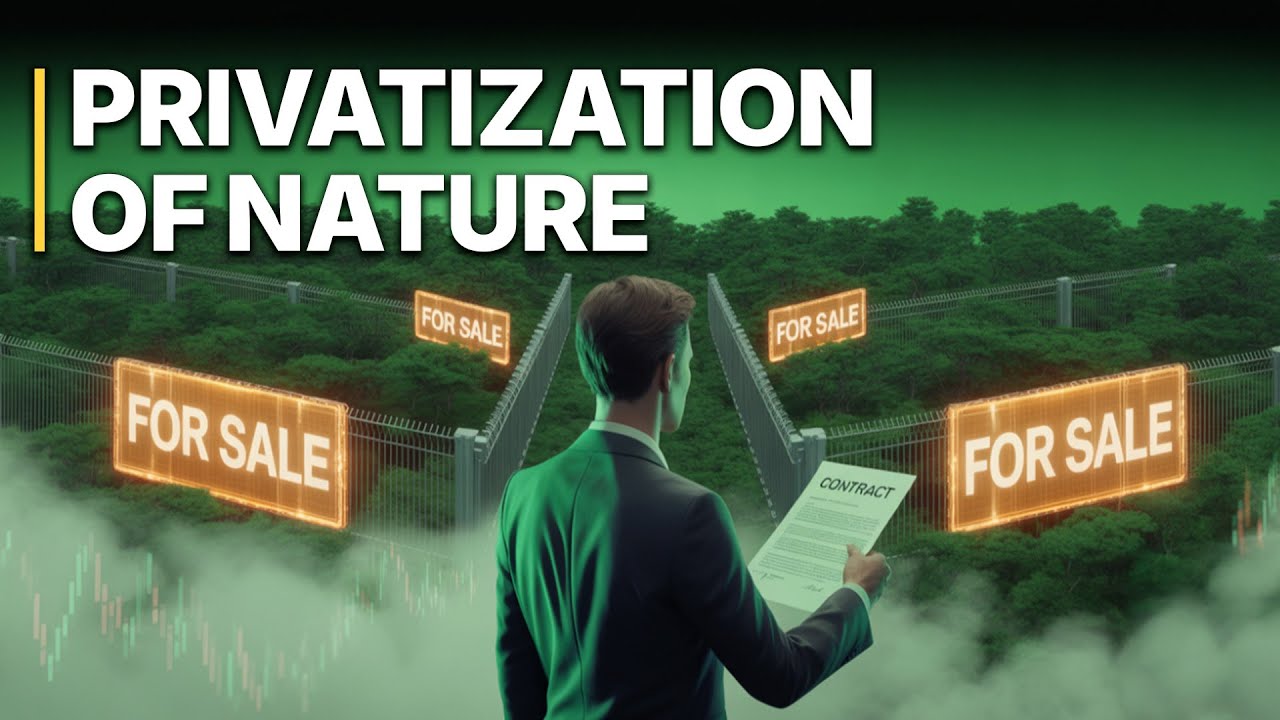
Privatization Of Nature | The Dark Side of Green Investments
Keywords
Summary
146 words
Critical Evaluation
The documentary provides a compelling and thought-provoking examination of the financialization of nature, a topic of growing relevance. Its strength lies in the diverse range of interviews, including economists, bankers, environmentalists, and local residents, which offers a balanced perspective. The case study of the Delhi Sands fly effectively illustrates the complexities and potential perverse incentives of mitigation banking. However, the film may oversimplify some economic concepts and does not delve deeply into alternative approaches to conservation. The sources cited are primarily interviews and reports, which are credible but not peer-reviewed. The documentary’s argumentation is generally solid, but it could benefit from more rigorous data and analysis. The title accurately reflects the content, and the film successfully raises important ethical and practical questions about the commodification of nature. Overall, it is a valuable resource for understanding the debates surrounding green investments, though viewers should seek additional sources for a comprehensive view.
150 words
Title / Content Match
The title accurately reflects the content, focusing on the privatization and financialization of nature.
Quality & Reliability
7/10
The documentary presents a well-researched investigation with interviews from experts and stakeholders, but it is not peer-reviewed and may have a biased perspective.
Key Moments
Markers derived by PSI from the transcript: the creator did not define chapters.
- Introduction to the concept of valuing nature and the economic invisibility of ecosystem services.
- Discussion on the economic value of bees and pollination services, estimated at $200 billion.
- Introduction to the Delhi Sands flower-loving fly and the first mitigation bank in the US.
- Explanation of how mitigation banking works and the financial incentives for protecting species.
- Interview with Pavan Sukhdev on natural capital and the economic value of ecosystems.
- Critique of the market-based approach and concerns about the commodification of nature.
- Discussion on the potential for a nature credit market crash, drawing parallels to the subprime crisis.
- Conclusion and final thoughts on whether financial markets can save the planet.
Cited Sources
- Banking Nature (documentary) — The documentary itself, which is the primary source of information.
Concurring Sources
- The Economics of Ecosystems and Biodiversity (TEEB) — Pavan Sukhdev led the TEEB study, which aligns with the documentary's focus on valuing nature.
Dissenting Sources
- Critique of green capitalism — Some environmentalists argue that financializing nature leads to its exploitation rather than protection, a perspective not fully explored in the documentary.
Contribution & Novelties
The documentary provides a comprehensive overview of the emerging field of nature finance, highlighting real-world examples and expert opinions. It contributes to the public discourse on the ethical and practical implications of commodifying nature.
Pour aller plus loin :
- Ecosystem services — Provides background on the concept of ecosystem services.
- Mitigation banking — Explains the practice of mitigation banking in the US.
- Natural capital — Discusses the concept of natural capital and its economic valuation.
75 words
Radar Profile
The radar profile shows high scores in quantity of information and technical level, indicating a well-researched documentary. The quality of information and global reliability are moderate, reflecting the subjective nature of the content.
💬 Sur les 0 commentaires analysés, aucune tendance n'est disponible.