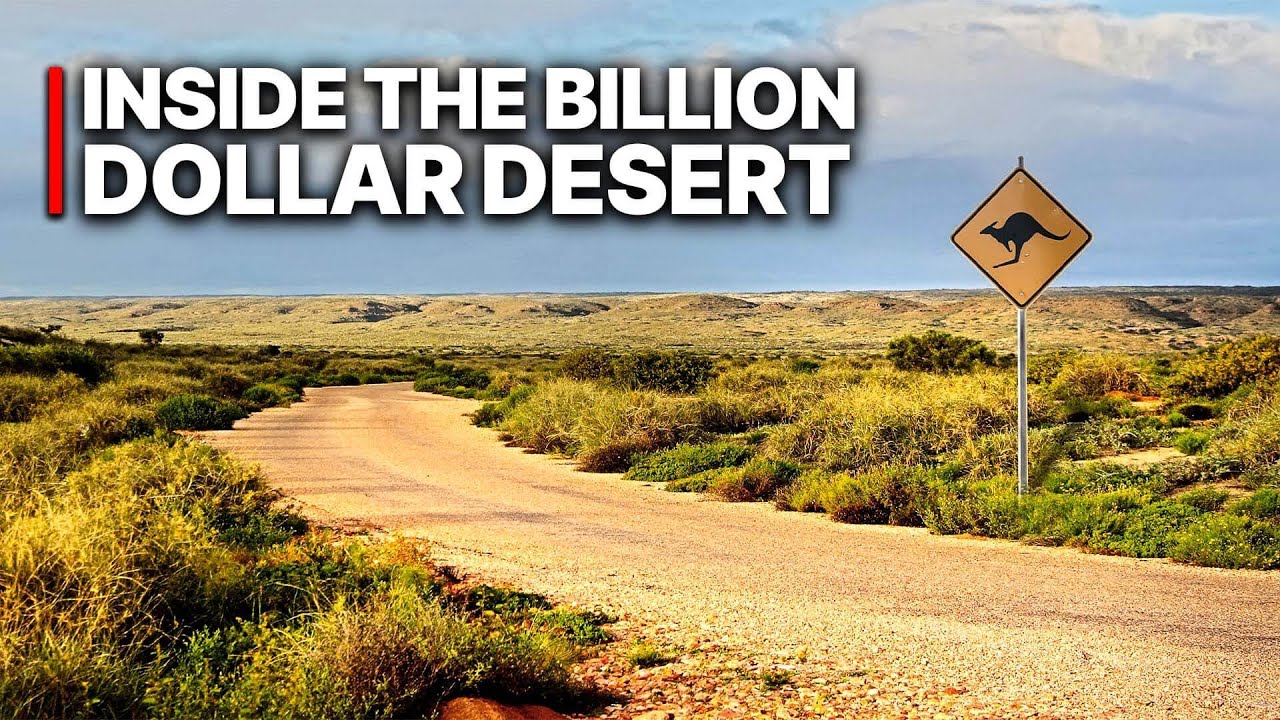
Inside the Billion Dollar Desert | Surviving Extreme Heat and Floods for Work
Keywords
Summary
123 words
Critical Evaluation
The documentary offers a vivid portrayal of life in the Kimberley, focusing on the human experience rather than scientific analysis. Its strength lies in the authentic interviews and stunning cinematography, which effectively convey the harshness and beauty of the environment. The information about cattle mustering and the use of helicopters is detailed and credible, coming directly from practitioners. However, the film lacks rigorous scientific context; for instance, it mentions the Bungle Bungles’ formation over 350 million years without citing geological sources. Similarly, the discussion of Aboriginal history is presented respectfully but without academic depth. The segment on cane toads correctly identifies them as invasive, but the claim about 80% crocodile decline in Northern Territory is not sourced. The documentary’s production by SPIEGEL TV, a reputable outlet, lends some credibility, but the absence of expert commentary or citations limits its scientific value. The title’s emphasis on ‘Billion Dollar Desert’ is somewhat misleading, as the film focuses more on lifestyle than economics. Overall, it is an engaging and informative piece for a general audience, but it does not meet the standards of a scientific review.
183 words
Title / Content Match
The title is somewhat sensationalist ('Billion Dollar Desert') but accurately reflects the economic activities (cattle, mining) in the remote Kimberley region.
Quality & Reliability
7/10
Documentary produced by SPIEGEL TV, a reputable German broadcaster, originally aired in 2012. It provides firsthand accounts and observations, but lacks explicit citations or references to scientific studies. The information is presented in an engaging manner, but some claims (e.g., historical timelines) are not sourced.
Key Moments
Markers derived by PSI from the transcript: the creator did not define chapters.
- Introduction to the Kimberley region and its vast, remote landscape.
- Rick Ford describes his life as a cattle farmer and the challenges of mustering.
- Helicopter mustering of 2,000 cattle; Rick explains the risks of low flying.
- Heavy rainfall floods the station, disrupting work; Rick assesses the situation from the air.
- Stacy Ford explains her role in medical care and reliance on the Royal Flying Doctor Service.
- Ranger Lindsey Brown discusses the Bungle Bungles and the challenges of park management.
- Vincent Edwards shares his cultural connection to the land and the importance of preserving Aboriginal heritage.
Cited Sources
- SPIEGEL TV — Production company of the documentary.
Concurring Sources
- Kimberley (Western Australia) — Provides general information about the region's geography and population.
- Purnululu National Park — Confirms the Bungle Bungle Range's geological formation and UNESCO listing.
Dissenting Sources
- Cane toad impact on crocodiles — The documentary claims 80% of crocodiles disappeared in Northern Territory due to cane toads, but this figure is not verified and may be an overstatement.
Contribution & Novelties
The documentary provides an intimate look at the lives of people in one of the world’s most isolated regions, highlighting the intersection of modern cattle farming with Aboriginal traditions. It offers rare footage of helicopter mustering and the daily challenges of remote living.
Pour aller plus loin :
- Kimberley (Western Australia) — Overview of the region’s geography and history.
- Purnululu National Park — Details on the Bungle Bungle Range and its UNESCO status.
- Cane toad in Australia — Information on the invasive species and its ecological impact.
87 words
Radar Profile
The radar profile shows moderate scores across all dimensions, with slightly higher scores in information quantity and quality, reflecting the documentary's rich visual content and firsthand accounts, but lower technical depth and reliability due to lack of scientific citations.