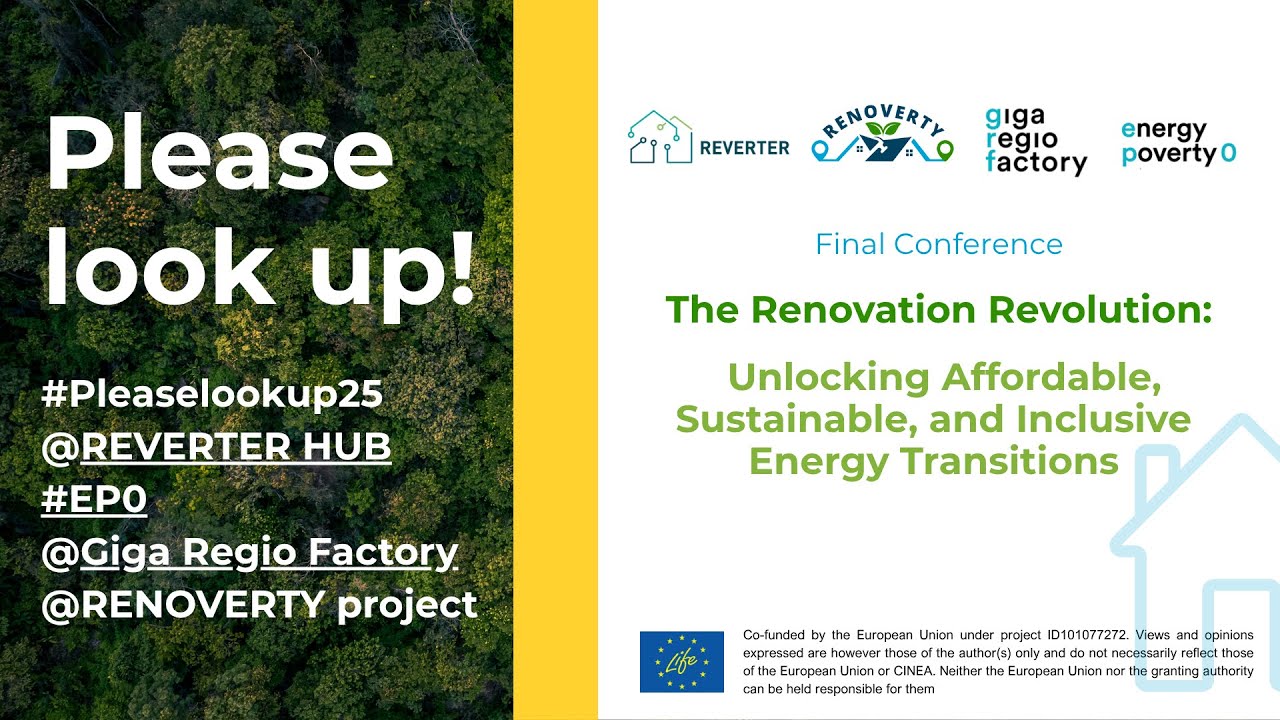
The Renovation Revolution Unlocking Affordable, Sustainable, and Inclusive Energy Transitions
Keywords
Summary
154 words
Critical Evaluation
Value of the Information & Strength of the Argument
The video provides valuable insights into the complexities of energy renovation, particularly in rural areas. Speakers offer a balanced perspective, acknowledging the revolutionary nature of the social climate fund while critiquing its implementation challenges. The argumentation is solid, grounded in project experiences and policy analysis. The discussion on transitional justice and the need for procedural justice adds depth, highlighting the importance of inclusive processes. However, some arguments are presented without extensive empirical evidence, relying more on expert opinion and project findings.
Scientific Rigor, Source Quality, Title Accuracy
The content demonstrates scientific rigor through references to EU directives and project outcomes. The speakers are experts from relevant institutions, and the session is part of a formal conference. The title accurately reflects the content. The description provides a link to follow-up materials, which serves as a source for further information. However, the video lacks formal citations to specific studies, and the reliance on project reports may limit generalizability. The adequacy between title and content is high, as the session indeed covers renovation as a key to sustainable and inclusive transitions.
187 words
Title / Content Match
The title accurately reflects the content, which focuses on renovation as a key strategy for sustainable and inclusive energy transitions.
Quality & Reliability
7/10
The video features expert speakers from EU-funded projects and institutions, providing substantive insights on renovation policies and practices. However, it is a conference recording with limited production polish and no formal fact-checking, and the content is largely based on project experiences and expert opinions rather than peer-reviewed studies.
Key Moments
Markers derived by PSI from the transcript: the creator did not define chapters.
- Introduction to the session and overview of EU projects.
- Discussion on EU directives and the Renovation Wave.
- Stefan Budaroski presents on the social climate fund and energy poverty.
- Cecilia Bertoi discusses rural building characteristics and insulation challenges.
- Mara presents the RENOVERTY project and rural energy poverty.
- Discussion on Rural Energy Efficiency Roadmaps (REARs) and pilot implementations.
- Lessons learned and recommendations for policy and funding.
- Q&A session and further discussion on implementation challenges.
Cited Sources
- IEECP event page — Follow-up materials for this session.
Concurring Sources
- EU Energy Poverty Observatory — Provides data and resources on energy poverty, aligning with the video's focus.
Contribution & Novelties
The video provides a comprehensive overview of recent EU initiatives and project outcomes, offering practical insights into addressing energy poverty in rural areas. It highlights the innovative approach of the social climate fund and the development of Rural Energy Efficiency Roadmaps. The discussion on transitional justice and procedural aspects adds a novel perspective to the renovation discourse.
Pour aller plus loin :
- Renovation Wave — EU initiative to improve building energy performance.
- Energy Poverty — EU resources on energy poverty.
- Energy Communities — EU repository on energy communities.
88 words
Radar Profile
The radar profile shows high scores in quantity of information and global reliability, indicating a content-rich and trustworthy presentation. The technical level is moderate, suitable for a professional audience. The quality of information is strong, though the reliance on expert opinion rather than peer-reviewed data slightly lowers the overall score.