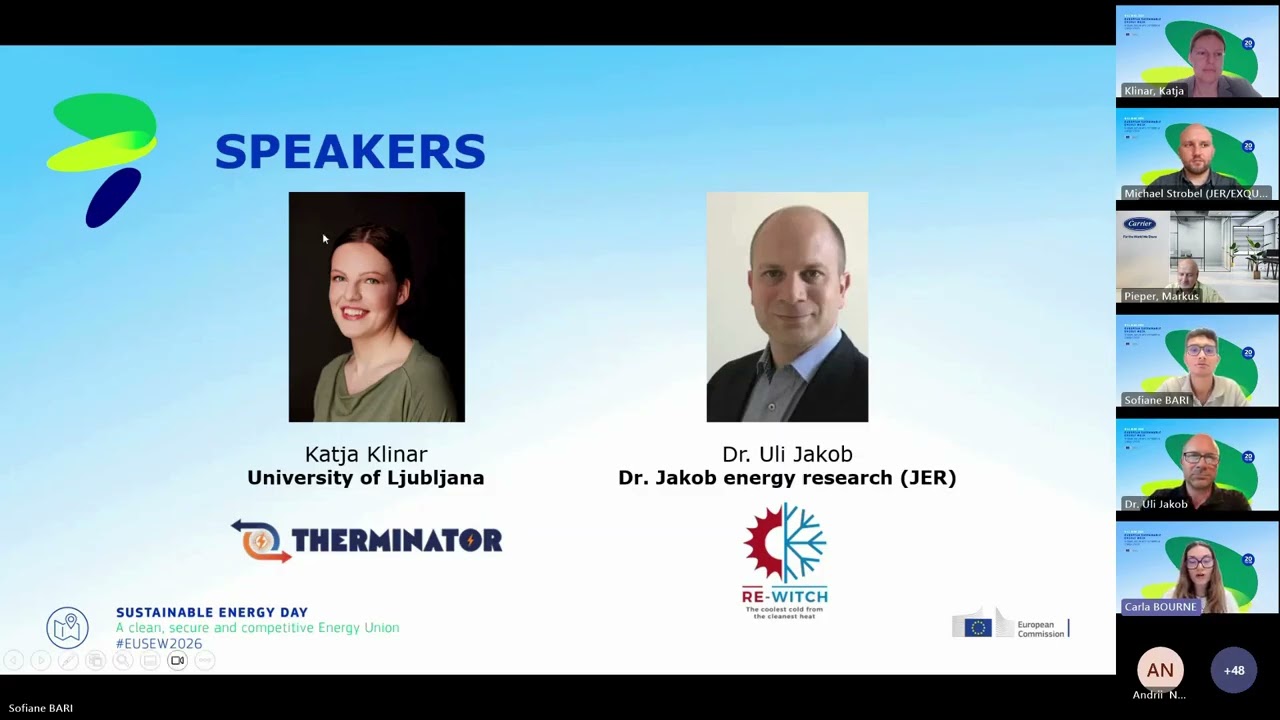
2COOL2WASTE Webinar: The future of energy efficiency
Keywords
Summary
150 words
Critical Evaluation
Value of the Information & Strength of the Argument
The webinar provides valuable insights into ongoing EU-funded research and pilot projects, offering concrete examples of technologies for heat recovery and electrification. The argumentation is based on the presenters’ expertise and project results, though it lacks quantitative data and rigorous comparisons. The discussions highlight practical challenges and potential solutions, making the content useful for stakeholders in the energy sector. However, the presentations are largely descriptive, with limited critical analysis or evidence of performance metrics.
Scientific Rigor, Source Quality, Title Accuracy
The webinar is organized by IEECP, a reputable organization, and features experts from various EU projects. The sources cited are primarily project websites and presentation materials, which are reliable but not peer-reviewed. The title accurately reflects the content, focusing on energy efficiency and heat recovery. The presentation is well-structured, but the lack of detailed references and data limits its scientific rigor. The Q&A session adds value by addressing audience questions, but the overall sourcing is moderate.
165 words
Title / Content Match
The title accurately reflects the content, which focuses on energy efficiency solutions including heat recovery and electrification.
Quality & Reliability
7/10
The webinar features experts from EU-funded projects presenting ongoing research and pilot implementations. The content is technically sound but lacks peer-reviewed references and detailed data. The presentation is part of an official EU initiative, adding credibility.
Key Moments
Markers derived by PSI from the transcript: the creator did not define chapters.
- Introduction and agenda overview
- Panel 1: Cooling without wasting energy - presentations on TERMINATOR and RE-WITCH projects
- Panel 2: Heat pumps - presentations on GEOSINE, SUSIET, and EXQUISITE projects
- Panel 3: Energy systems working together - buildings, grids, and flexibility
- Q&A and panel discussion
Cited Sources
- RE-WITCH project website — Mentioned as the project website for RE-WITCH, providing details on the project.
- IEECP website — Mentioned as the official website of the organizing institute.
- Webinar presentations PDF — Linked in the description as the source for the webinar presentations.
- RE-WITCH playlist — Linked as a playlist of related videos.
- IEECP topics page — Linked as a resource for research and projects.
- IEECP newsletter subscription — Linked for subscribing to the IEECP newsletter.
Concurring Sources
- RE-WITCH project website — Provides information on the RE-WITCH project, which aligns with the webinar's content.
- IEECP website — Official website of the organizing institute, supporting the credibility of the webinar.
Contribution & Novelties
The webinar provides an overview of several EU-funded projects focusing on heat recovery and electrification, highlighting innovative technologies such as thermoacoustic and pyroelectric energy conversion, hybrid chillers, and advanced heat pumps. It emphasizes the importance of integrating these technologies into existing industrial systems and the role of digital twins for system design. The session offers practical insights from pilot implementations, which is valuable for stakeholders seeking to decarbonize industrial processes.
Pour aller plus loin :
- Thermoacoustic heat engine — Overview of thermoacoustic technology.
- Pyroelectricity — Explanation of pyroelectric effect.
- Absorption refrigerator — Details on absorption chillers.
- Heat pump — General information on heat pumps.
- Pinch analysis — Method for heat integration.
111 words
Radar Profile
The radar profile shows balanced scores across all dimensions, with slightly higher scores in information quantity and quality, indicating a well-rounded presentation. The technical level is moderate, suitable for a general audience, while reliability is solid due to the involvement of EU projects.
💬 No comments were provided for analysis.