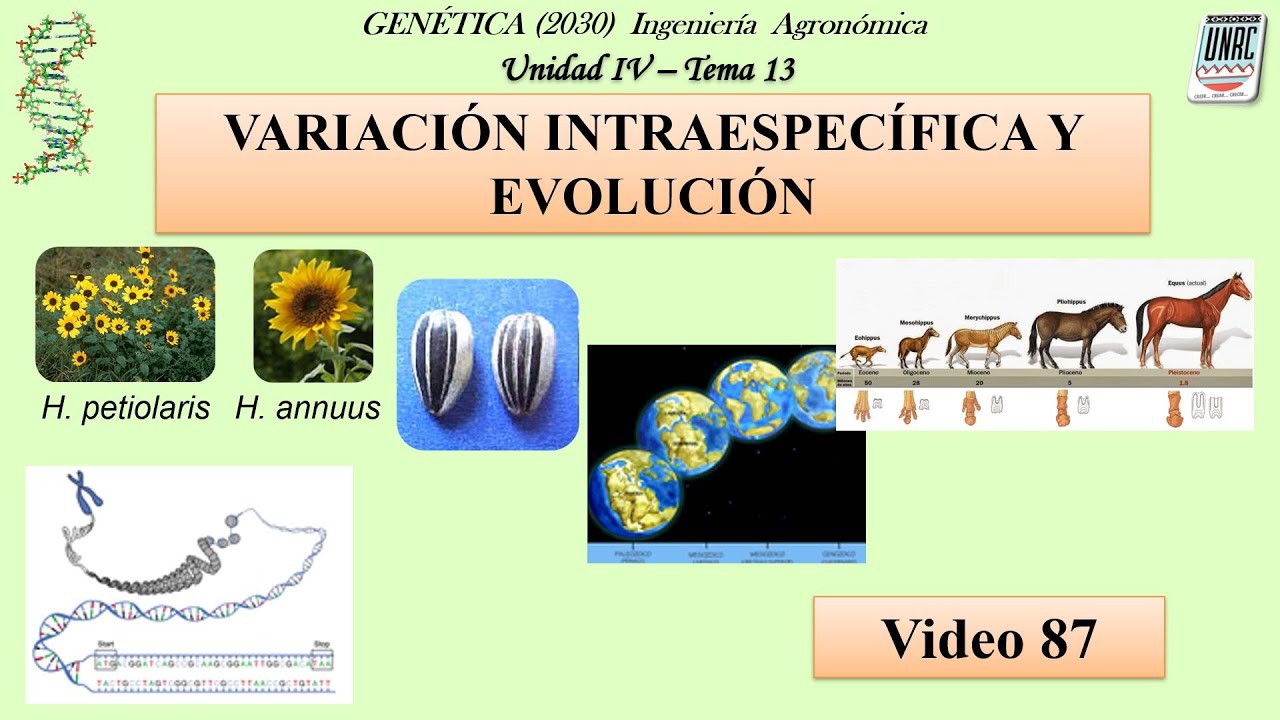
90 Tema 13 Variación Intraespecífica y Evolución. Genética (Cód. 2030)
Keywords
Summary
167 words
Critical Evaluation
Value of the Information & Strength of the Argument
The video provides a clear and structured explanation of microevolution and natural selection, using well-known examples to illustrate key concepts. The argumentation is logical, building from Darwin’s observations to the modern synthesis. However, it does not critically evaluate the evidence or discuss alternative viewpoints. The examples are classic and well-chosen, but the video lacks depth in explaining the genetic mechanisms behind the observed changes.
Scientific Rigor, Source Quality, Title Accuracy
The video is scientifically accurate but does not cite specific sources. It relies on established textbook knowledge, which is generally reliable. The title accurately reflects the content, and the video is well-organized. However, the lack of citations to primary literature reduces its scientific rigor. The video is suitable for an introductory genetics course.
132 words
Title / Content Match
The title accurately reflects the content, which covers intra-specific variation and evolution within the context of genetics.
Quality & Reliability
7/10
The video provides a solid overview of microevolution and natural selection, with classic examples (industrial melanism, insecticide resistance, antibiotic resistance). However, it lacks citations to primary literature and is based on established textbook knowledge. The presentation is clear but not deeply critical.
Key Moments
Markers derived by PSI from the transcript: the creator did not define chapters.
- Introduction to microevolution and natural selection
- Darwin's voyage and Galápagos Islands as a natural laboratory
- Premises of Darwin and Wallace's theory
- Weaknesses of Darwin's theory and Mendel's contribution
- Definition of microevolution and macroevolution
- Industrial melanism in peppered moths
- Insecticide resistance examples
- Antibiotic resistance in bacteria
- Experiments on genetic variability and evolutionary rate
Contribution & Novelties
The video provides a concise educational overview of microevolution, synthesizing classic examples and experiments. It is useful for students as an introduction to the topic. For further exploration, consider the following resources:
Pour aller plus loin :
- Industrial melanism — Background on the peppered moth example.
- Modern synthesis (20th century) — Explains the integration of genetics with evolution.
- Antibiotic resistance — Current relevance and mechanisms.
65 words
Radar Profile
The radar profile shows balanced scores across all dimensions, with slightly lower technical depth and source rigor. This indicates a solid introductory video that is reliable but not highly advanced.