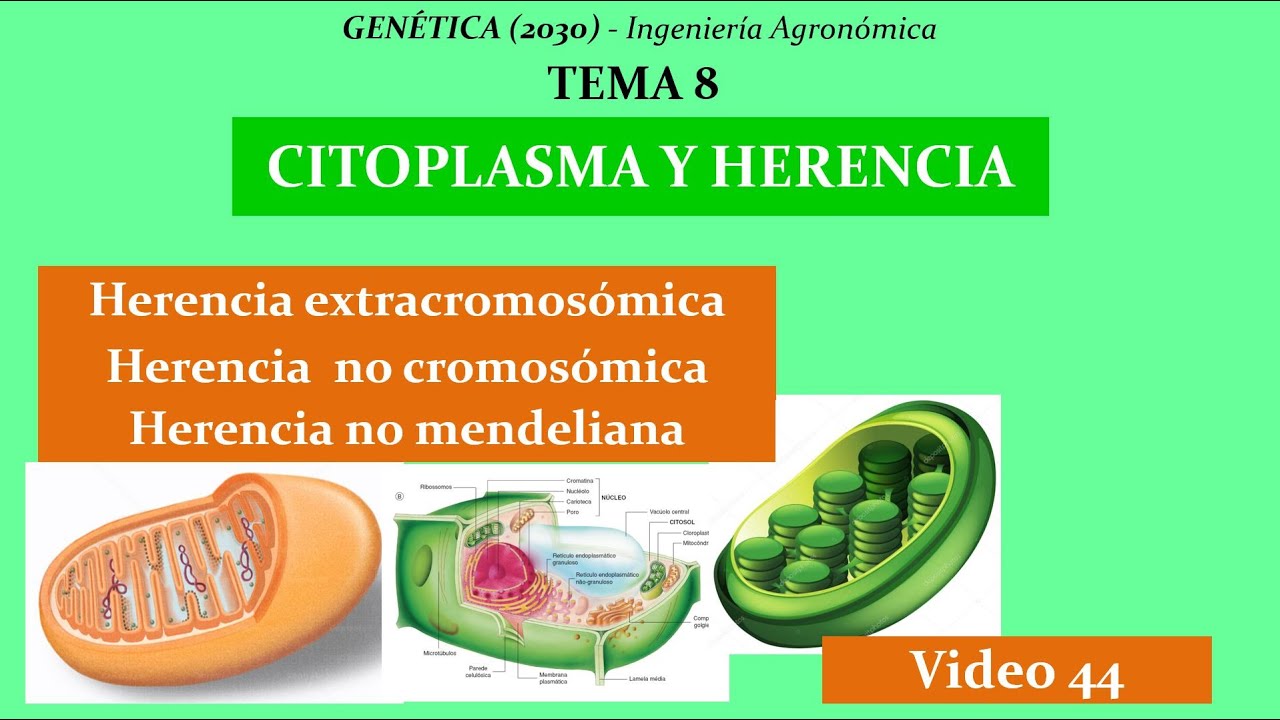
47 Tema 8. Citoplasma y Herencia. Mitocondrias. Genética (Cód. 2030)
Keywords
Summary
135 words
Critical Evaluation
Value of the Information & Strength of the Argument
The video provides a comprehensive overview of mitochondrial genetics, explaining complex concepts in a clear and logical manner. It effectively uses diagrams and examples to illustrate key points, such as the D-loop replication and the differences between animal and plant mitochondrial DNA. The argumentation is solid, based on established scientific knowledge, and the presentation is well-structured, building from basic structure to advanced genetic mechanisms. However, the video lacks critical analysis or discussion of controversies, and it does not cite specific studies or sources, which somewhat limits its value for advanced learners.
Scientific Rigor, Source Quality, Title Accuracy
The scientific rigor is adequate for an introductory tutorial, with accurate information and clear explanations. However, the video does not cite any sources or references, which is a significant weakness for a scientific content. The title accurately reflects the content, and the video is well-organized, following a logical progression. The lack of citations means that viewers cannot verify the information or explore further, which is a drawback for those seeking in-depth knowledge.
178 words
Title / Content Match
The title accurately reflects the content, which covers mitochondrial genetics and cytoplasmic inheritance.
Quality & Reliability
7/10
Content is scientifically accurate and well-structured, but lacks citations and references to primary sources. The presentation is clear and educational, with a focus on mitochondrial genetics.
Key Moments
Markers derived by PSI from the transcript: the creator did not define chapters.
- Introduction to mitochondria and their role in energy production.
- Explanation of oxidative phosphorylation and the Krebs cycle.
- Discussion of the endosymbiotic theory and the origin of mitochondria.
- Discovery of mitochondrial DNA in 1963 and its characteristics.
- Replication of mitochondrial DNA via the D-loop mechanism.
- Transcription and processing of mitochondrial RNA.
- Comparison of animal and plant mitochondrial genomes.
- Translation and the unique genetic code of mitochondria.
- Cooperation between nuclear and mitochondrial genomes.
- Examples of mitochondrial mutations and cytoplasmic inheritance.
Contribution & Novelties
The video provides a clear and structured introduction to mitochondrial genetics, suitable for students. It synthesizes information from various aspects of mitochondrial biology, including structure, function, replication, and inheritance. While it does not present new research, it effectively organizes existing knowledge for educational purposes.
Pour aller plus loin :
- Mitochondrial DNA — Overview of mitochondrial DNA structure and function.
- Endosymbiotic theory — Explanation of the origin of mitochondria.
- D-loop replication — Details on the replication mechanism of mitochondrial DNA.
79 words
Radar Profile
The radar profile shows a balanced distribution across all dimensions, with slightly higher scores in quantity and technical level, indicating a comprehensive and moderately technical tutorial. The lower score in reliability reflects the lack of citations, which is a common weakness in educational videos.