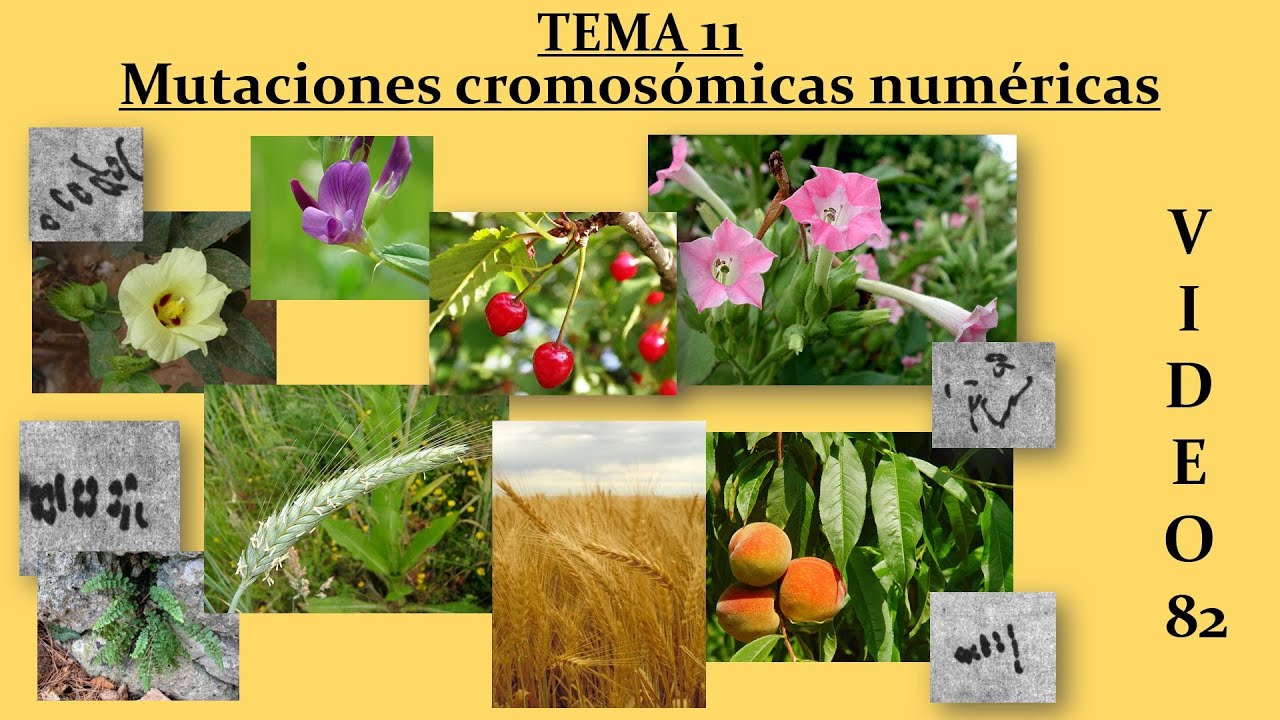
85 Tema 11Mutaciones Cromosómicas Numéricas. Genética (Cód. 2030)
Keywords
Summary
202 words
Critical Evaluation
Value of the Information & Strength of the Argument
The video provides a thorough, step-by-step explanation of how to solve genetics problems involving allopolyploidy. The instructor demonstrates a logical approach: first determining the basic chromosome number, then using meiotic pairing data to infer genomic relationships. The argumentation is solid, as each step is justified with reasoning based on chromosome behavior during meiosis. The value lies in its pedagogical clarity, making complex concepts accessible through worked examples. However, the video does not present new research or data; it is purely instructional, relying on established genetic principles.
Scientific Rigor, Source Quality, Title Accuracy
The scientific rigor is adequate for an educational tutorial. The content is based on well-established genetic concepts, and the explanations are accurate. However, no sources are cited, and the video does not reference any specific literature or studies. The title accurately reflects the content, which is a continuation of a series on chromosomal mutations. The lack of citations is a minor weakness, but the internal logic and consistency of the explanations compensate for it.
175 words
Title / Content Match
The title accurately reflects the content, which covers numerical chromosomal mutations (allopolyploidy) in genetics.
Quality & Reliability
7/10
The video is a didactic tutorial on numerical chromosomal mutations, specifically allopolyploidy, based on standard genetics concepts. The explanations are clear and methodical, but no external sources are cited, and the content is not peer-reviewed.
Key Moments
Markers derived by PSI from the transcript: the creator did not define chapters.
- Introduction to the video and Problem 5 about Nicotiana tabacum.
- Explanation of the genomic formula for Nicotiana tabacum as an allotetraploid.
- Deduction of the basic chromosome number x=12 and the diploid species' chromosome numbers.
- Proposed origin of Nicotiana tabacum via hybridization and chromosome doubling.
- Explanation of the ancestor deduction test: crossing allotetraploid with diploids and observing meiotic pairing.
- Synthesis of artificial allotetraploid and comparison with natural one.
- Introduction to Problem 6 about the Avena genus and meiotic data.
- Determination of basic number x=7 and analysis of crosses to deduce genomic constitutions.
- Completion of the table for Avena species and their genomic formulas.
- Assignment of Problem 7 as homework and conclusion.
Contribution & Novelties
The video’s contribution is primarily pedagogical, offering a clear methodology for solving problems on allopolyploidy. It does not present new scientific findings but reinforces understanding through worked examples. For further exploration, the following concepts are relevant:
Pour aller plus loin :
- Allopolyploidy — Provides background on polyploidy types.
- Nicotiana tabacum — Details on the species and its origin.
- Avena sativa — Information on cultivated oat and its polyploid nature.
69 words
Radar Profile
The radar profile shows high scores in information quantity and technical level, indicating a content-rich tutorial. Quality and reliability are slightly lower due to lack of citations, but still solid for educational purposes.