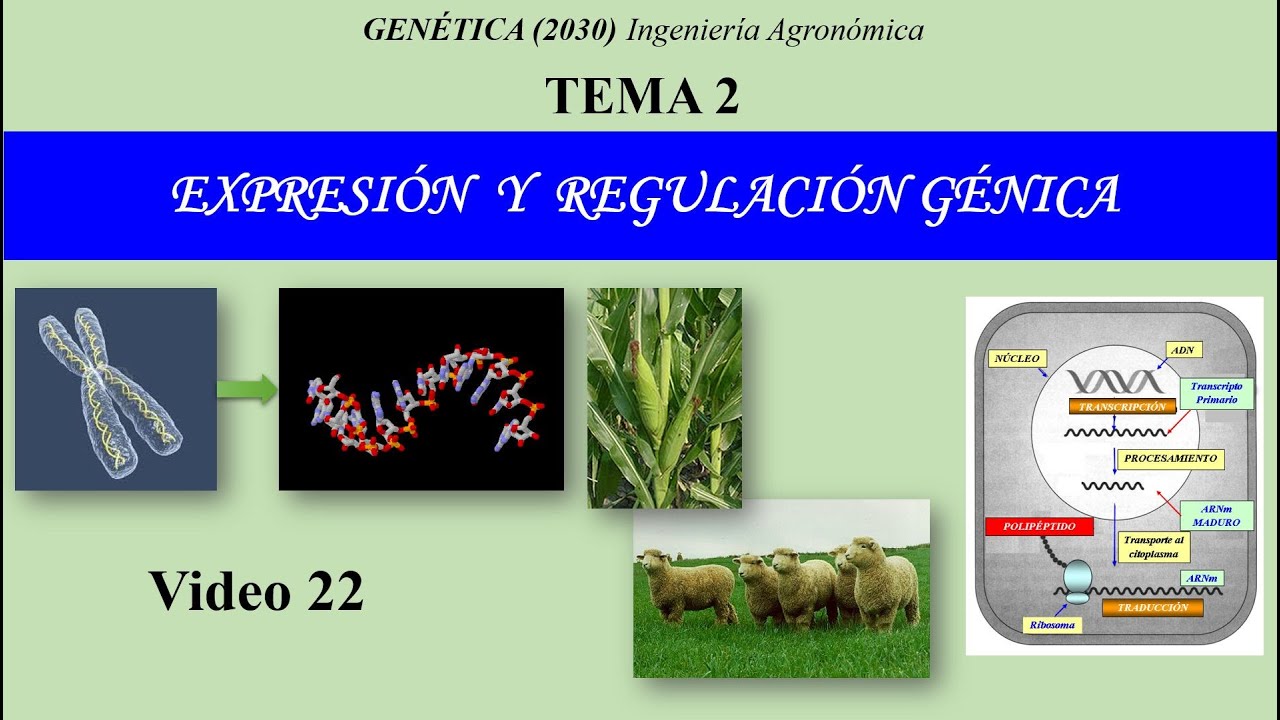
25 Tema 2. Expresión y Regulación Génica - Traducción - Genética (Cód. 2030)
Keywords
Summary
174 words
Critical Evaluation
Value of the Information & Strength of the Argument
The video provides a solid foundation in the molecular mechanisms of translation, explaining each step with clarity. The argumentation is logical, building from the genetic code to the detailed stages of translation. It uses diagrams and examples to illustrate concepts, enhancing understanding. The content is accurate and aligns with standard textbooks, making it a valuable educational resource.
Scientific Rigor, Source Quality, Title Accuracy
The video does not cite external sources, but the content is consistent with established molecular biology knowledge. The title accurately reflects the topic, and the content is presented in a structured, pedagogical manner. The lack of citations is typical for educational videos, but the accuracy of the information is high.
122 words
Title / Content Match
The title accurately reflects the content, which focuses on translation as part of gene expression and regulation.
Quality & Reliability
8/10
The video provides a clear and accurate explanation of the translation process in molecular biology, consistent with established scientific knowledge. It covers the genetic code, codon-anticodon interactions, initiation, elongation, and termination, as well as protein targeting. The content is presented in a structured manner suitable for educational purposes.
Key Moments
Markers derived by PSI from the transcript: the creator did not define chapters.
- Introduction to translation and the genetic code
- Explanation of the genetic code and codon table
- Overview of the components involved in protein synthesis
- Initiation stage of translation
- Elongation stage and peptide bond formation
- Termination stage and release factors
- Protein targeting and signal peptides
- Example of insulin synthesis as a secreted protein
Contribution & Novelties
The video offers a clear and concise explanation of translation, suitable for beginners. It effectively uses diagrams and examples to illustrate complex processes. For further exploration, consider the following resources:
- Translation (biology) - Wikipedia — Provides a comprehensive overview of the translation process.
- Genetic code - Wikipedia — Details the genetic code and its characteristics.
- Ribosome - Wikipedia — Explains the structure and function of ribosomes in protein synthesis.
69 words
Radar Profile
The radar chart shows high scores in quantity and quality of information, with a moderate technical level. This indicates a well-balanced educational video that provides substantial content without being overly technical.