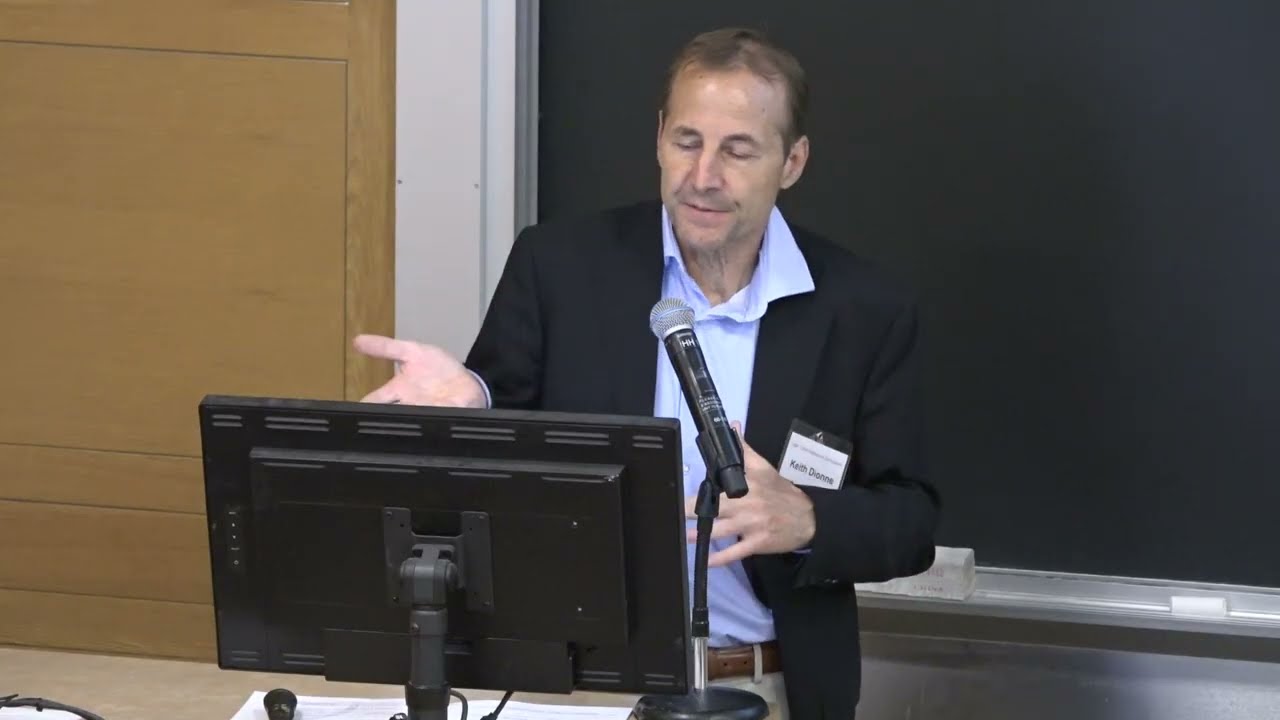
Clark Colton Symposium Accomplishments of Prof Colton
Keywords
Summary
154 words
Critical Evaluation
Value of the Information & Strength of the Argument
The video provides valuable insights into the research philosophy and achievements of a prominent biomedical engineer. The speaker effectively argues for Colton’s impact by presenting two detailed case studies (diabetes and atherosclerosis) that illustrate his systematic approach to problem-solving. The argumentation is persuasive, relying on concrete examples of research directions and outcomes, though it lacks quantitative data or peer-reviewed references. The value lies in the historical perspective and the demonstration of how engineering principles can be applied to medical challenges.
Scientific Rigor, Source Quality, Title Accuracy
The video is a personal account by a colleague, so scientific rigor is moderate. No formal sources are cited, but the content is based on the speaker’s direct involvement and knowledge of Colton’s work. The title accurately reflects the content, which is a tribute to Colton’s accomplishments. The description is minimal, providing only the event and date. The video does not include external references or links, so the quality of sources is limited to the speaker’s testimony.
172 words
Title / Content Match
The title accurately reflects the content, which focuses on the accomplishments of Prof. Clark Colton as presented at a symposium.
Quality & Reliability
7/10
The video is a symposium introduction by a colleague, providing an overview of Prof. Colton's research contributions. It is based on personal knowledge and experience, with no formal citations or peer-reviewed sources. The content is credible but anecdotal, and the technical depth is moderate.
Key Moments
Markers derived by PSI from the transcript: the creator did not define chapters.
- Introduction of the symposium and Prof. Clark Colton
- Colton's background and shift from aerospace to biomedical engineering
- Overview of research areas: diabetes, stem cell therapy, etc.
- First approach to diabetes: electromechanical systems and glucose sensors
- Second approach: islet transplantation with immunoisolation membranes
- Encapsulation and oxygen diffusion challenges
- Further approaches: microcapsules, electrochemical oxygen generators, and beta cell optimization
- Atherosclerosis research and comprehensive theory of plaque formation
- Impact on students and conclusion
Contribution & Novelties
The video provides a unique retrospective on Prof. Colton’s research, highlighting his systematic approach to biomedical problems. It offers insights into the evolution of diabetes treatments and atherosclerosis research, emphasizing the importance of interdisciplinary thinking. The main novelty is the personal perspective on how engineering principles were applied to medical challenges over decades.
Pour aller plus loin :
- Islet transplantation — Background on the technique and challenges.
- Atherosclerosis — Overview of the disease and mechanisms.
- Biomedical engineering — Field overview and applications.
82 words
Radar Profile
The radar profile shows high scores in quantity of information and reliability, reflecting the speaker's expertise and detailed overview. The technical level is moderate, suitable for a general audience, while the quality of information is consistent with a personal account. Overall, the video is informative but lacks formal citations.