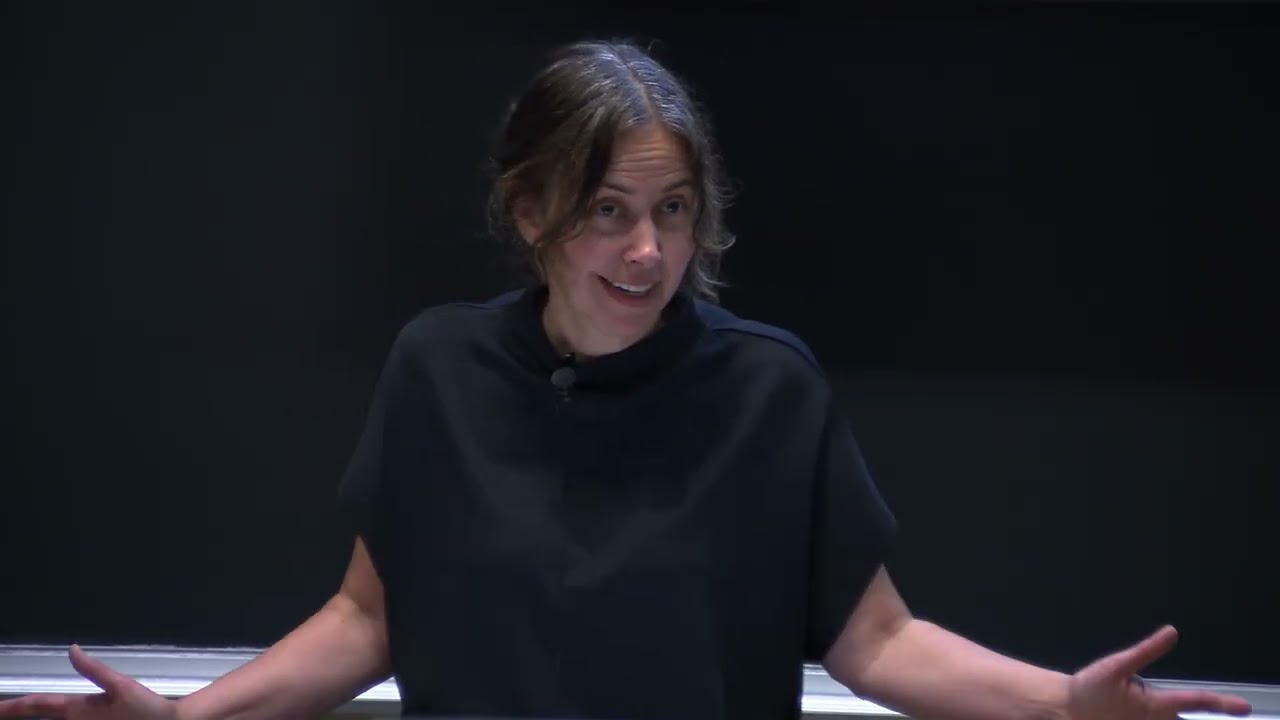
MIT ChemE: Alan S. Michaels Distinguished Lectureship in Medical and Biological Engineering
Keywords
Summary
156 words
Critical Evaluation
Value of the Information & Strength of the Argument
The lecture provides valuable insights into the application of synthetic biology to address real-world pharmaceutical supply chain issues. Smolke’s argumentation is solid, grounded in her extensive research and practical experience. She effectively illustrates the limitations of current production methods and the potential of yeast-based biosynthesis. The narrative is compelling, but the talk is more of an overview than a detailed technical exposition, which may limit its value for specialists seeking in-depth data.
Scientific Rigor, Source Quality, Title Accuracy
The lecture demonstrates scientific rigor through references to published work, such as the 2015 Nature paper and the 2020 paper on tropane alkaloids. However, specific citations are not provided in the transcript, and the talk relies on the speaker’s authority. The title accurately reflects the content, focusing on medical and biological engineering. The lecture is well-structured and aligns with the prestigious lectureship’s purpose.
150 words
Title / Content Match
The title accurately reflects the lecture's focus on medical and biological engineering, as the speaker discusses the application of synthetic biology to pharmaceutical supply chains.
Quality & Reliability
8/10
The lecture is delivered by a recognized expert in synthetic biology and metabolic engineering, with a strong academic and industrial track record. The content is based on peer-reviewed research and practical experience, but is presented as a personal narrative and may lack detailed citations in the talk itself.
Key Moments
Markers derived by PSI from the transcript: the creator did not define chapters.
- Introduction of the Alan S. Michaels Lectureship and its history.
- Introduction of Christina Smolke and her background.
- Discussion of the problem of pharmaceutical supply chains and essential medicines.
- Example of poppy field production and its inefficiencies.
- Introduction of the idea of using yeast as a production host.
- Overview of 20 years of academic research and key publications.
- Details of the 2015 paper on morphinan alkaloid production in yeast.
- Discussion of spatial engineering and modularization in tropane alkaloid pathway.
- Transition to Antheia and commercialization efforts.
- Conclusion and Q&A session.
Cited Sources
- Nature 2020 paper on tropane alkaloids — Referenced as a key publication from the academic lab.
- 2015 paper on morphinan alkaloids — Highlighted as a milestone in the journey.
Concurring Sources
- WHO Model List of Essential Medicines — Referenced as the basis for essential medicine lists.
Contribution & Novelties
The lecture provides a unique perspective on the intersection of chemical engineering and synthetic biology, emphasizing the importance of spatial organization and modularization in metabolic engineering. It offers a roadmap for translating academic research into industrial applications, addressing critical supply chain vulnerabilities.
Pour aller plus loin :
- Metabolic engineering — Overview of the field.
- Synthetic biology — Foundational concepts.
- Artemisinin production — Early example of metabolic engineering for pharmaceuticals.
69 words
Radar Profile
The radar profile shows high scores in information quantity, quality, and reliability, with a slightly lower technical level, indicating a lecture that is informative and credible but accessible to a broader audience.
💬 No comments were provided for analysis.