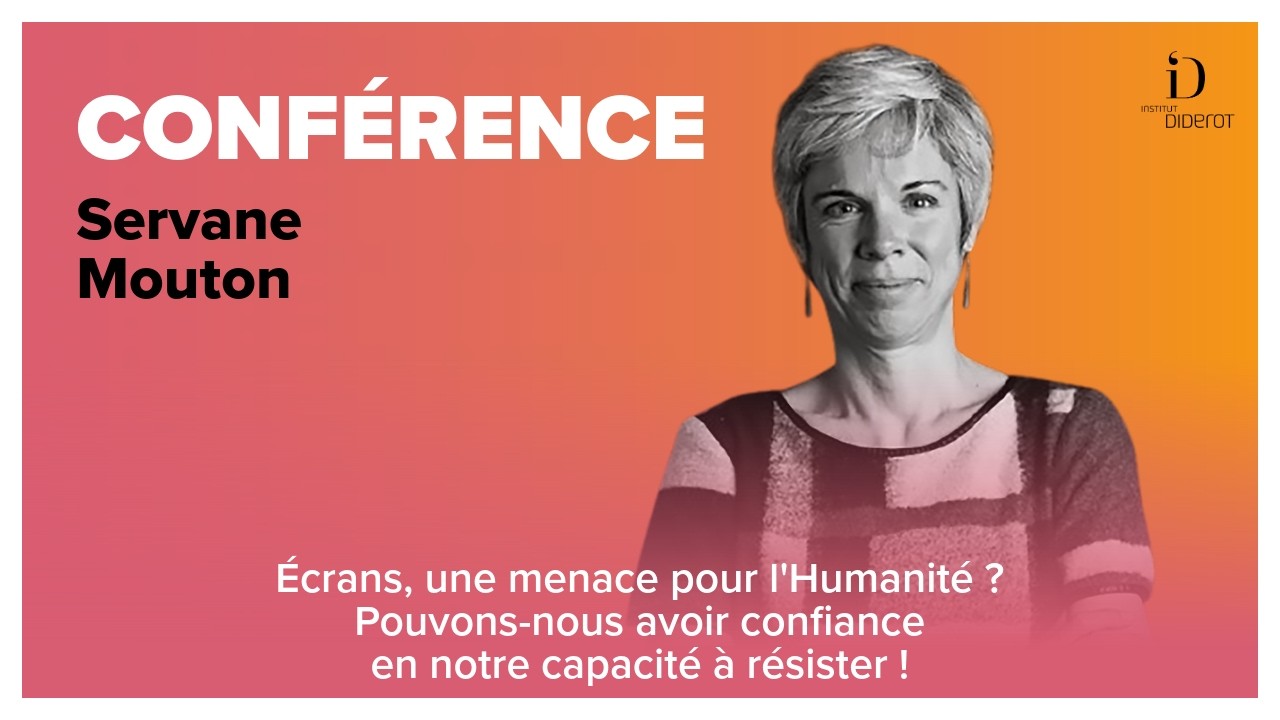
Écrans, une menace pour l'Humanité ?
Keywords
Summary
145 words
Critical Evaluation
Value of the Information & Strength of the Argument
The talk provides valuable information by synthesizing scientific evidence on the health effects of screens, particularly for children. Mouton’s argumentation is structured and evidence-based, citing specific studies and reports (e.g., ANSES, INSV) and explaining mechanisms like blue light and myopia. She effectively counters the notion that all screen use is benign, distinguishing between content types but emphasizing that the physical act of screen use has inherent risks. However, some claims are presented without detailed citations, and the talk is more of an expert opinion than a systematic review.
Scientific Rigor, Source Quality, Title Accuracy
The speaker demonstrates scientific rigor by referencing authoritative sources such as ANSES reports and the ‘Enfants et écrans’ commission. She acknowledges limitations of self-reported data and the lack of long-term human studies on blue light toxicity. The title is somewhat alarmist but aligns with the content’s critical stance. The talk is well-structured, but the lack of specific citations for some statistics reduces its scholarly precision.
168 words
Title / Content Match
The title is somewhat sensational but accurately reflects the content's focus on the potential harms of screens to human health and development.
Quality & Reliability
8/10
The speaker is a neurologist with relevant expertise, and the talk references scientific studies and reports. However, specific citations are not always provided, and some claims are based on general consensus.
Key Moments
Markers derived by PSI from the transcript: the creator did not define chapters.
- Introduction and context: the speaker is introduced by the Institut Diderot, and the topic of screens as a threat to humanity is framed.
- Statistics on screen time: children aged 2 spend 1h/day, 10-year-olds 2h30, and adolescents up to 5h. Age of first smartphone is 10-11 for 50%.
- Social media usage: 67% of primary school children are on social networks despite age limits. Early exposure is increasing.
- Physical health impacts: myopia epidemic linked to screen use, blue light, and reduced outdoor time. Eye development until age 15.
- Sleep disruption: screens affect sleep quantity and quality, leading to cognitive issues and potential misdiagnosis of ADHD.
- Sedentary behavior: nearly 50% of children are at high health risk due to inactivity and screen time, leading to early cardiovascular diseases.
- Cognitive and social impacts: attention problems, language delays, and social skill deficits. The speaker discusses the role of screens in neurodevelopment.
- Recommendations: limit screen time for young children, avoid screens before age 6, and promote outdoor activities. The speaker calls for collective action.
- Conclusion: the speaker emphasizes the urgency of addressing this public health issue and the need for societal changes.
Cited Sources
- Enfants et écrans : à la recherche du temps perdu — Commission report on the impact of screens on children, mentioned in the introduction.
- ANSES report on sedentary behavior — Referenced when discussing the high health risk due to sedentary behavior.
- INSV sleep surveys — Mentioned in the context of sleep studies and screen use.
Concurring Sources
- Michel Desmurget, 'Faites les lire' — Mentioned in the introduction as a previous speaker on the negative effects of digital media on reading and cognition.
- Raphaël Gaillard, 'L'homme augmenté' — Mentioned in the introduction as a previous speaker on the topic of human augmentation and cultural decline.
Contribution & Novelties
The talk provides a comprehensive synthesis of current scientific knowledge on the health impacts of screens, emphasizing the vulnerability of children. It highlights the need for precautionary measures and public health interventions. The speaker’s expertise adds credibility, and she offers practical recommendations.
Pour aller plus loin :
- Myopia and screen use — Overview of myopia and its environmental risk factors.
- Blue light and eye health — Explanation of blue light and its potential effects on the retina.
- Sleep hygiene in children — Guidelines for healthy sleep habits in children.
89 words
Radar Profile
The radar profile shows high scores in information quantity, quality, and reliability, with a slightly lower technical level, indicating a well-informed but accessible presentation.