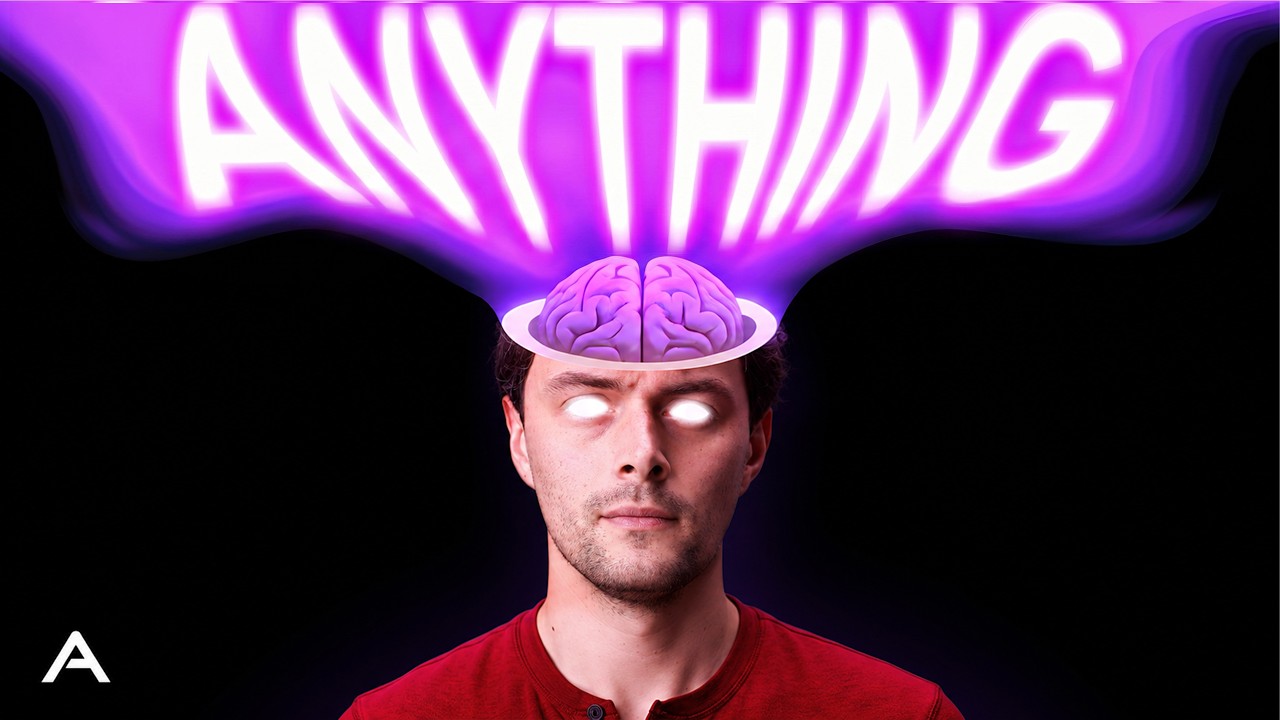
You Don't Know Anything About Consciousness
Keywords
Summary
134 words
Critical Evaluation
Value of the Information & Strength of the Argument
The video offers substantial value by synthesizing complex philosophical and neuroscientific ideas into an engaging narrative. It presents multiple perspectives, including dualism, materialism, and panpsychism, and supports arguments with expert interviews and illustrative examples. The argumentation is generally solid, but it occasionally oversimplifies nuanced debates and does not critically evaluate the theories presented, sometimes presenting speculative ideas as equally valid as established science.
Scientific Rigor, Source Quality, Title Accuracy
The scientific rigor is moderate. The video cites experts and references theories, but it does not provide detailed citations or links to primary sources. The title is somewhat sensational but aligns with the content’s exploration of the unknown. The description includes links to the channel’s contact page, but no direct references to academic papers. The content is well-produced but could benefit from more rigorous sourcing.
143 words
Title / Content Match
The title is catchy and accurately reflects the video's core message that our understanding of consciousness is limited, though it slightly overstates the claim.
Quality & Reliability
7/10
The video presents a well-structured overview of consciousness, featuring interviews with recognized experts (Michael Graziano, Thomas Metzinger) and referencing established theories (attention schema theory, self-model theory). However, it blends scientific content with speculative and spiritual elements, and lacks detailed citations for many claims.
Key Moments
Markers derived by PSI from the transcript: the creator did not define chapters.
- Introduction: The hard problem of consciousness is presented.
- Descartes' 'I think, therefore I am' and the mind-body problem.
- Discussion on animal consciousness and degrees of consciousness.
- Interview with Michael Graziano on attention schema theory.
- Thomas Metzinger on the self as an illusion and the autobiographical self.
- Exploration of qualia and subjective experience, including experiments.
- The possibility that consciousness is fundamental to reality.
Cited Sources
- Contact page of Underknown (Aperture's parent company) — Provided in the video description as a contact point for questions or concerns.
Concurring Sources
- Attention schema theory — The theory is presented as a leading scientific explanation of consciousness.
- Hard problem of consciousness — The central problem discussed in the video.
Dissenting Sources
- Panpsychism — The video suggests consciousness might be fundamental to reality, which aligns with panpsychism, a view not universally accepted in mainstream science.
Contribution & Novelties
The video provides a comprehensive and accessible overview of consciousness, synthesizing historical and contemporary theories. Its main contribution is the clear explanation of attention schema theory and the self-model theory, making complex ideas understandable to a general audience. It also highlights the subjective nature of qualia through engaging experiments.
Pour aller plus loin :
- Attention schema theory — A detailed explanation of the theory proposed by Michael Graziano.
- Hard problem of consciousness — The central philosophical issue discussed in the video.
- Thomas Metzinger’s Being No One — The book referenced by Metzinger, exploring the self as an illusion.
98 words
Radar Profile
The radar profile shows high scores in quantity of information and technical level, indicating a dense and moderately technical content. The quality and reliability scores are slightly lower, reflecting the blend of scientific and speculative elements.
💬 Positif. Sur les 30 commentaires analysés, la majorité exprime une admiration pour la profondeur du contenu et son caractère stimulant, avec quelques réflexions personnelles sur la conscience.