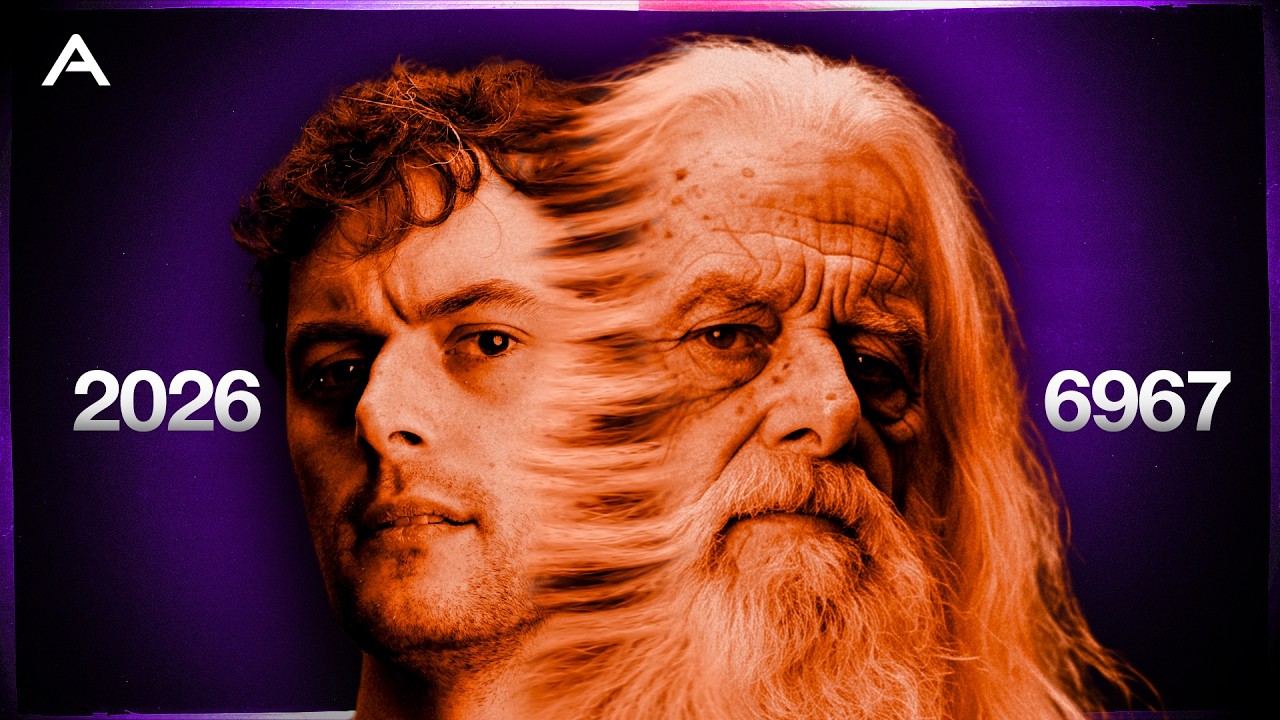
The horrifying realities of Eternity
Keywords
Summary
126 words
Critical Evaluation
Value of the Information & Strength of the Argument
The video provides a valuable exploration of the concept of eternity, synthesizing ideas from multiple philosophers and presenting them in an accessible way. The argumentation is coherent and builds logically from the initial thought experiment to broader societal and personal implications. However, it is primarily opinion-based, and the reasoning is not always rigorous. For example, the claim about the brain’s memory limit is presented without citation, and the discussion of societal changes is speculative. The video does not engage with counterarguments in depth, but it does acknowledge the subjectivity of the experience of immortality.
Scientific Rigor, Source Quality, Title Accuracy
The video references several classical philosophical works and thinkers, including Bernard Williams, Nietzsche, Epicurus, Schopenhauer, and Thomas Aquinas, as well as the Bhagavad Gita. These references are used appropriately to support the arguments. However, the video does not provide citations for scientific claims, such as the brain’s memory limit, and the sources are not listed in the description. The title accurately reflects the content, which focuses on the negative aspects of eternity. The video is well-structured and the arguments are presented clearly, but the lack of verifiable sources for some claims reduces its scientific rigor.
204 words
Title / Content Match
The title accurately reflects the content, which explores the negative aspects of eternal life through thought experiments and philosophical arguments.
Quality & Reliability
7/10
The video presents a well-structured philosophical argument, referencing several classical thinkers (Bernard Williams, Nietzsche, Epicurus, Schopenhauer, Thomas Aquinas) and the Bhagavad Gita. However, it is primarily an opinion piece with limited empirical evidence, and some scientific claims (e.g., brain memory limit) are not sourced.
Chapters
Cited Sources
- The Makropulos Case: Reflections on the Tedium of Immortality — Bernard Williams's essay that introduces the eternal cocktail party thought experiment.
- The Bhagavad Gita — Referenced for its caution against lamenting the unavoidable and the spiritual disaster of eternal life.
- Nietzsche's philosophy — Referenced for the idea that eternal life would be a blessing or punishment depending on one's attitude.
- Epicurus — Referenced for the idea that death saves us from an eternity of pain and suffering.
- Arthur Schopenhauer — Referenced for the idea that the will holds us in suffering until death.
- Thomas Aquinas — Referenced for the idea that finite creatures cannot fully comprehend the infinite.
Concurring Sources
- The Makropulos Case: Reflections on the Tedium of Immortality — Bernard Williams's essay aligns with the video's central argument that immortality would lead to boredom.
- Nietzsche's philosophy — Nietzsche's idea that eternal life could be a blessing or punishment depending on one's attitude is echoed in the video.
- Epicurus — Epicurus's view that death is not to be feared aligns with the video's conclusion that death gives life meaning.
Dissenting Sources
- Transhumanist perspectives on immortality — Some transhumanists argue that immortality could be desirable if we can adapt psychologically and technologically, which contradicts the video's pessimistic view.
Contribution & Novelties
The video offers a comprehensive and engaging synthesis of philosophical arguments against immortality, making them accessible to a broad audience. It connects the concept of the hedonic treadmill to the experience of eternity, and it vividly describes the eventual heat death of the universe as the ultimate horror for an immortal being. The video does not present new research but rather a creative compilation of existing ideas.
Pour aller plus loin :
- Bernard Williams - The Makropulos Case — The original essay that inspired the video’s central thought experiment.
- Hedonic treadmill — Psychological concept that explains why happiness tends to return to a baseline despite positive changes.
- Heat death of the universe — The eventual state of maximum entropy, which the video describes as the final fate of an immortal.
130 words
Radar Profile
The radar profile shows moderate to high scores across all dimensions, with the lowest being technical level and reliability, reflecting the video's philosophical and opinion-based nature. The video is strong in providing information and argumentation but lacks empirical rigor.
💬 The comments are predominantly positive, with viewers expressing appreciation for the video's thought-provoking content and engaging presentation. Many share personal reflections on mortality and immortality, indicating a deep resonance with the topic.