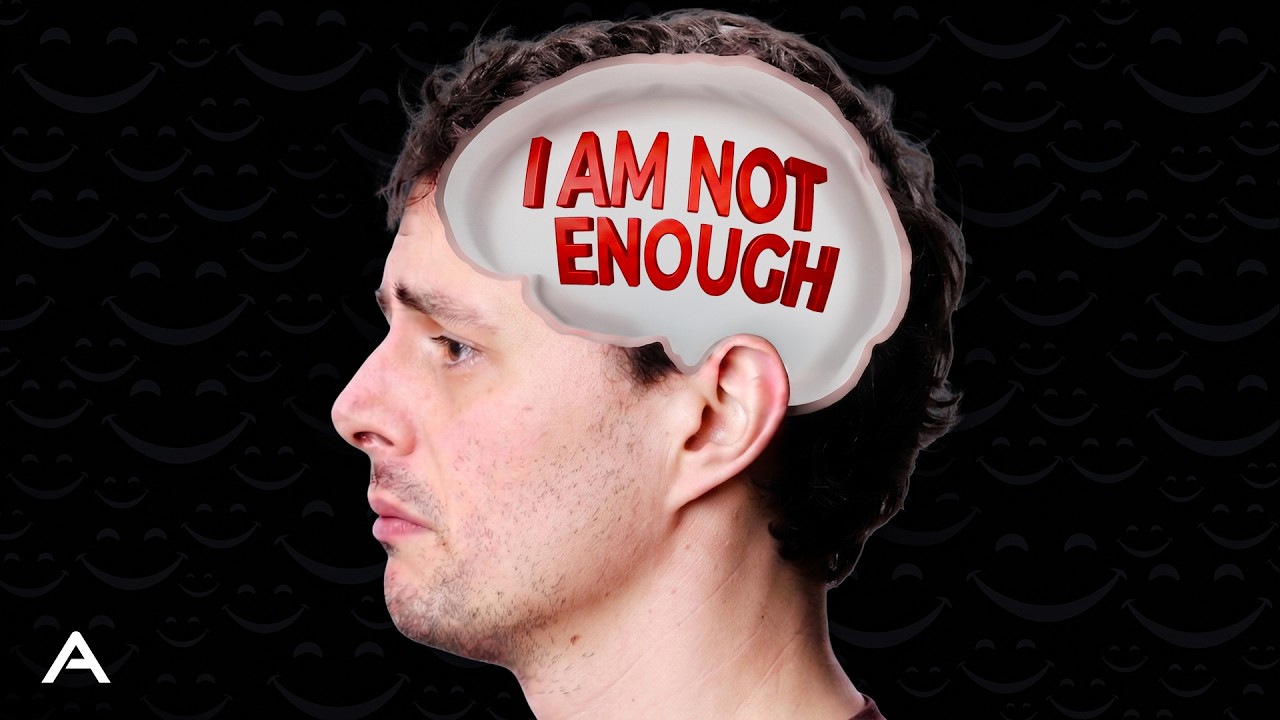
The Psychology of People Who Never Feel Good Enough
Keywords
Summary
158 words
Critical Evaluation
Value of the Information & Strength of the Argument
The video provides a valuable synthesis of psychological concepts, making complex ideas accessible. It effectively uses historical examples (Einstein, Steinbeck) and a clear narrative structure to illustrate the impostor phenomenon. The argumentation is coherent, moving from the definition of the problem to its origins and potential solutions. However, it relies heavily on anecdotal evidence and lacks direct citations to scientific studies, which weakens its empirical foundation. The presentation is engaging and persuasive, but the lack of rigorous sourcing limits its scientific value.
Scientific Rigor, Source Quality, Title Accuracy
The video demonstrates moderate scientific rigor. It correctly attributes the impostor phenomenon to Clance and Imes and references Carl Rogers’ work, but it does not provide specific citations or links to these sources. The inclusion of Michael Young’s satirical origin of ‘meritocracy’ is accurate and adds depth. The title accurately reflects the content, and the video’s structure with chapters aids comprehension. However, the absence of direct references and the reliance on popularized accounts reduce its academic credibility. The description includes a sponsor link, but this does not affect the scientific content.
188 words
Title / Content Match
The title accurately reflects the video's focus on the psychology of chronic self-doubt and impostor syndrome.
Quality & Reliability
7/10
The video provides a well-structured synthesis of established psychological concepts (impostor phenomenon, unconditional positive regard, conditions of worth) and references historical figures (Einstein, Steinbeck) and researchers (Clance, Imes, Rogers, Young). However, it lacks direct citations to primary sources and relies on anecdotal evidence, limiting its academic rigor.
Chapters
Cited Sources
- Incogni - Data Removal Service — Sponsor segment; not a scientific source.
Concurring Sources
- Clance & Imes (1978) - The Impostor Phenomenon in High Achieving Women — Original study defining the impostor phenomenon.
- Rogers, C. (1957) - The Necessary and Sufficient Conditions of Therapeutic Personality Change — Foundational work on unconditional positive regard.
Dissenting Sources
- Critique of the impostor phenomenon as a construct — Some researchers argue that impostor syndrome is not a distinct disorder but a normal response to certain environments, questioning its prevalence and diagnostic validity.
Contribution & Novelties
The video offers a compelling narrative that connects the impostor phenomenon to childhood conditioning and societal meritocracy, providing a holistic view of chronic self-doubt. It popularizes academic concepts and makes them relatable through historical examples. The suggestion to shift from self-esteem to self-compassion, referencing Kristin Neff’s work, is a valuable takeaway.
Pour aller plus loin :
- Impostor phenomenon - Wikipedia — Overview of the concept and research.
- Unconditional positive regard - Wikipedia — Carl Rogers’ concept.
- Self-compassion - Kristin Neff’s website — Research and resources on self-compassion.
87 words
Radar Profile
The radar profile shows high scores in information quantity and quality, reflecting the video's comprehensive coverage of the topic. The technical level is moderate, indicating accessibility to a general audience. The overall reliability is decent but limited by the lack of direct citations.
💬 No comments provided.