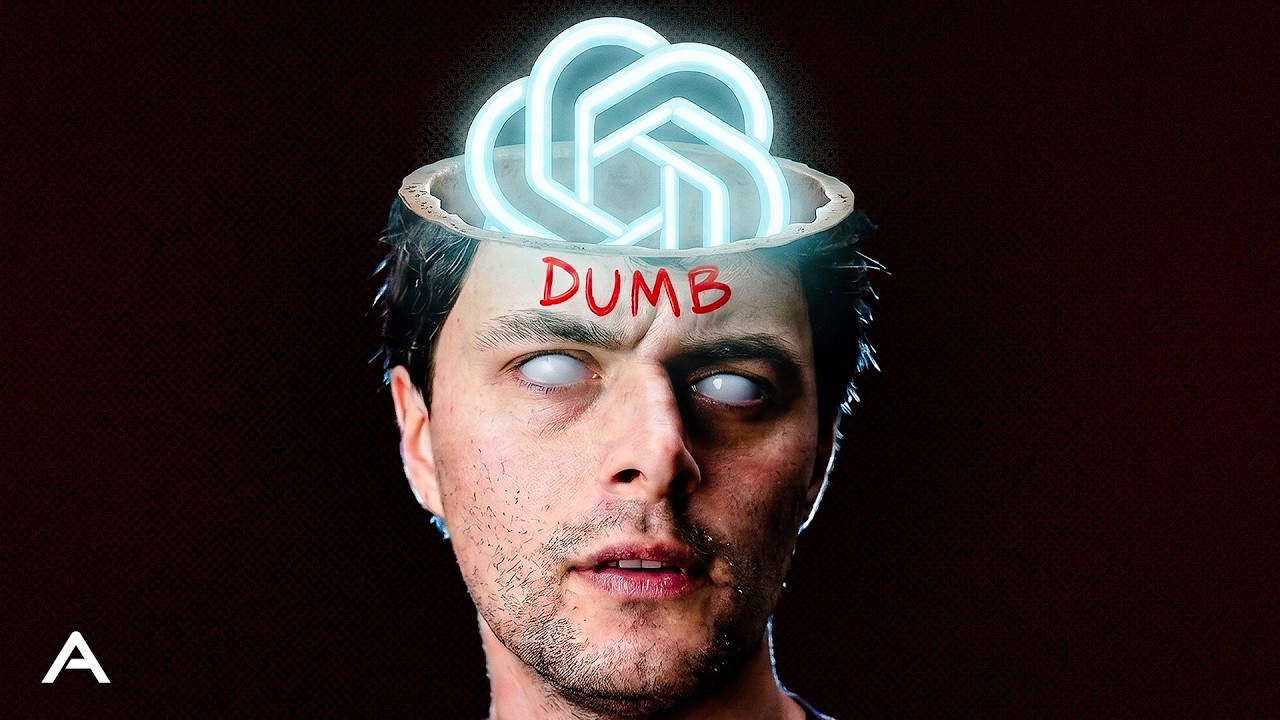
Critical Thinking is Dying and Nobody Noticed
Keywords
Summary
184 words
Critical Evaluation
Value of the Information & Strength of the Argument
The video provides a compelling and well-structured argument about the erosion of critical thinking. It synthesizes various sources, including academic studies and expert opinions, to support its claims. The argumentation is logical and persuasive, though it relies on anecdotal evidence and personal interpretation at times. The value lies in its accessible presentation of complex ideas, making it a useful starting point for reflection.
Scientific Rigor, Source Quality, Title Accuracy
The video cites several sources, including an MIT study on LLM use in education, a UNESCO survey on content creators, and references to experts like John Dewey and Gloria Mark. However, it does not provide direct links or detailed citations, which limits verifiability. The title accurately reflects the content, and the video stays on topic throughout.
134 words
Title / Content Match
The title accurately reflects the content, which explores the decline of critical thinking due to technology and societal pressures.
Quality & Reliability
7/10
The video presents a coherent argument with references to studies (MIT, UNESCO) and experts (John Dewey, Gloria Mark), but relies heavily on anecdotal evidence and personal interpretation. It is a philosophical essay rather than a rigorous scientific review.
Key Moments
Markers derived by PSI from the transcript: the creator did not define chapters.
- Introduction: The death of critical thinking and the need to save our minds.
- Discussion of groupthink and historical examples like Nazi Germany.
- Cognitive offloading and the impact of tools like GPS and calculators.
- The role of AI in education and the MIT study on LLM use.
- Work slop and the uncritical adoption of AI in the workplace.
- Social media, echo chambers, and confirmation bias.
- Therapy speak and its impact on critical thinking.
- Signs of hope: Gen Z returning to cinema and longer content.
- Advice from Dr. Gloria Mark on managing screen time.
- Conclusion: The Buddhist parable of the poisoned arrow and taking action.
Cited Sources
- Underknown Contact — Contact page for the channel, mentioned in the description.
Concurring Sources
- MIT Study on LLM Use in Education — Referenced in the video, but no direct link provided.
Dissenting Sources
- Sam Altman's view on AI intelligence as a resource — The video quotes Sam Altman suggesting intelligence will be a paid resource, which is a controversial claim not universally accepted.
Contribution & Novelties
The video offers a comprehensive and accessible synthesis of current concerns about the decline of critical thinking, linking groupthink, AI, and social media. It provides a philosophical perspective that is often missing in technical discussions. The practical advice from Dr. Gloria Mark adds a actionable dimension.
Pour aller plus loin :
- Critical thinking - Wikipedia — Overview of critical thinking concepts.
- Groupthink - Wikipedia — Definition and examples of groupthink.
- Cognitive offloading - Wikipedia — Explanation of cognitive offloading and its effects.
82 words
Radar Profile
The radar profile shows high scores in quantity and quality of information, moderate technical level, and lower reliability due to lack of direct citations. This suggests a well-argued but not rigorously sourced video.
💬 Positif. Sur les 30 commentaires analysés, les spectateurs expriment un accord général avec le message de la vidéo, partageant des expériences personnelles et des préoccupations sur le déclin de la pensée critique.