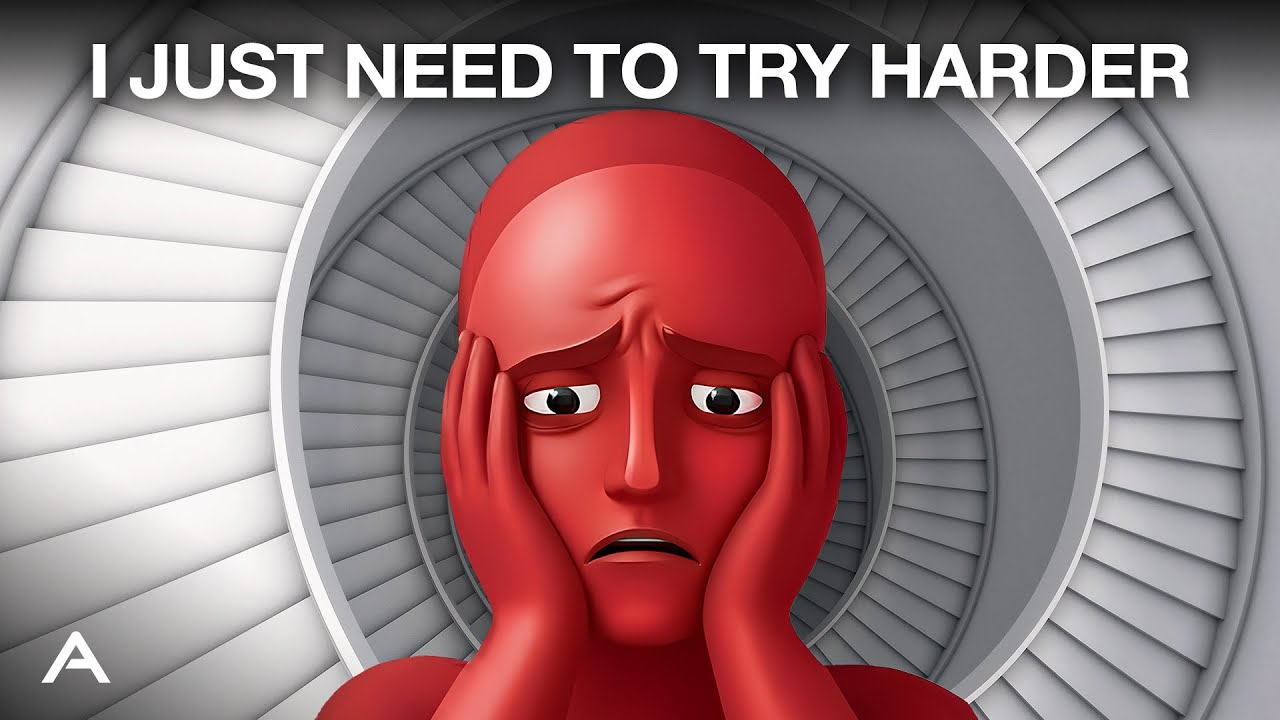
Self Improvement Is Ruining Modern Society
Keywords
Summary
78 words
Critical Evaluation
Value of the Information & Strength of the Argument
The video provides a compelling argument against the self-improvement industry, supported by statistics on market size and consumer spending. It effectively uses historical parallels and psychological studies to illustrate the negative effects. However, the argumentation is one-sided and lacks counterpoints, and some claims are presented without direct evidence. The video’s strength lies in its critical perspective, but it could benefit from more balanced analysis.
Scientific Rigor, Source Quality, Title Accuracy
The video cites some statistics and mentions a 2016 study, but does not provide specific references or links to these sources. The title is appropriate and matches the content. The video does not include interviews or expert opinions, which limits its scientific rigor. The description includes a link to contact the channel, but no additional sources are provided.
137 words
Title / Content Match
The title accurately reflects the content, which critically examines the negative impacts of the self-improvement industry on modern society.
Quality & Reliability
6/10
The video provides a critical analysis of the self-improvement industry, citing some statistics and historical context, but lacks direct citations to scientific studies or expert interviews. The argument is coherent but relies on general observations and a few studies without detailed references.
Key Moments
Markers derived by PSI from the transcript: the creator did not define chapters.
- Introduction to the self-improvement industry's promises and its grip on society.
- Discussion of the industry's size and the psychological impact of constant self-improvement.
- Historical context: Dale Carnegie and Napoleon Hill, and the rise of self-help during crises.
- The role of social media and comparison culture in perpetuating self-improvement.
- Critique of toxic positivity and the pressure to always be improving.
- The financial cost of self-improvement and its alignment with capitalism.
- The 2016 study on self-help books and increased stress and depression.
- Conclusion: shifting focus to intrinsic growth and self-acceptance.
Cited Sources
- Contact Aperture — Contact information for the channel, not a source for the content.
Concurring Sources
- The Self-Help Industry: A Critical Analysis — Psychology Today article that aligns with the video's critique of the self-help industry.
Dissenting Sources
- The Benefits of Self-Help — APA article highlighting positive aspects of self-help, contrasting with the video's negative portrayal.
Contribution & Novelties
The video offers a critical perspective on the self-improvement industry, highlighting its negative psychological and financial impacts. It synthesizes existing critiques and adds a contemporary angle on social media’s role. However, it does not present original research.
Pour aller plus loin :
- Self-help - Wikipedia — Provides an overview of the self-help movement and its history.
- Toxic positivity - Wikipedia — Explains the concept of toxic positivity and its effects.
- Hustle culture - Wikipedia — Discusses the glorification of overwork and its societal implications.
84 words
Radar Profile
The radar profile shows moderate scores across all dimensions, with slightly higher quantity of information and lower technical level, indicating a broad but accessible critique.