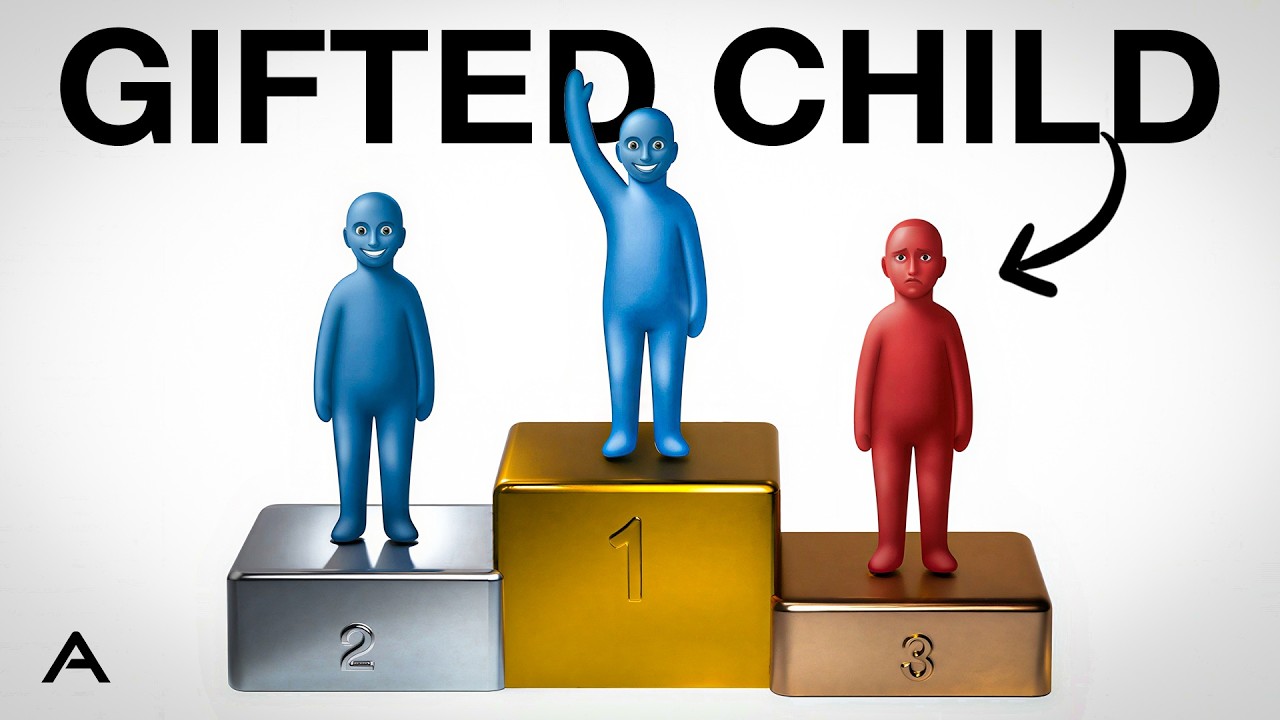
The Psychology of The Former Gifted Child
Keywords
Summary
156 words
Critical Evaluation
Value of the Information & Strength of the Argument
The video offers valuable insights into the psychological mechanisms behind the ‘former gifted child’ phenomenon, such as the avoidance of effort, the burden of potential, and the role of identity. It synthesizes concepts like fixed mindset, overexcitabilities, and asynchronous development into a coherent narrative. The argumentation is compelling, using metaphors like the mansion blueprint and the closed loop to illustrate complex ideas. However, it relies heavily on anecdotal evidence and lacks direct references to empirical studies, which weakens its scientific rigor. The personal testimony of the narrator adds authenticity but also introduces potential bias.
Scientific Rigor, Source Quality, Title Accuracy
The video demonstrates a good understanding of psychological concepts but does not cite specific studies or experts, relying instead on general knowledge. The description includes links to a sponsor and a contact page, but no academic sources. The title accurately reflects the content, and the video is well-structured with clear chapters. The lack of explicit citations reduces its scientific credibility, but the content aligns with established psychological theories.
177 words
Title / Content Match
The title accurately reflects the content, which explores the psychological trajectory of gifted children into adulthood.
Quality & Reliability
7/10
The video provides a coherent psychological framework, referencing established concepts like fixed mindset, overexcitabilities, and asynchronous development, but lacks explicit citations to specific studies or experts, relying on narrative synthesis.
Chapters
Cited Sources
- Shortform — Sponsor mention, not a source for the content.
- Underknown Contact — Contact page for the channel, not a source.
Concurring Sources
- Mindset: The New Psychology of Success — Carol Dweck's work on fixed vs. growth mindset aligns with the video's discussion of praise for intelligence vs. effort.
Contribution & Novelties
The video provides a comprehensive and accessible synthesis of the psychological challenges faced by former gifted children, integrating concepts like overexcitabilities and the ‘help-rejecting pattern’ into a narrative that resonates with many. It offers a unique perspective by framing the gifted identity as a childhood adaptation that must be relinquished for adult growth.
Pour aller plus loin :
- Overexcitability — Relevant to the discussion of heightened sensitivity in gifted individuals.
- Fixed vs. Growth Mindset — Directly related to the video’s emphasis on effort and intelligence.
- Asynchronous development — Explains the uneven development mentioned in the video.
96 words
Radar Profile
The radar profile shows high scores in information quantity and quality, with moderate technical level and reliability. This suggests the video is informative and well-argued but lacks deep scientific rigor due to limited citations.
💬 Très positif. Sur les 30 commentaires analysés, la grande majorité exprime une forte identification personnelle avec le contenu, le décrivant comme une 'piqûre de rappel' ou une 'thérapie', et partage des expériences similaires de burnout et de pression liées à l'étiquette de 'surdoué'.