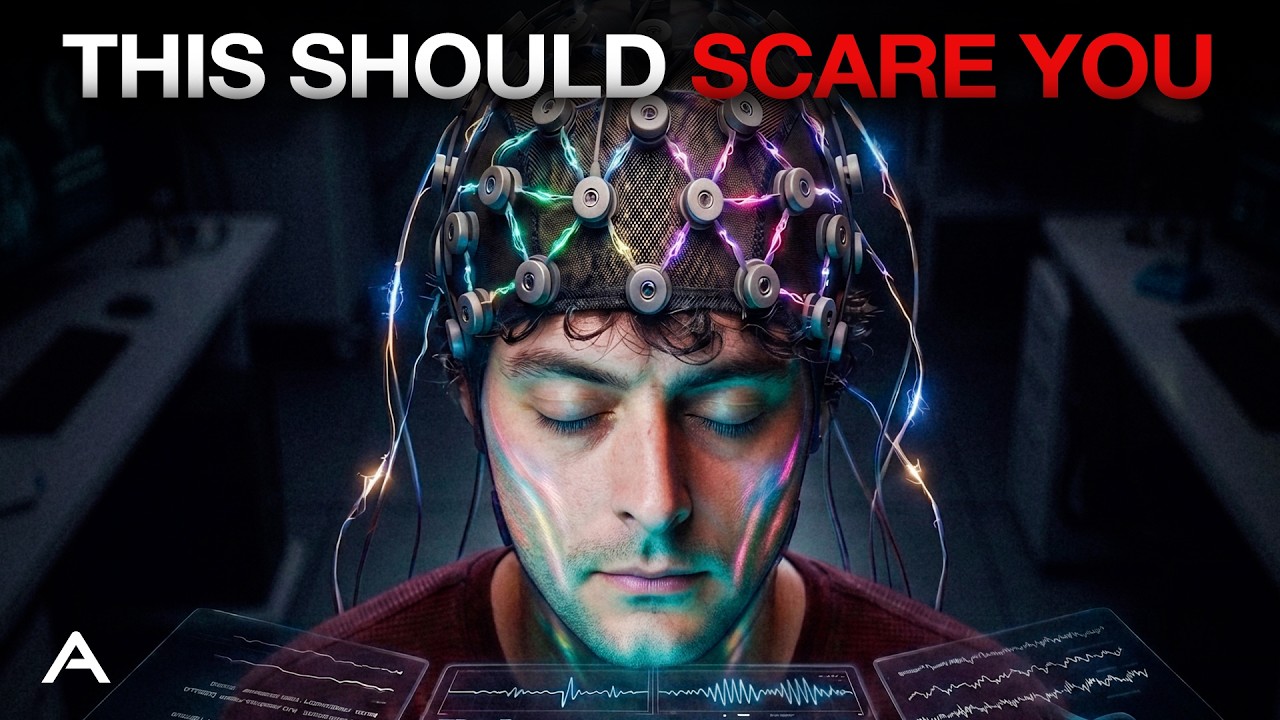
The Terrifying Power of the Unconscious Mind
Keywords
Summary
135 words
Critical Evaluation
Value of the Information & Strength of the Argument
The video offers a comprehensive and engaging overview of different states of consciousness, drawing from both scientific and philosophical perspectives. It presents a structured framework of seven levels, which helps organize complex ideas. The argumentation is largely narrative and metaphorical, using vivid imagery to convey subjective experiences. While it references scientific concepts like EEG and REM sleep, it does not provide detailed evidence or citations, and some claims (e.g., ‘dreams as quantum echoes’) are speculative. The strength lies in its ability to synthesize diverse traditions and make abstract concepts accessible, but it lacks critical analysis and often presents unverified ideas as fact.
Scientific Rigor, Source Quality, Title Accuracy
The video demonstrates moderate scientific rigor: it mentions scientific terms and studies but does not cite specific sources or provide references. The quality of sources is limited to general references to neuroscience and philosophy without direct citations. The title ‘The Terrifying Power of the Unconscious Mind’ is somewhat misleading as the content focuses on levels of consciousness rather than the unconscious mind specifically, though it does touch on dreams and the placebo effect. The video’s production quality is high, with clear narration and visuals, but the lack of verifiable sources reduces its scientific credibility.
211 words
Title / Content Match
The title is somewhat misleading as the video focuses on levels of consciousness rather than the unconscious mind specifically, but it captures the broad theme of exploring the mind.
Quality & Reliability
6/10
The video presents a philosophical and spiritual overview of consciousness levels, referencing scientific concepts like EEG and REM sleep, but lacks rigorous scientific citations and often blends speculative ideas with established neuroscience.
Chapters
Cited Sources
- Contact Aperture — Provided in the video description for questions or concerns.
Concurring Sources
- Default Mode Network — The video mentions the default mode network as the basis for the narrative self, which aligns with scientific understanding.
- REM Sleep and Dreaming — The video correctly associates dreaming with REM sleep, a well-established scientific fact.
Dissenting Sources
- Quantum Consciousness Theories — The video's segment 'Dreams as Quantum Echoes' suggests a quantum basis for dreams, which is highly speculative and not supported by mainstream neuroscience.
Contribution & Novelties
The video provides a novel synthesis of Eastern philosophical concepts and Western neuroscience, presenting a structured model of consciousness levels that is both accessible and thought-provoking. It encourages viewers to consider consciousness beyond ordinary waking state, integrating meditation and mystical experiences into a scientific framework.
Pour aller plus loin :
- Default Mode Network — The brain network associated with self-referential thought, relevant to the discussion of waking consciousness.
- REM Sleep — The sleep stage associated with dreaming, mentioned in the video.
- Placebo Effect — The phenomenon of mind over matter, covered in the video.
- Lucid Dreaming — The ability to be aware within dreams, discussed in the video.
- Nondual Awareness — A concept related to unity consciousness, referenced in the video.
121 words
Radar Profile
The radar profile shows moderate scores across all dimensions, with a slight peak in quantity of information and a dip in technical level, indicating a broad but not deeply technical presentation.