Programación día 3 - Celebración 30 años IGUN - En la Mañana
Keywords
Summary
175 words
Critical Evaluation
Value of the Information & Strength of the Argument
The talk provides valuable insights into the integration of demographic and genetic data for studying human populations. The speaker argues convincingly that traditional classifications based on birthplace or ethnicity are insufficient and that a more nuanced demographic approach can reveal hidden population structure. They support this with examples from their own research, showing how reclassification leads to clearer genetic clusters. The argumentation is solid, grounded in their extensive fieldwork and statistical analyses. However, the talk is more of an overview of their work rather than a detailed presentation of results, and some claims lack specific data or references.
Scientific Rigor, Source Quality, Title Accuracy
The speaker demonstrates scientific rigor by referencing their own published work and the historical context of genetic studies in Colombia. They mention a seminal paper on the genetic structure of the Colombian population from the 1970s. However, they do not provide specific citations or external sources during the talk. The title is appropriate for the event, as it is a scheduled talk within the celebration. The content is consistent with the title, though the title is generic and does not specify the topic.
196 words
Title / Content Match
The title indicates a day of programming for the 30th anniversary of IGUN, and the content is a talk on genetic demography, which fits the event context.
Quality & Reliability
7/10
The presentation is given by a researcher from the Institute of Genetics, showing deep expertise in genetic demography. The content is based on their own research and published work, but lacks detailed citations or peer-reviewed references in the talk itself. The methodological explanations are sound, but the lack of specific data and references limits the verifiability.
Key Moments
Markers derived by PSI from the transcript: the creator did not define chapters.
- Introduction to the talk and the objectives of genetic demography.
- Historical context: early genetic studies in Colombia since the 1970s.
- Explanation of genetic demography and its three main goals.
- Discussion of the importance of cultural factors in human population genetics.
- Case study in La Guajira: methodology and community engagement.
- Description of the survey instrument with 115 questions.
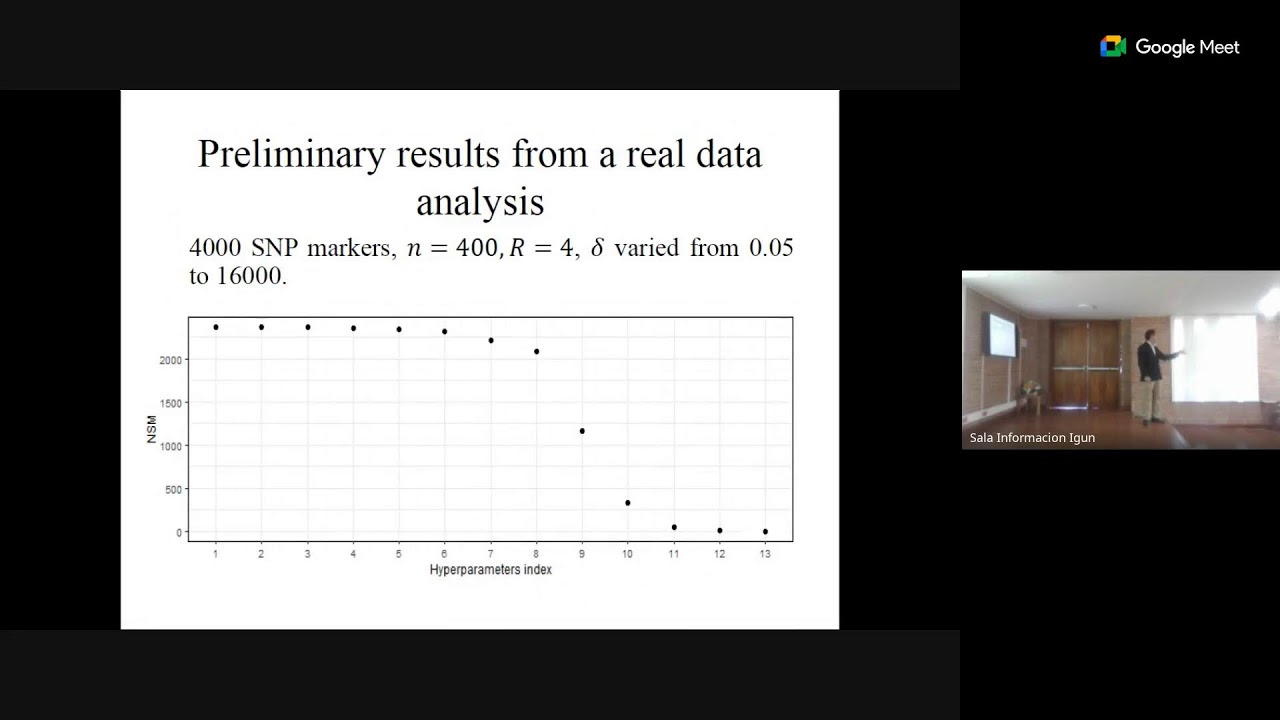
- Results showing improved genetic resolution with demographic classification.
- Discussion of indigenous population differentiation and admixture.
- Future directions and development of sample quality assessment methods.
Cited Sources
- Estructura genética de la población colombiana (1972-1978) — Mentioned as a seminal work from the Institute of Genetics, but no URL provided.
Concurring Sources
- Genetic structure of the Colombian population — Referenced as a foundational study, but no URL provided.
Contribution & Novelties
The talk presents an original approach to integrating demographic and genetic data for studying human populations, emphasizing the importance of cultural and historical factors. The speaker’s work in reclassifying individuals based on demographic criteria rather than birthplace or ethnicity is a novel contribution that improves genetic resolution. The development of a comprehensive survey instrument and the use of statistical methods to assess sample quality are also innovative.
Pour aller plus loin :
- Genetic demography — Overview of population genetics, relevant to the concepts discussed.
- Principal component analysis — Statistical method used in the talk for genetic data analysis.
- F-statistics — Measures of population differentiation, mentioned in the talk.
- Indigenous peoples of Colombia — Context for the ethnic groups studied.
119 words
Radar Profile
The radar profile shows a balanced performance across all dimensions, with slightly higher scores in information quantity and quality, reflecting the speaker's expertise and the depth of content. The technical level is moderate, suitable for a general scientific audience, while reliability is high due to the speaker's authority.