Camino a la Felicidad
Keywords
Summary
173 words
Critical Evaluation
Value of the Information & Strength of the Argument
The video provides a broad overview of philosophical and psychological perspectives on happiness, but the argumentation is largely anecdotal and lacks empirical depth. The speaker shares personal experiences and cites historical figures without providing specific references or data. The value lies in its accessible presentation of diverse ideas, but it does not offer a rigorous scientific analysis. The argumentation is coherent but relies heavily on subjective interpretation and general statements.
Scientific Rigor, Source Quality, Title Accuracy
The scientific rigor is low; the talk is more of a motivational lecture than a scientific presentation. No specific studies or sources are cited, and the references to philosophers are general. The title accurately reflects the content, which is a discussion on the path to happiness. The video is from a university channel, but the content is not presented with academic rigor. No comments were provided for analysis.
153 words
Title / Content Match
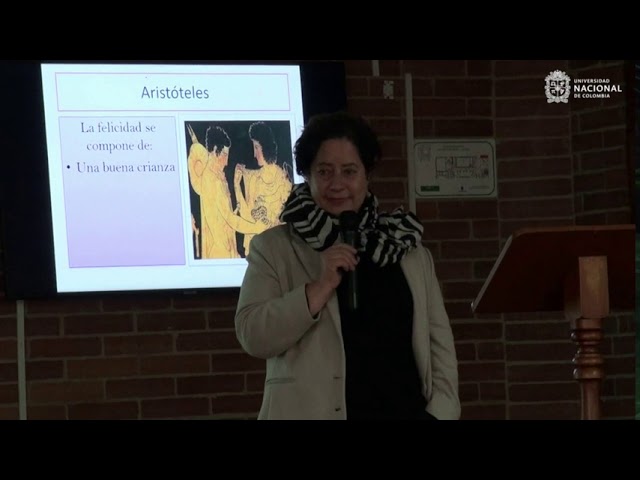
The title 'Camino a la Felicidad' (Path to Happiness) accurately reflects the content, which explores various philosophical and psychological perspectives on achieving happiness.
Quality & Reliability
5/10
The video is a conference presentation with personal testimonies and references to historical philosophers, but lacks rigorous scientific citations and empirical data. The speaker's arguments are based on anecdotal evidence and general knowledge, with no clear methodology or peer-reviewed sources.
Key Moments
Markers derived by PSI from the transcript: the creator did not define chapters.
- Introduction and personal testimony about overcoming emotional and economic dependence.
- Discussion on the historical quest for happiness, referencing the US Declaration of Independence.
- Exploration of Greek philosophers' views on happiness: Socrates, Plato, and Aristotle.
- Importance of childhood in shaping happiness, with reference to a video on raising happy children.
- Discussion on the role of genetics and personal attitude in happiness, citing a 50% genetic influence.
- Viktor Frankl's story and the importance of finding meaning even in suffering.
- The power of gratitude and positive emotions in cultivating happiness.
- Conclusion and encouragement to actively pursue happiness through actions and mindset.
Cited Sources
- US Declaration of Independence — Mentioned as a historical document that includes the pursuit of happiness as an inalienable right.
- Viktor Frankl's 'Man's Search for Meaning' — Referenced for his experience in concentration camps and the idea of choosing one's attitude.
Concurring Sources
- Sonja Lyubomirsky's research on happiness — Her work suggests that a significant portion of happiness is determined by intentional activities, aligning with the video's emphasis on attitude.
Dissenting Sources
Contribution & Novelties
The video offers a personal and accessible synthesis of philosophical and psychological ideas on happiness, but it does not present new research or original insights. Its novelty lies in the integration of personal testimony with historical perspectives, making it relatable for a general audience.
Pour aller plus loin :
- Positive Psychology — Foundational concepts in the scientific study of happiness and well-being.
- Happiness Economics — Economic perspectives on what contributes to life satisfaction.
- Viktor Frankl’s Logotherapy — The therapeutic approach based on finding meaning, directly related to the video’s discussion.
90 words
Radar Profile
The radar profile shows moderate scores across all dimensions, indicating a balanced but not deeply rigorous presentation. The video is more about sharing perspectives than providing hard data, so the scores reflect its accessible but non-scientific nature.