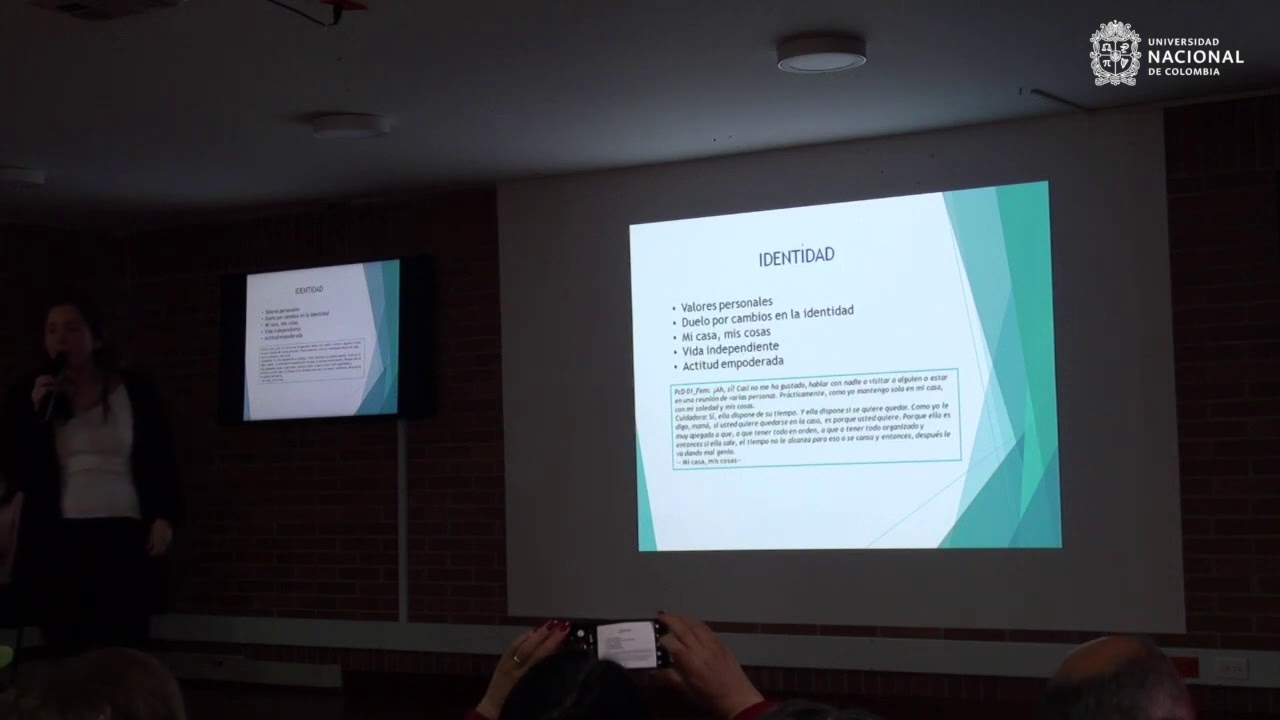
Promocion de la Autonomia II
Keywords
Summary
151 words
Critical Evaluation
Value of the Information & Strength of the Argument
The video provides valuable insights into the nuanced process of decision-making for dementia patients, emphasizing the importance of preserving identity and autonomy. The argumentation is based on clinical experience and a specific study, but lacks rigorous scientific evidence or references. The speaker presents a compassionate and person-centered approach, which is valuable for healthcare professionals and families. However, the lack of concrete data and methodology weakens the scientific argumentation.
Scientific Rigor, Source Quality, Title Accuracy
The scientific rigor is moderate; the speaker references a study but does not provide details or citations. The sources are not clearly identified, and no external references are given. The title is somewhat generic but adequately reflects the content. The video is an expert opinion rather than a systematic review, and the lack of verifiable sources reduces its reliability.
142 words
Title / Content Match
The title 'Promocion de la Autonomia II' is somewhat vague but aligns with the content focusing on promoting autonomy in dementia patients.
Quality & Reliability
6/10
The video presents expert opinions and clinical experiences from a university genetics institute, but lacks detailed references and rigorous scientific methodology. The content is informative but not peer-reviewed.
Key Moments
Markers derived by PSI from the transcript: the creator did not define chapters.
- Introduction to the conference and the importance of autonomy in dementia.
- Discussion on types of decision-making: autonomous, shared, and substituted.
- Presentation of a study on decision-making in Alzheimer's patients and mild cognitive impairment.
- Exploration of the role of personal values and identity in decision-making.
- Discussion on the grief and identity loss experienced by patients when independence declines.
- Concept of retrospective autonomy and the role of caregivers in advanced stages.
- Conclusion on the importance of compassionate care and the challenges of caregiving.
Contribution & Novelties
The video offers a person-centered perspective on promoting autonomy in dementia care, emphasizing the importance of identity and values. It highlights the role of caregivers as facilitators and discusses the concept of retrospective autonomy, which is not widely covered in mainstream media.
Pour aller plus loin :
- Person-centered care in dementia — Provides background on the approach used in the video.
- Autonomy in dementia care — Alzheimer’s Society resources on supporting autonomy.
- Shared decision-making in healthcare — Relevant to the types of decision-making discussed.
84 words
Radar Profile
The radar profile shows moderate scores across all dimensions, indicating a balanced but not exceptional video. The highest score is in information quantity, while technical level is slightly lower, reflecting the non-technical nature of the content.