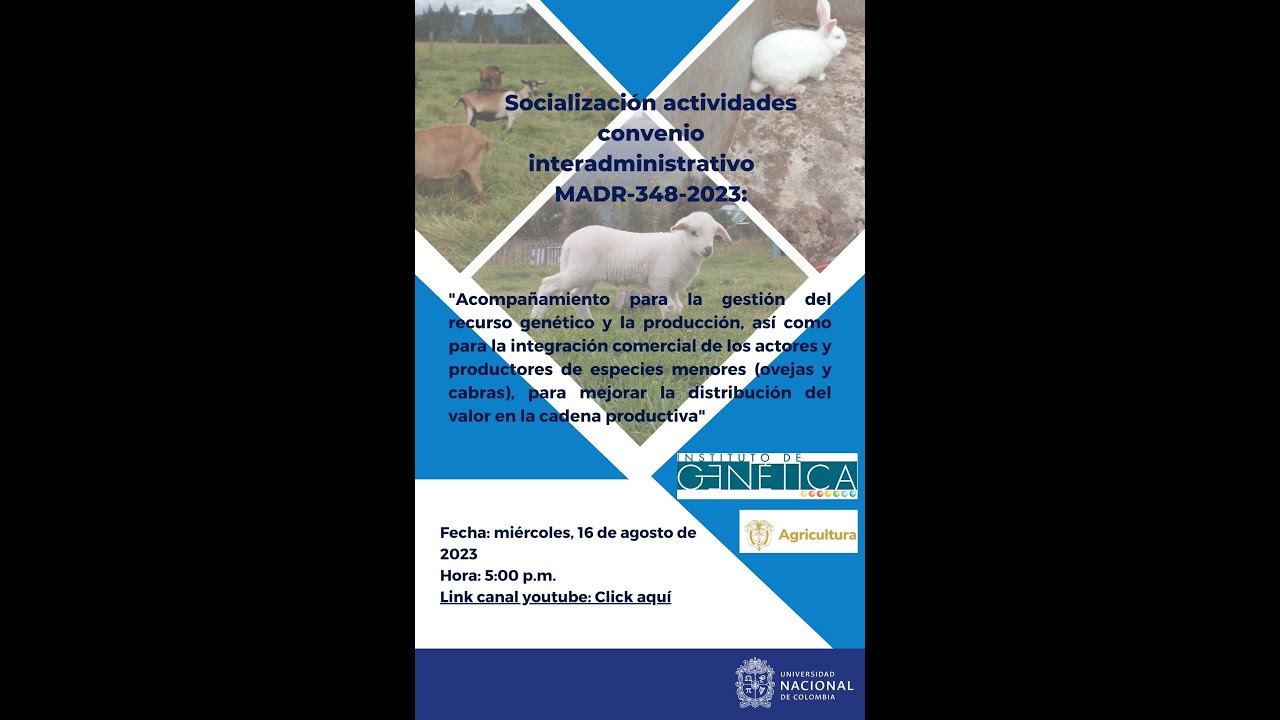
Socialización actividades convenio interadministrativo MADR-348-2023
Keywords
Summary
171 words
Critical Evaluation
Value of the Information & Strength of the Argument
The value of the information lies in its detailed description of a concrete project plan, including specific activities, target numbers, and methodologies. The argumentation is based on a logical framework approach, starting from a problem tree and deriving objectives. The presenter supports the selection of intervention zones with references to census data and other indicators. However, the presentation is largely descriptive and lacks critical analysis or evidence of effectiveness. The argumentation is coherent but relies on assumptions about the sector’s needs without presenting empirical data or case studies.
Scientific Rigor, Source Quality, Title Accuracy
The scientific rigor is moderate: the presenter mentions the use of the logical framework methodology and refers to official census data (ICA), but does not provide specific citations or references. The sources are not explicitly listed, and the presentation is based on the presenter’s expertise and prior work. The title accurately reflects the content, which is a socialization of project activities. The video includes a brief technical issue at the beginning but does not affect the overall content.
181 words
Title / Content Match
The title accurately reflects the content, which is a socialization of project activities under the mentioned agreement.
Quality & Reliability
7/10
The content is presented by the project director with clear methodology (logical framework) and references to official data (ICA census), but lacks detailed citations and independent verification.
Key Moments
Markers derived by PSI from the transcript: the creator did not define chapters.
- Welcome and introduction by Jenny Vargas, director of the Institute of Genetics.
- Explanation of the project's origin and the agreement with the Ministry of Agriculture.
- Presentation of the problem tree and main issues in the ovine-caprine sector.
- Discussion of the project's objectives and target departments.
- Overview of planned training activities in solidarity economy, business planning, and marketing.
- Details on field activities, including technical visits and data collection.
- Description of the e-commerce tool and market studies.
- Explanation of the project charter methodology for problem-solving.
- Closing remarks and invitation for producer participation.
Cited Sources
- ICA census data — Referenced as the source for population figures of ovine and caprine species in Colombia.
Concurring Sources
- FAO Colombia — Provides general agricultural context and statistics for Colombia.
Contribution & Novelties
The video provides an overview of a government-university collaboration project aimed at improving the ovine-caprine value chain in Colombia. It highlights the importance of integrating producers, improving genetic resource management, and enhancing commercialization. The project’s approach includes training, technical assistance, and the development of an e-commerce tool using open-source software, which is a novel aspect for the sector.
Pour aller plus loin :
- Ovine and caprine production in Colombia — FAO country page with relevant agricultural statistics.
- Logical framework approach — Methodology used for project planning.
- Solidarity economy — Concept related to the training component.
95 words
Radar Profile
The radar profile shows high scores in information quantity and quality, moderate technical level, and good reliability. This indicates a well-structured presentation with substantial content, though it could benefit from more technical depth and explicit source citations.
💬 No comments were provided for analysis.