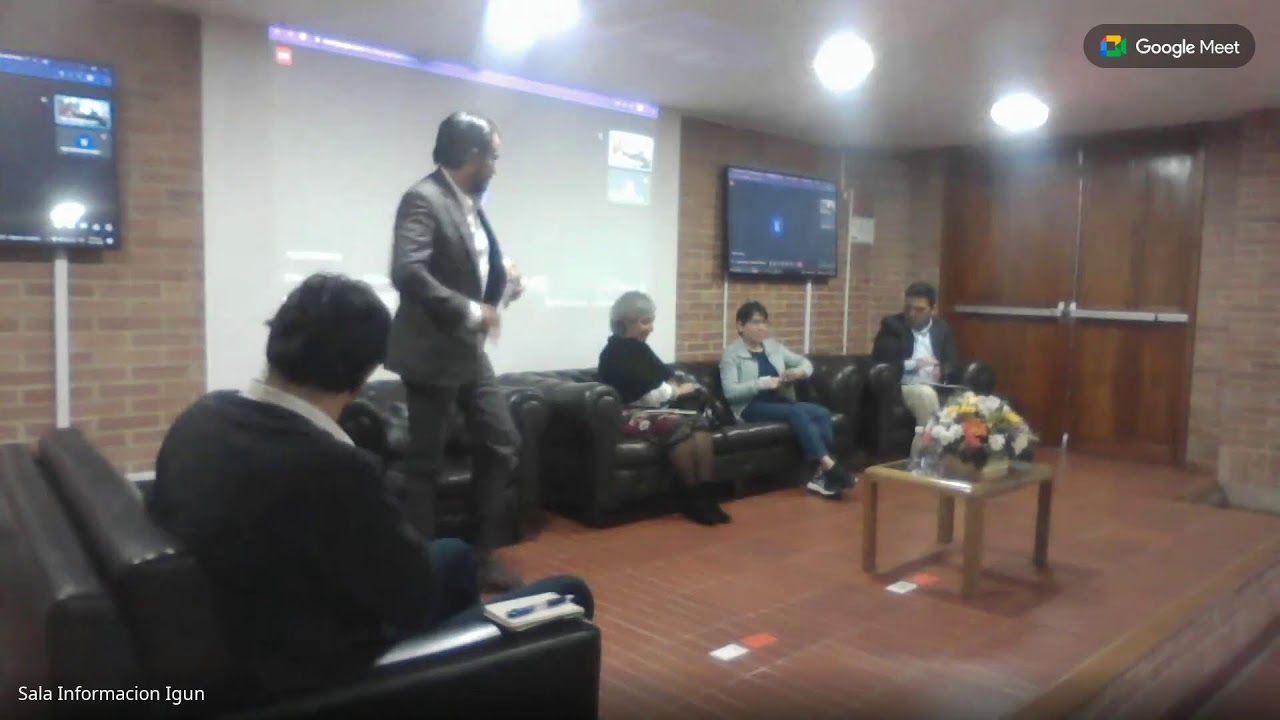
Programación dia 1 - Celebracion 30 años IGUN - En la Tarde
Keywords
Summary
145 words
Critical Evaluation
Value of the Information & Strength of the Argument
The video provides valuable insights into real-world conservation efforts, particularly the detailed case study of the Orinoco crocodile reintroduction. The argumentation is solid, based on scientific principles and practical experience. The panelists present their projects with clear objectives and methodologies, demonstrating the importance of genetic analysis in conservation. The discussion is well-structured and informative, offering a comprehensive view of biodiversity conservation in Colombia.
Scientific Rigor, Source Quality, Title Accuracy
The scientific rigor is high, as the content is presented by experts with advanced degrees and direct involvement in the projects. The sources cited include the documentary itself and references to genetic studies, but specific publications are not mentioned. The title accurately describes the content, which is a recording of an event. The video is a valuable resource for understanding conservation challenges and solutions in Colombia.
144 words
Title / Content Match
The title accurately reflects the content: a day of programming for the 30th anniversary of the Institute of Genetics, featuring a panel on biodiversity conservation.
Quality & Reliability
8/10
The video is a recording of a scientific panel discussion with experts from various institutions, including a detailed documentary on the reintroduction of Orinoco crocodiles. The content is based on ongoing research and conservation projects, with direct references to genetic studies and field work. The information is presented by professionals in the field, lending credibility. However, the video is a recording of an event and may contain informal discussions, and some claims lack specific citations.
Key Moments
Markers derived by PSI from the transcript: the creator did not define chapters.
- Introduction and context about Colombia's biodiversity and the sixth mass extinction.
- Start of the documentary on Orinoco crocodile reintroduction.
- Logistics of transporting crocodiles, including flight cancellation and temperature concerns.
- Release of crocodiles into the river and community engagement.
- Discussion on genetic diversity and inbreeding in captive breeding programs.
- Panelist introductions and presentations on their conservation projects.
- Discussion on wildlife crossings and road ecology.
- Discussion on high mountain ecosystems and climate change.
- Discussion on wildlife management and invasive species like hippos.
Cited Sources
- Documentary on Orinoco crocodile reintroduction — Shown within the video, detailing the release of 25 crocodiles.
Concurring Sources
- IUCN Red List - Orinoco Crocodile — Confirms the species is critically endangered.
Contribution & Novelties
The video provides an in-depth look at a specific conservation project, highlighting the integration of genetic analysis with field work. It offers a unique perspective on the challenges and successes of reintroducing a critically endangered species. The panel discussion adds value by showcasing diverse conservation approaches in Colombia.
Pour aller plus loin :
- Orinoco crocodile (Crocodylus intermedius) — Background on the species and its conservation status.
- Conservation genetics — The role of genetics in conservation.
- Wildlife crossing — Infrastructure to reduce animal-vehicle collisions.
83 words
Radar Profile
The radar profile shows high scores in quantity and quality of information, reflecting the comprehensive coverage of the topic. The technical level is also high, indicating the content is suitable for an informed audience. The overall reliability is strong, given the expertise of the speakers.
💬 No comments were provided for analysis.