GG History Part 1
Keywords
Summary
166 words
Critical Evaluation
Value of the Information & Strength of the Argument
The video provides a valuable overview of the historical context of genetics, emphasizing the role of domestication. The argumentation is logical and builds a case for domestication as a key precursor to genetic science. However, the presentation is informal and lacks rigorous scientific depth. The instructor uses anecdotes and personal opinions, which may reduce the perceived authority. The value lies in its educational accessibility, making complex historical connections understandable for beginners.
Scientific Rigor, Source Quality, Title Accuracy
The scientific rigor is moderate. The instructor mentions general historical facts and some specific examples (e.g., Homo sapiens age, Fertile Crescent) but does not cite specific sources or studies. The title ‘GG History Part 1’ is somewhat vague but accurately reflects the content. The video does not include any external references or links in the description, limiting the ability to verify claims. The content is presented as an introductory lecture, so the lack of citations is somewhat expected, but it still affects the overall reliability.
171 words
Title / Content Match
The title 'GG History Part 1' is vague but accurately indicates a historical introduction to genetics. The content matches the title, covering early history and domestication.
Quality & Reliability
6/10
The video provides a broad historical overview of genetics, focusing on domestication as a precursor. It is scientifically accurate but lacks depth and specific citations. The content is presented in an informal lecture style, with some personal anecdotes. The information is generally reliable but not rigorously sourced.
Key Moments
Markers derived by PSI from the transcript: the creator did not define chapters.
- Introduction to the course and importance of history in genetics.
- Discussion on human observation and societal support for science.
- Introduction of Homo sapiens timeline and early human activities.
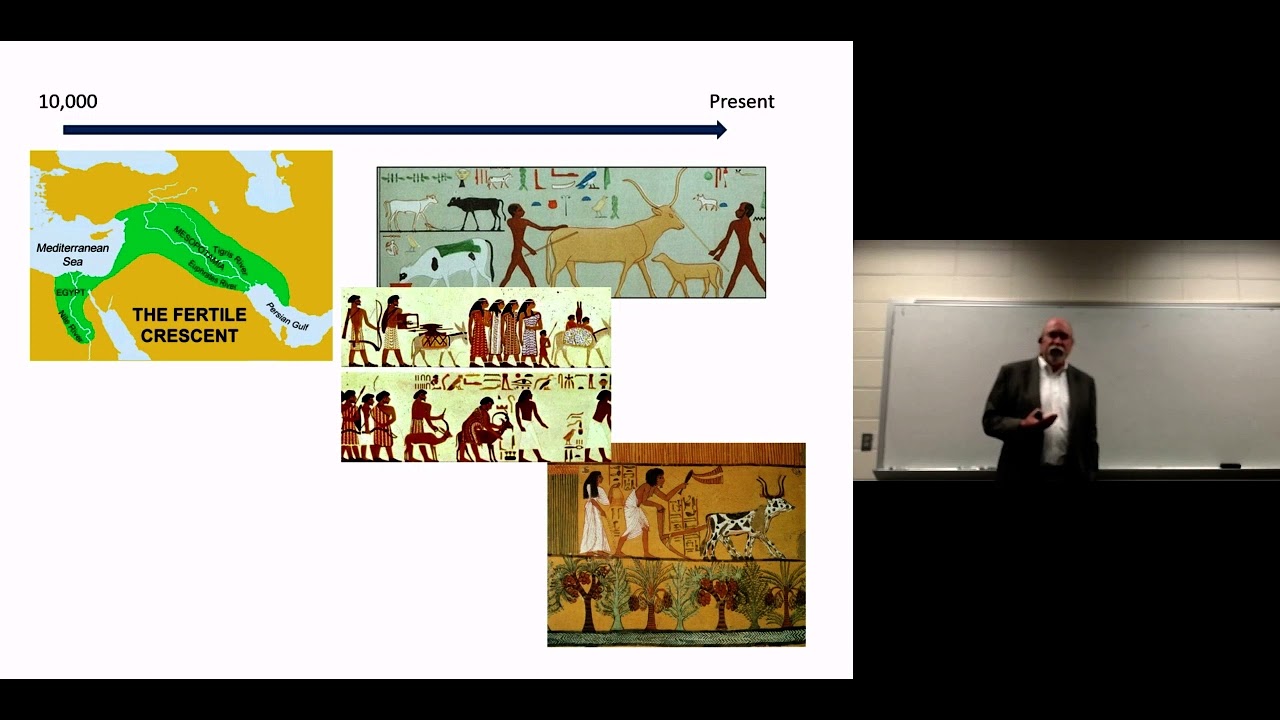
- Domestication as the root of genetics; examples from the Fertile Crescent.
- Examples of early domesticated animals and plants, including dogs and date palms.
- Impact of domestication on society, leading to settled communities and irrigation.
- Modern examples of domestication and conclusion, preview of next lecture.
Contribution & Novelties
The video offers a unique perspective by framing domestication as the foundational practice of genetics, which is often overlooked in standard genetics courses. It connects historical agricultural practices to modern genetic science, providing a holistic view. The lecture is accessible and engaging, making it suitable for introductory students.
Pour aller plus loin :
- Domestication — Overview of domestication and its significance.
- Fertile Crescent — Historical region where early agriculture and domestication occurred.
- Homo sapiens — Information on the species and its evolutionary timeline.
83 words
Radar Profile
The radar profile shows moderate scores across all dimensions, indicating a balanced but not exceptional video. The highest score is in information quantity and reliability, while technical level is lower, reflecting the introductory nature. This suggests the video is a decent starting point for beginners but lacks depth for advanced viewers.