GG Allelic Interactions I Part 1
Keywords
Summary
169 words
Critical Evaluation
Value of the Information & Strength of the Argument
The video provides a clear and thorough explanation of incomplete dominance, using multiple examples to reinforce the concept. The argumentation is solid, building from basic Mendelian genetics to the molecular mechanisms. The instructor effectively contrasts incomplete dominance with complete dominance, highlighting the key difference in phenotypic ratios. The use of a worked problem helps apply the knowledge. However, the video does not delve into exceptions or complexities, and the molecular explanation, while accurate, is simplified. The value lies in its pedagogical clarity, making it a useful resource for students.
Scientific Rigor, Source Quality, Title Accuracy
The scientific content is accurate and aligns with standard genetics textbooks. The instructor does not cite specific sources, but the examples are classic and well-documented in the literature. The title accurately reflects the content, which is the first part of a lecture on allelic interactions. The video is well-structured and the explanations are rigorous, though it lacks references for further reading. The absence of citations is a minor weakness, but the content itself is reliable.
179 words
Title / Content Match
The title accurately reflects the content, which is the first part of a lecture on allelic interactions, focusing on incomplete dominance.
Quality & Reliability
7/10
The video is an educational tutorial on incomplete dominance, presented by a genetics educator. The content is scientifically accurate and well-structured, but it lacks citations to primary literature and is based on established textbook knowledge. The examples are classic and correctly explained, but the video does not provide references for further reading.
Key Moments
Markers derived by PSI from the transcript: the creator did not define chapters.
- Introduction to allelic interactions and overview of the lecture.
- Review of Mendel's principles and the idea of changing phenotypic outcomes.
- Introduction to incomplete dominance using snapdragons.
- Explanation of the 1:2:1 phenotypic ratio in F2 generation.
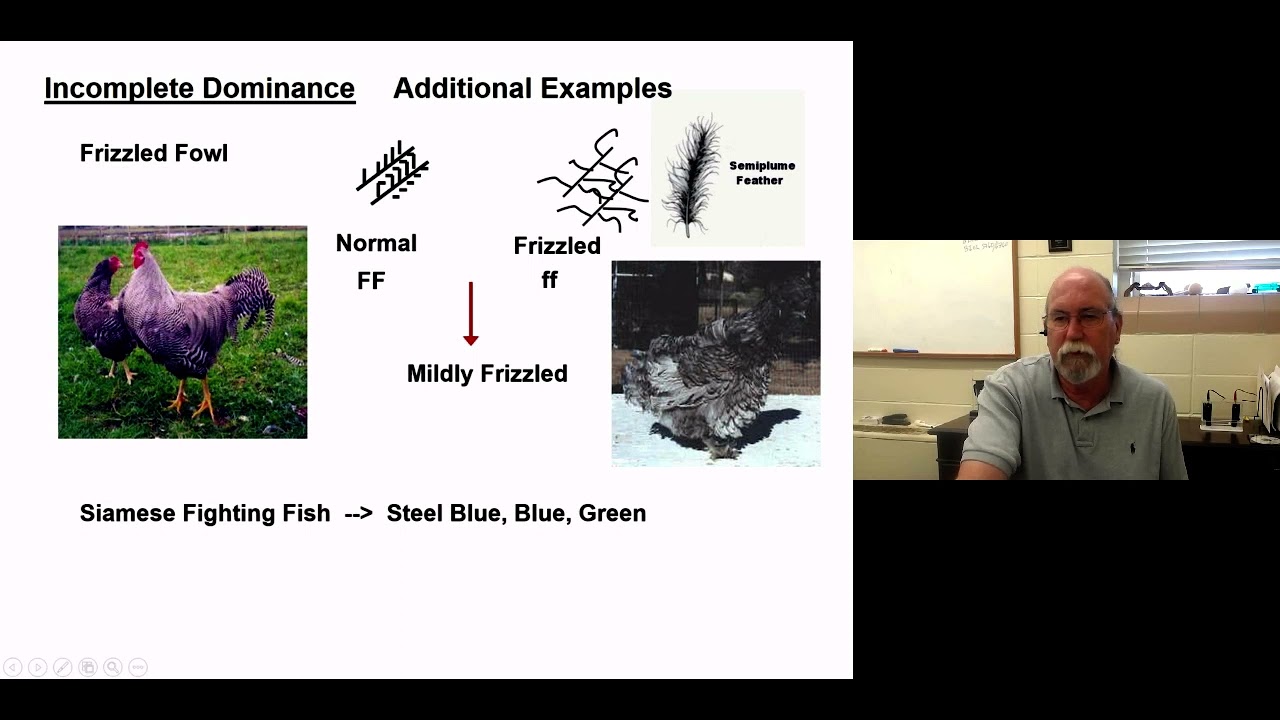
- Additional examples: frizzled fowl, Siamese fighting fish, radishes, and wobbly mice.
- Worked problem on cat tail length demonstrating incomplete dominance.
- Molecular basis: haplosufficiency and haploinsufficiency.
- Explanation of dosage effects and product quantity.
- Summary and preview of next lecture on other allelic interactions.
Contribution & Novelties
The video provides a clear pedagogical explanation of incomplete dominance, emphasizing the distinction between genotypic and phenotypic ratios. It offers multiple examples and a worked problem, which aids understanding. The molecular explanation of haploinsufficiency adds depth. However, the content is standard textbook material and does not present new research or novel insights.
Pour aller plus loin :
- Incomplete dominance - Wikipedia — Provides a comprehensive overview of incomplete dominance and related concepts.
- Haploinsufficiency - Wikipedia — Explains the molecular mechanism behind incomplete dominance.
- Mendelian inheritance - Wikipedia — Reviews the principles of segregation and independent assortment.
96 words
Radar Profile
The radar profile shows high scores in quality of information and reliability, with moderate scores in quantity and technical level. This indicates a well-structured educational video that is scientifically sound but not highly technical or comprehensive in scope.