HG Genetic Testing Part 1
Keywords
Summary
152 words
Critical Evaluation
Value of the Information & Strength of the Argument
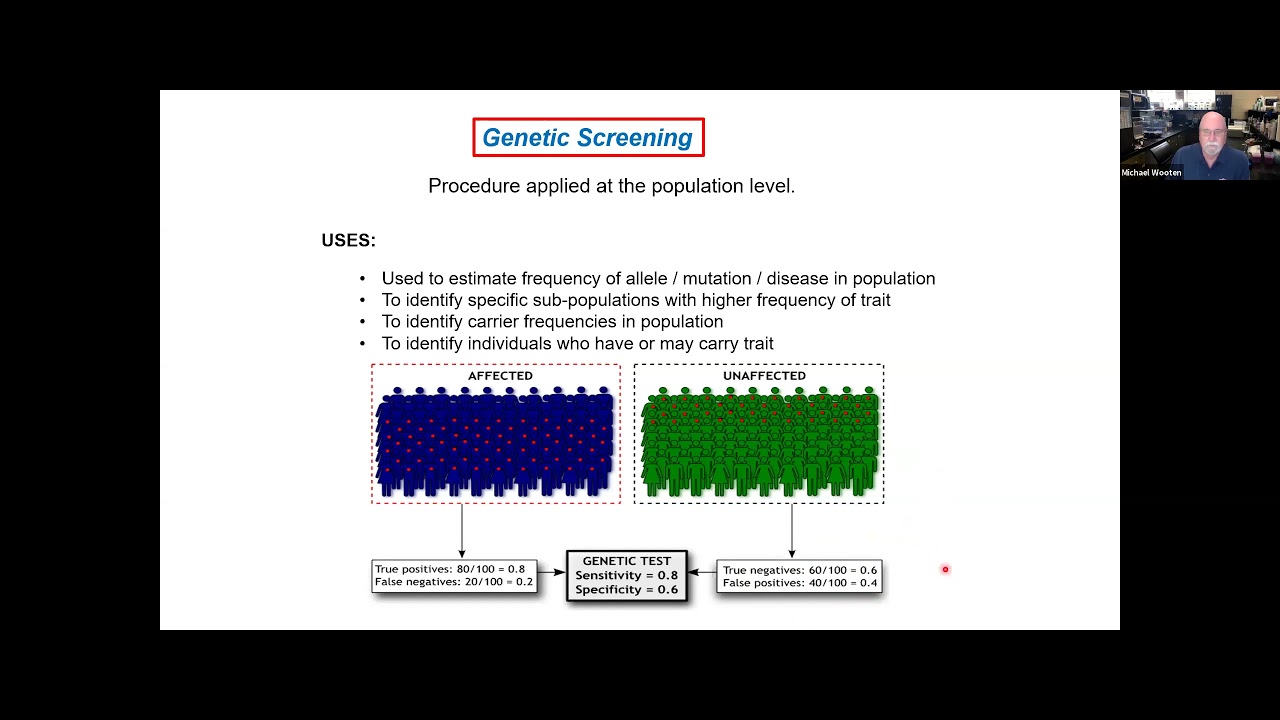
The video provides valuable information on the fundamental concepts of genetic testing, particularly the distinction between sensitivity, specificity, and predictive values. The argumentation is solid, using clear definitions and a worked example to illustrate the impact of prevalence on predictive values. The TSA analogy effectively clarifies the trade-off between sensitivity and specificity. The lecture also touches on ethical issues, such as the historical misuse of sickle cell screening, which adds depth. However, the presentation is somewhat dry and lacks visual aids beyond simple diagrams, which may reduce engagement.
Scientific Rigor, Source Quality, Title Accuracy
The scientific rigor is adequate for an introductory lecture. The content is accurate and well-structured, but no specific sources are cited within the video or description. The title accurately reflects the content, focusing on genetic testing methods and issues. The lack of references limits the ability to verify claims, but the material is consistent with established knowledge in genetics.
162 words
Title / Content Match
The title accurately reflects the content, which focuses on genetic testing methods and issues in humans.
Quality & Reliability
7/10
The video provides a clear and accurate explanation of genetic screening and testing concepts, including sensitivity, specificity, and predictive values. The content is scientifically sound, but lacks citations and references to specific studies or sources. The presentation is educational and methodical, with practical examples.
Key Moments
Markers derived by PSI from the transcript: the creator did not define chapters.
- Introduction to genetic screening and testing
- Definition of genetic screening at population level
- Examples of genetic screening: Tay-Sachs, sickle cell
- Introduction to sensitivity and specificity
- Explanation of positive and negative predictive values
- Worked example with 80% sensitivity and 60% specificity
- Impact of prevalence on predictive values
- Pre-screening to improve predictive values
- Genetic testing at individual level
- Overview of genetic testing usage and Medicare coverage
Contribution & Novelties
The video provides a clear and accessible explanation of the concepts of sensitivity, specificity, and predictive values in the context of genetic testing. It emphasizes the often-overlooked distinction between clinical validity and clinical utility, and illustrates how prevalence affects predictive values. The use of a worked example is particularly instructive.
Pour aller plus loin :
- Sensitivity and specificity — Provides a detailed overview of these statistical concepts.
- Positive and negative predictive values — Explains the calculation and interpretation of predictive values.
- Genetic testing — General overview of genetic testing methods and applications.
92 words
Radar Profile
The radar profile shows a balanced performance across all dimensions, with slightly higher scores in quality of information and fiabilité globale, reflecting the accurate and reliable content. The lower score in niveau technique indicates that the lecture is accessible to a general audience, while still providing substantive information.