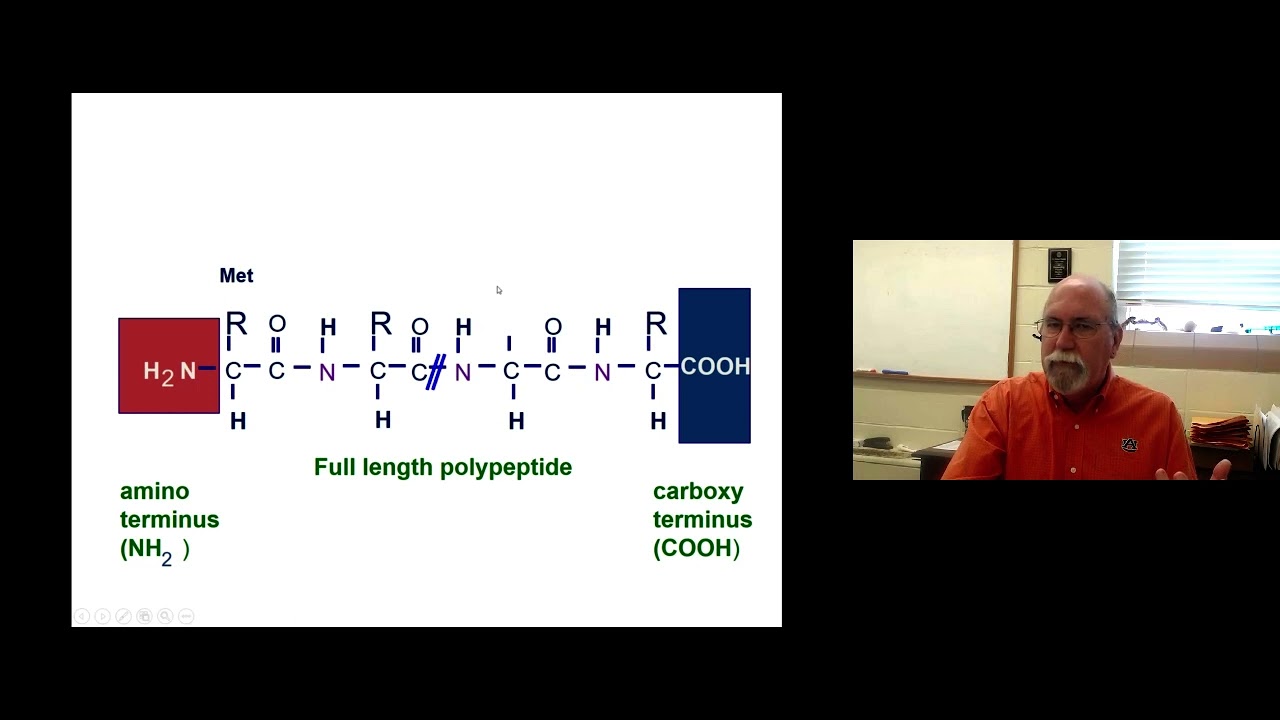
GG Proteins Part 1
Keywords
Summary
189 words
Critical Evaluation
Value of the Information & Strength of the Argument
The video provides a clear and accessible introduction to protein structure, emphasizing the relationship between amino acid properties and protein function. The argumentation is logical, building from basic components to their functional implications. However, the presentation is somewhat informal and includes tangential anecdotes (e.g., about antibiotics and koalas) that, while interesting, do not directly contribute to the core scientific content. The scientific information is accurate but presented at a basic level, with limited depth on topics like protein folding mechanisms.
Scientific Rigor, Source Quality, Title Accuracy
The video does not cite specific sources or references, and the description contains no links. The scientific content is generally accurate, but the lack of citations reduces its rigor. The title ‘Proteins Part 1’ accurately reflects the content, as it is an introductory overview. The presentation is informal, with occasional digressions, but the core information is reliable.
152 words
Title / Content Match
The title 'Proteins Part 1' is appropriate as the video introduces proteins, amino acids, and peptide bonds, setting the stage for further discussion.
Quality & Reliability
6/10
The video provides a basic overview of protein structure and peptide bonds, with some historical context on antibiotics and protein electrophoresis. It is scientifically accurate but lacks depth and citations. The presentation is informal and occasionally tangential.
Key Moments
Markers derived by PSI from the transcript: the creator did not define chapters.
- Introduction to proteins and recap of transcription/translation
- Basic structure of amino acids: amino group, carboxyl group, R groups
- Explanation of peptide bond formation and peptidyl transferase
- Historical note on early antibiotics inhibiting peptide bond formation
- Discussion of N-terminus and C-terminus, protein orientation in membranes
- Categorization of amino acids: nonpolar, polar, charged
- Example of histones and charged amino acids interacting with DNA
- Introduction to protein electrophoresis and its historical use in genotyping
Contribution & Novelties
The video offers a basic educational overview of protein structure, suitable for beginners. It connects concepts from transcription and translation to protein function, and introduces techniques like electrophoresis. The content is not novel but serves as a foundation for further study.
Pour aller plus loin :
- Protein structure — Overview of protein structure levels.
- Peptide bond — Details on peptide bond formation.
- Electrophoresis — General technique description.
67 words
Radar Profile
The radar profile shows moderate scores across all dimensions, indicating a balanced but not exceptional educational video. The highest scores are in information quantity and quality, while technical level is slightly lower, reflecting its introductory nature.