GG Epistasis Part 3
Keywords
Summary
156 words
Critical Evaluation
Value of the Information & Strength of the Argument
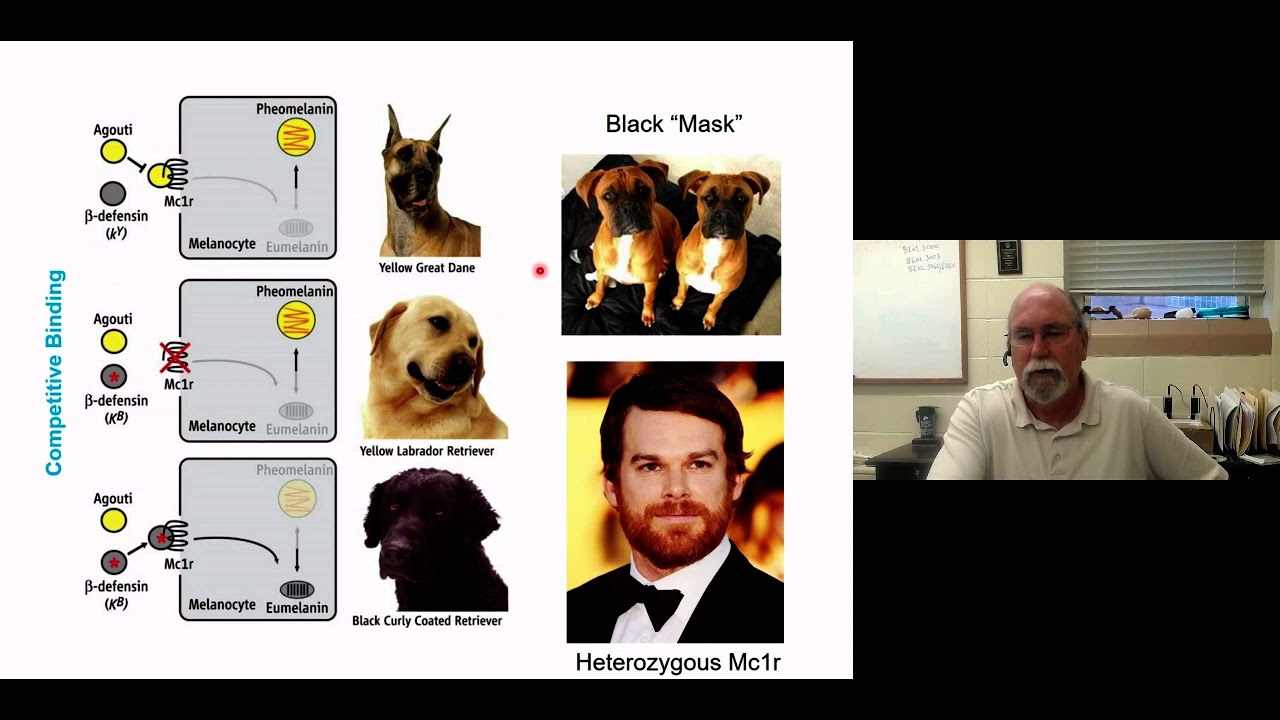
The video provides valuable information by connecting abstract epistatic ratios to tangible examples, enhancing understanding. The argumentation is solid, as the instructor explains the molecular mechanisms behind the phenotypes, such as the competitive binding of beta-defensin and agouti to MC1R. However, the presentation is informal and lacks citations to specific studies, relying on general knowledge. The examples are well-chosen and effectively illustrate the concepts, but the depth is limited for advanced learners.
81 words
Title / Content Match
The title 'Epistasis Part 3' accurately reflects the content, which continues the series on epistasis with examples.
Quality & Reliability
7/10
The video provides a clear and accurate explanation of epistasis using well-established examples (Labrador coat color, MC1R mutations, etc.). The content is scientifically sound, though it lacks citations to primary literature and is presented in an informal lecture style.
Key Moments
Markers derived by PSI from the transcript: the creator did not define chapters.
- Introduction to the lecture and recap of epistasis basics.
- Example of single recessive epistasis in Labrador coat color.
- Molecular explanation of coat color: MC1R, agouti, and beta-defensin.
- Discussion of different mutations in MC1R across species, including jaguars and jaguarundis.
- Human red hair genetics and associated traits.
- Example of epistatic lethality in carp.
- Preview of upcoming problem-solving sessions.
Contribution & Novelties
The video’s original contribution lies in its compilation of diverse examples of epistasis, from classic textbook cases to recent molecular findings, presented in an accessible manner. It bridges the gap between theoretical ratios and real phenotypes, which is valuable for students.
Pour aller plus loin :
- MC1R gene — Overview of the MC1R gene and its role in pigmentation.
- Agouti signaling protein — Details on the agouti protein and its interaction with MC1R.
- Epistasis — General concept of epistasis in genetics.
- Labrador Retriever coat color genetics — Specifics on the genetic basis of Labrador coat colors.
96 words
Radar Profile
The radar profile shows a balanced performance across all dimensions, with slightly higher scores in quality of information and technical level, indicating a solid educational content with good depth.