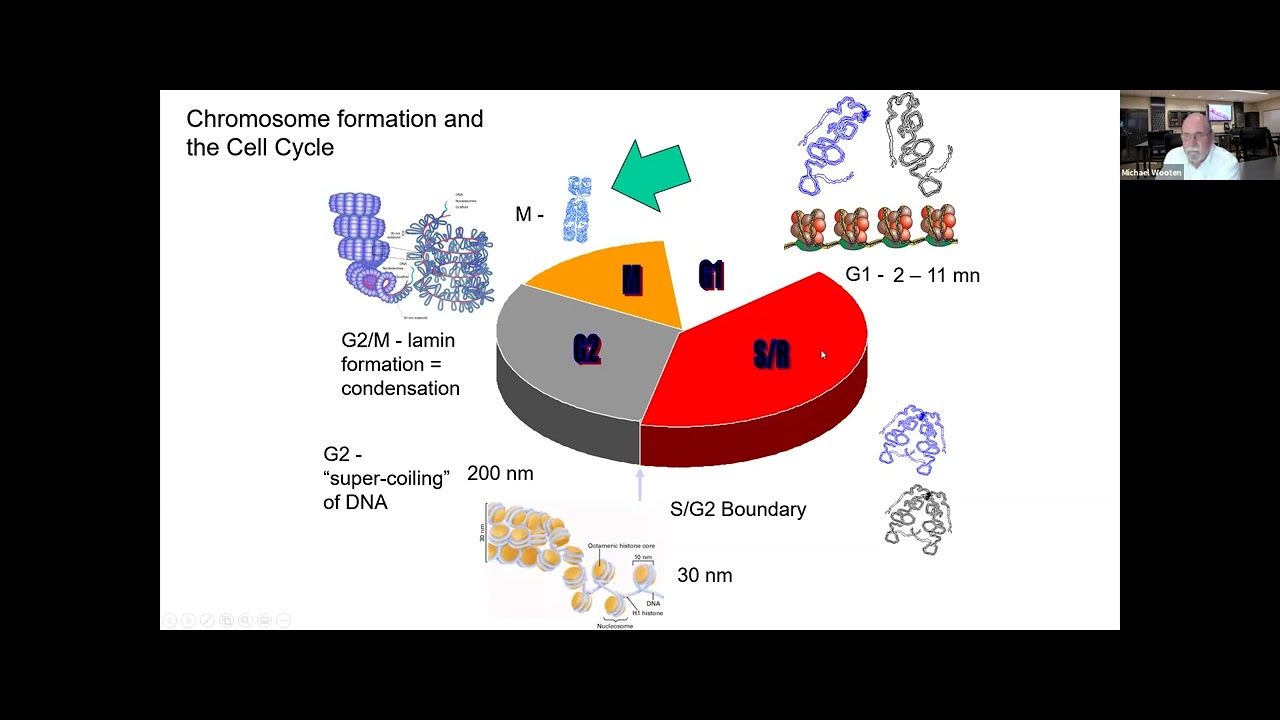
HG - Cell Review Lecture Part 1
Keywords
Summary
208 words
Critical Evaluation
Value of the Information & Strength of the Argument
The lecture provides a clear and accurate overview of cell biology and genetics, with a focus on concepts relevant to human genetics. The instructor explains complex topics such as chromosome condensation and mitochondrial DNA replication in an accessible manner. The argumentation is logical and builds upon foundational knowledge, but it lacks depth and does not present new or original research. The value lies in its educational utility for students needing a refresher.
Scientific Rigor, Source Quality, Title Accuracy
The lecture is scientifically accurate, but it does not cite specific sources. The instructor relies on established knowledge in cell biology and genetics. The title accurately reflects the content, which is a review of cell biology concepts. The lecture is well-structured and the information is presented in a coherent manner, but the lack of citations reduces its scientific rigor.
146 words
Title / Content Match
The title accurately reflects the content: a review of cell biology concepts relevant to human genetics.
Quality & Reliability
7/10
The lecture provides a solid, if basic, review of cell biology and genetics concepts, with accurate descriptions of cellular components, chromosome structure, and mitochondrial DNA. The information is presented in a clear, educational manner, but lacks depth and specific citations. The content is generally reliable, though some simplifications are made.
Key Moments
Markers derived by PSI from the transcript: the creator did not define chapters.
- Introduction and overview of the lecture topics.
- Discussion of major cellular components and organelles.
- Explanation of centrifugation as a method to isolate organelles.
- Introduction to nuclear DNA and the cell cycle.
- Description of chromosome condensation and the use of colchicine.
- Explanation of karyotyping and idiograms.
- Introduction to mitochondrial DNA and its structure.
- Discussion of mitochondrial dynamics, including fission and fusion.
- Overview of mitochondrial genes and their importance.
- Conclusion and preview of the next lecture.
Contribution & Novelties
The lecture provides a basic review of cell biology and genetics, with a focus on concepts relevant to human genetics. It does not present new research but serves as an educational resource. The instructor’s explanation of mitochondrial DNA structure and dynamics is particularly clear.
Pour aller plus loin :
- Mitochondrial DNA — Provides a comprehensive overview of mitochondrial DNA structure and function.
- Karyotype — Explains the process of karyotyping and the arrangement of chromosomes.
- Cell cycle — Details the phases of the cell cycle and regulation.
86 words
Radar Profile
The radar profile shows a balanced performance across all dimensions, with a slight emphasis on information quality and reliability. The lecture is informative and accurate, but lacks depth and technical complexity, making it suitable for introductory-level learners.