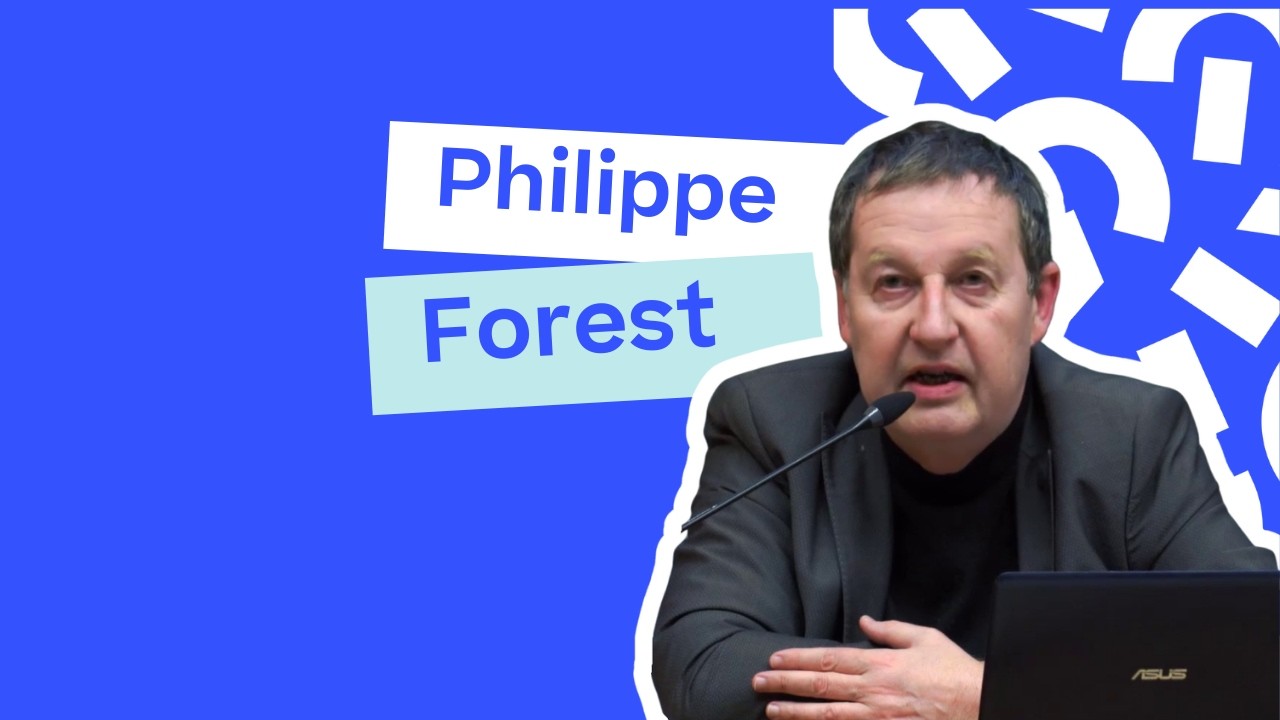
Philippe Forest - Shakespeare. Quelqu'un, tout le monde et puis personne
Keywords
Summary
179 words
Critical Evaluation
The talk offers a thoughtful and erudite reflection on the nature of biography and the challenge of writing about a figure like Shakespeare. Forest’s argument is well-structured, moving from personal anecdote to literary theory to the specific case of Shakespeare. He draws on a range of references, including Aragon, Hazlitt, and the Bible, to support his points. The strength of the talk lies in its philosophical depth and the coherence of its central thesis: that writing about another is always a form of self-writing. However, the talk is not a rigorous scholarly analysis; it is an opinion piece, and Forest himself acknowledges that he is not a Shakespeare specialist. The lack of concrete evidence or detailed textual analysis may disappoint viewers seeking factual information about Shakespeare’s life. The sources cited are limited to the speaker’s own works and general literary references, with no direct citations to academic studies. The talk’s value is more in its literary and philosophical insights than in its factual content. The title accurately reflects the content, and the talk does not mislead. Overall, it is a high-quality, thought-provoking lecture, but it is not a comprehensive or systematic study.
192 words
Title / Content Match
The title accurately reflects the content: a personal and philosophical exploration of Shakespeare's identity, emphasizing his universality and elusiveness.
Quality & Reliability
8/10
The speaker is a professor of literature at Nantes University with extensive publications on literary figures. The talk is a personal and subjective essay on Shakespeare, not a scholarly lecture, but it is grounded in literary theory and references to authors like Aragon and Hazlitt. The content is coherent and well-structured, though it lacks empirical data or systematic analysis.
Key Moments
Markers derived by PSI from the transcript: the creator did not define chapters.
- Introduction: Forest explains the book is not really about Shakespeare but uses him as a pretext for a personal essay.
- Forest discusses the collection 'D'après' and the principle of inviting writers to evoke great creators subjectively.
- Forest introduces the concepts of autofiction and exofiction, and how they relate to biography.
- Forest cites Aragon's idea that writing another's life is always writing one's own.
- Forest mentions his previous works, including biographies of Aragon and Napoleon, and the novel 'Sarinagara'.
- Forest introduces the paradox of Shakespeare: we know everything and nothing about him.
- Forest quotes Hazlitt's 1818 essay on Shakespeare, describing him as 'nothing in himself' but everything in others.
- Forest explains how this paradox inspired the title of his book and his approach to writing about Shakespeare.
Cited Sources
- Nantes Université LinkedIn — Official university page, mentioned in the video description.
- Nantes Université YouTube Channel — Channel subscription link, mentioned in the video description.
Concurring Sources
- Nantes Université LinkedIn — Official university page, consistent with the speaker's affiliation.
Contribution & Novelties
The talk offers a unique perspective on Shakespeare by framing him as a figure of universal absence, drawing on literary theory and personal reflection. It bridges biography and autofiction, suggesting a new way to approach historical figures. The discussion of Hazlitt’s essay and its influence on the book’s title is a novel angle.
Pour aller plus loin :
- Autofiction — Relevant to the concepts discussed.
- Exofiction — A French term for the genre Forest mentions.
- William Hazlitt — The essayist whose work inspired the book’s title.
86 words
Radar Profile
The radar profile shows high scores in quality of information and reliability, reflecting the speaker's expertise and coherent argumentation. The quantity of information is moderate, as the talk is more reflective than factual. The technical level is moderate, suitable for a general audience interested in literature.