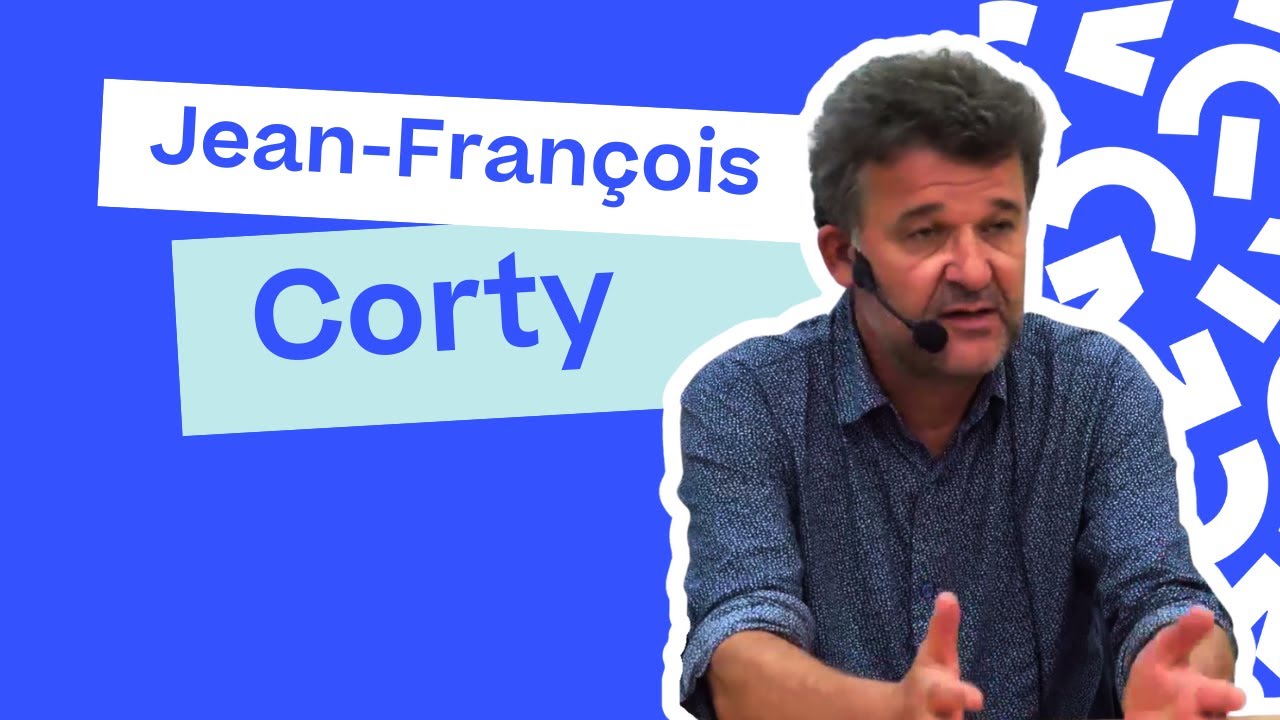
Jean-François Corty - Humanitaire. Une crise inédite ?
Keywords
Summary
124 words
Critical Evaluation
The conference provides a comprehensive and insightful overview of the challenges facing humanitarian action today. Jean-François Corty, with his extensive experience as a medical doctor and president of Médecins du Monde, offers a credible and authoritative perspective. He effectively contextualizes the current crisis within a broader geopolitical and historical framework, referencing the origins of international humanitarian law and its current erosion. His argumentation is coherent and well-structured, moving from general observations to specific examples, such as the funding cuts and their dire consequences. However, the talk is primarily an opinion piece rather than a rigorous scientific analysis; it lacks specific data, citations, or references to studies. While Corty mentions statistics like the number of humanitarians killed, he does not provide sources. The discussion of the ‘double standard’ in international law is compelling but remains at a descriptive level. The title accurately reflects the content, and the talk is valuable for its expert insights and call to action, though it could benefit from more concrete evidence and solutions. Overall, it is a thought-provoking and informative presentation, but not a scientific study.
180 words
Title / Content Match
The title accurately reflects the content, which discusses the unprecedented crisis in humanitarian action.
Quality & Reliability
8/10
The speaker is a medical doctor and president of Médecins du Monde, with extensive field experience and publications. The talk is an expert opinion grounded in professional practice, but lacks formal citations or data sources.
Key Moments
Markers derived by PSI from the transcript: the creator did not define chapters.
- Introduction by the moderator and presentation of Jean-François Corty.
- Corty describes the current period as difficult, with multiple conflicts and attacks on fundamental rights.
- Discussion on the erosion of international humanitarian law and the selective application of justice.
- Corty criticizes the rise of populism and its impact on democracy and solidarity, citing funding cuts.
- He details the consequences of funding cuts on health programs and vulnerable populations.
- Discussion on the role of NGOs and the need to defend humanitarian principles.
- Corty addresses the situation in Gaza and the challenges for humanitarian workers.
- He talks about forgotten crises and the importance of solidarity.
- Corty discusses the role of the private sector and the need for adaptation.
- He concludes with a call to action and the importance of defending human rights.
Cited Sources
- Nantes Université on LinkedIn — Official LinkedIn page of the organizing university, mentioned in the video description.
- Nantes Université YouTube Channel — Channel subscription link provided in the video description.
Concurring Sources
- Médecins du Monde — The NGO's official website, consistent with the speaker's affiliation and mission.
Contribution & Novelties
The talk provides an expert perspective on the current humanitarian crisis, highlighting the systemic challenges and the erosion of international norms. It offers a critical analysis of the double standards in international law and the impact of populism on humanitarian funding.
Pour aller plus loin :
- Médecins du Monde — Official website of the NGO, providing information on their programs and advocacy.
- International Humanitarian Law — Overview by the ICRC.
- USAID — Official site of the US agency, relevant to the discussion on funding cuts.
85 words
Radar Profile
The radar profile shows high scores in information quantity and quality, reflecting the speaker's expertise and the depth of the discussion. The technical level is moderate, as the talk is accessible to a general audience. The overall reliability is high due to the speaker's credentials, though the lack of formal citations slightly reduces the score.
💬 Sur les 0 commentaires analysés, aucune tendance n'a pu être dégagée.