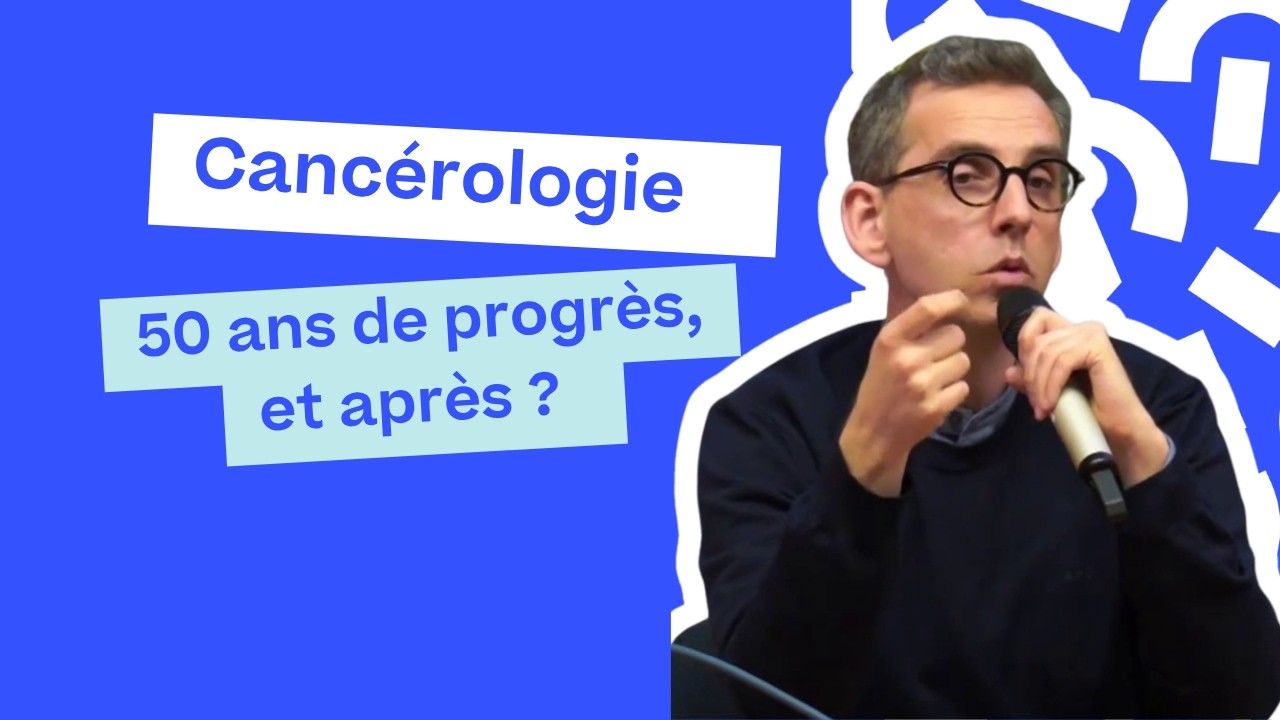
Cancérologie : 50 ans de progrès, et après ?
Keywords
Summary
134 words
Critical Evaluation
The conference provides a comprehensive overview of the major advances in oncology over the past 50 years, delivered by four experts in their respective fields. The content is scientifically sound, based on established medical knowledge and recent breakthroughs. The speakers effectively communicate complex concepts to a general audience without oversimplifying the science. The discussion on targeted therapies, such as imatinib (Glivec) for chronic myeloid leukemia and trastuzumab (Herceptin) for HER2-positive breast cancer, illustrates the paradigm shift from non-specific chemotherapy to personalized medicine. The emphasis on early detection and screening programs highlights the importance of prevention. The inclusion of immunotherapy and its potential to transform cancer treatment is particularly relevant. However, the conference lacks specific citations to scientific literature, which would enhance its credibility. The speakers also do not address potential limitations or side effects of these treatments in depth. The title accurately reflects the content, and the conference successfully conveys the message that cancer is no longer a death sentence but a manageable chronic disease for many. The future directions, including AI in imaging and ongoing research, are promising. Overall, the conference is informative and well-structured, though it could benefit from more critical analysis of the challenges ahead.
198 words
Title / Content Match
The title accurately reflects the content, which reviews 50 years of progress in cancer research and treatment and discusses future directions.
Quality & Reliability
8/10
The conference features four experts in oncology and related fields, providing a high level of expertise. The content is based on established medical knowledge and recent advances, with no obvious misinformation. However, it is a conference aimed at a general audience, so some simplifications are made, and no specific sources are cited during the talk.
Key Moments
Markers derived by PSI from the transcript: the creator did not define chapters.
- Introduction by the moderator, presenting the theme and speakers.
- Jean-Sébastien Frenel begins his talk on the evolution of cancer treatments, highlighting the increase in cancer cases.
- Discussion on the improvement in survival rates for certain cancers, such as breast and prostate cancer.
- Explanation of the shift from chemotherapy to targeted therapies, using the example of imatinib (Glivec) for chronic myeloid leukemia.
- Further examples of targeted therapies, including EGFR inhibitors for lung cancer and trastuzumab for HER2-positive breast cancer.
- Introduction to immunotherapy and its role in cancer treatment, with examples such as checkpoint inhibitors.
- Karine Berquet discusses organized cancer screening programs and their impact on early detection.
- Tanguy Perennec presents advances in radiotherapy, including more precise techniques like IMRT and stereotactic radiotherapy.
- Jean-François Fonteneau talks about research in tumor immunology and the development of immunotherapies.
- Discussion on future directions, including the use of artificial intelligence in imaging and personalized medicine.
Cited Sources
- Nantes Université on LinkedIn — Official LinkedIn page of Nantes Université, mentioned in the video description.
- Nantes Université YouTube Channel — Official YouTube channel of Nantes Université, where the video is hosted.
Concurring Sources
- National Cancer Institute - Cancer Statistics — Provides statistics on cancer incidence and survival, consistent with the data presented in the conference.
- World Health Organization - Cancer — Global cancer facts and figures, supporting the discussion on increasing cancer burden.
Dissenting Sources
- No discordant sources found — The conference content aligns with established medical knowledge and current research.
Contribution & Novelties
The conference provides a comprehensive synthesis of 50 years of progress in oncology, highlighting key milestones such as targeted therapies, immunotherapy, and personalized medicine. It offers a unique perspective from multiple experts, covering screening, treatment, and research. The discussion on future directions, including AI in imaging, is particularly forward-looking.
Pour aller plus loin :
- Imatinib (Gleevec) - Wikipedia — First targeted therapy for chronic myeloid leukemia, a landmark in precision medicine.
- Trastuzumab (Herceptin) - Wikipedia — Monoclonal antibody for HER2-positive breast cancer, illustrating targeted therapy.
- Immune checkpoint inhibitors - Wikipedia — Key class of immunotherapies that have revolutionized cancer treatment.
100 words
Radar Profile
The radar profile shows high scores in quantity and quality of information, reflecting the comprehensive coverage of the topic. The technical level is moderate, suitable for a general audience, while reliability is high due to the expertise of the speakers.
💬 No comments provided.