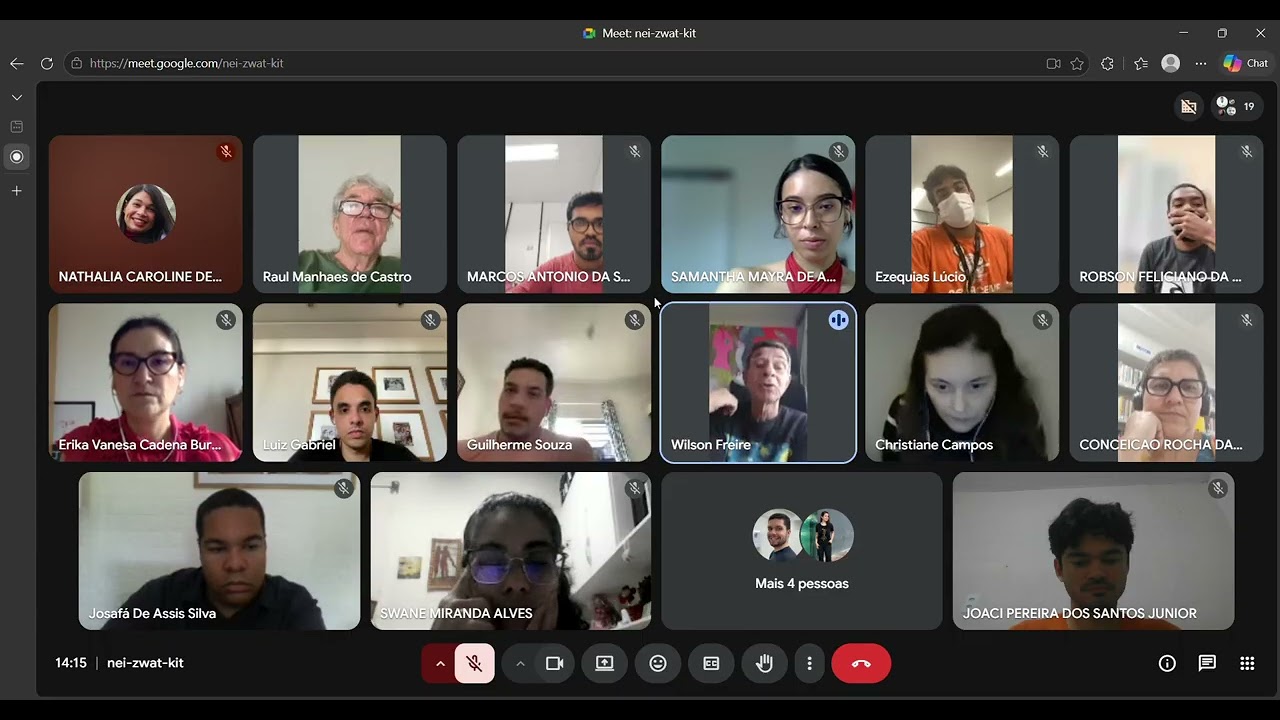
TEORIAS EPISTEMOLÓGICAS – Tema: Ciência e Arte: A Mistureba
Keywords
Summary
147 words
Critical Evaluation
Value of the Information & Strength of the Argument
The video offers valuable insights into the intersection of science and art, particularly through the personal testimony of a physician-poet. It argues for the importance of integrating artistic and humanistic perspectives into medical practice, supported by examples from Dr. Freire’s career. However, the argumentation is largely anecdotal and lacks systematic analysis or empirical evidence. The discussion is engaging and thought-provoking, but it does not provide a rigorous epistemological framework.
Scientific Rigor, Source Quality, Title Accuracy
The video is a recorded academic debate, not a formal scientific presentation. It lacks explicit citations to scientific literature, and the sources mentioned are primarily personal experiences and artistic works. The title accurately reflects the content, which is an epistemological discussion on the intersection of science and art. The quality of sources is limited to the speaker’s testimony and artistic creations, which are not verifiable through external references.
152 words
Title / Content Match
The title accurately reflects the content, which is an epistemological discussion on the intersection of science and art, featuring a physician-poet.
Quality & Reliability
6/10
The video is a recorded academic debate with a distinguished physician-poet, providing authentic personal testimony and historical context. However, it lacks formal citations, peer-reviewed references, and structured argumentation, limiting its scientific rigor.
Key Moments
Markers derived by PSI from the transcript: the creator did not define chapters.
- Introduction of Dr. Wilson Freire and the topic of science and art.
- Dr. Freire shares his background in medicine and poetry, and his involvement in student politics during the dictatorship.
- Dr. Freire reads his poem 'Teimosia' as an act of resistance against a military informant.
- Discussion on the role of art in medicine and the concept of 'arteterapia'.
- Dr. Freire shows his studio and discusses his visual art and films.
- Q&A session with students, exploring the relationship between science and art.
Cited Sources
- Um Espaço de Ausência (book of poetry) — Mentioned by Dr. Freire as his second book of poetry, published in 1980-81.
- A Mulher que Queria Ser Micheline Verunsk (book) — Mentioned as one of his published works.
- Haikaiano (book) — Mentioned as one of his published works.
- A Última Voz (book) — Mentioned as one of his published works.
Concurring Sources
- Medical Humanities — Supports the integration of arts and humanities in medical education.
- Art Therapy — Supports the therapeutic use of art mentioned in the video.
Dissenting Sources
- No discordant sources found — The video does not present conflicting scientific claims.
Contribution & Novelties
The video provides a unique personal testimony on the integration of science and art, particularly in the context of medical humanities. It highlights the role of poetry and art as tools for resistance and therapy, offering a humanistic perspective often missing in scientific discourse. The discussion underscores the importance of creativity in medical practice and education.
Pour aller plus loin :
- Medical Humanities — Overview of the field that integrates humanities into medical education.
- Art Therapy — The use of art as a therapeutic tool.
- Poetry Therapy — The use of poetry in therapeutic settings.
95 words
Radar Profile
The radar profile shows moderate scores across all dimensions, with slightly higher quality of information and lower technical level, reflecting the video's focus on personal narrative and humanities rather than technical science.
💬 No comments were provided for analysis.