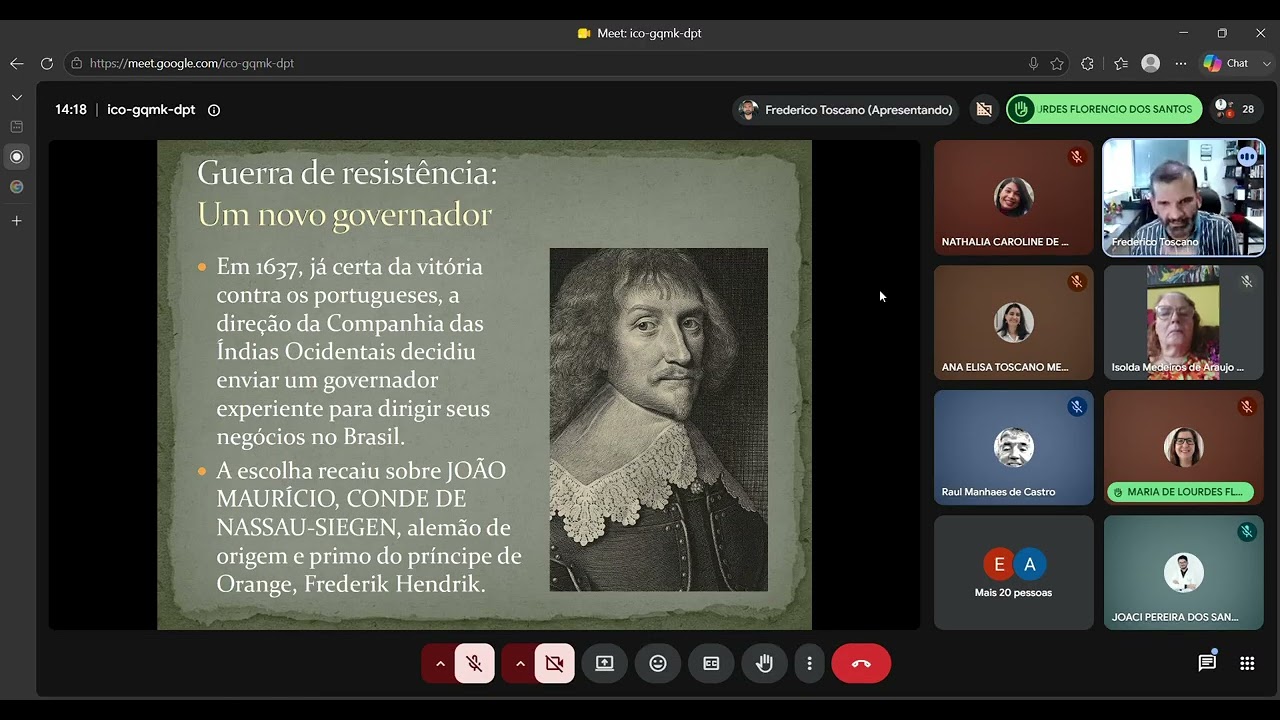
TEORIAS EPISTEMOLÓGICAS: Aula - A Ciência no Brasil Holandês
Keywords
Summary
181 words
Critical Evaluation
Value of the Information & Strength of the Argument
The lecture provides a valuable synthesis of the history of science in Dutch Brazil, integrating political, economic, and cultural factors. The argumentation is solid, based on established historical narratives and the speaker’s extensive reading. He effectively contextualizes the scientific endeavors within the broader colonial enterprise, highlighting the interplay between commerce, power, and knowledge production. The discussion of the ‘Historia Naturalis Brasiliae’ as a landmark work is well-presented, and the speaker’s critical perspective on figures like Calabar adds nuance. However, the lecture is more descriptive than analytical, and the speaker occasionally digresses into personal anecdotes and technical details about his own background. The argumentation would benefit from more explicit engagement with epistemological questions, as the title suggests, but the historical narrative is compelling and well-structured.
Scientific Rigor, Source Quality, Title Accuracy
The lecture demonstrates a good level of scientific rigor, with the speaker referencing several key works and authors, such as Evaldo Cabral de Mello and Geoffrey Parker. He also mentions the ‘Historia Naturalis Brasiliae’ and its authors, Piso and Marcgraf. However, specific citations are not systematically provided, and the speaker relies on his own knowledge rather than citing page numbers or direct quotes. The title accurately reflects the content, though the focus is more on the history of science than on epistemological theories per se. The speaker’s background in science and technology policy, rather than history, is acknowledged, but he shows a strong command of the subject. The lecture would benefit from more explicit references to primary sources and a clearer connection to epistemological frameworks.
264 words
Title / Content Match
The title accurately reflects the content, which is a lecture on epistemological theories applied to the history of science in Dutch Brazil.
Quality & Reliability
7/10
The lecture is given by a professional with a PhD in therapeutic innovation and experience in science and technology policy, but not a historian. The content is based on established historical narratives and mentions specific sources, but lacks direct citations to primary documents. The speaker acknowledges the complexity and ongoing research in the field.
Key Moments
Markers derived by PSI from the transcript: the creator did not define chapters.
- Introduction and speaker's background
- Historical context: Iberian Union and Dutch West India Company
- Dutch invasions of Bahia and Pernambuco
- Maurice of Nassau's governance and scientific mission
- Scientific contributions: Piso, Marcgraf, and Historia Naturalis Brasiliae
- Economic aspects: sugar trade, slavery, and credit
- Pernambucan Insurrection and expulsion of the Dutch
- Conclusion: Dutch Brazil as an Atlantic laboratory
Cited Sources
- Historia Naturalis Brasiliae — Mentioned as a key scientific work produced during Dutch Brazil, authored by Piso and Marcgraf.
- Evaldo Cabral de Mello — Referenced for his interpretation of the Pernambucan Insurrection and the economic motivations of the Dutch.
- Geoffrey Parker — Mentioned in relation to climate crises affecting the Dutch colony.
Concurring Sources
- Dutch Brazil — Provides a general overview of the Dutch occupation and its scientific contributions.
- Historia Naturalis Brasiliae — Confirms the significance of the work and its authors.
Dissenting Sources
- None — No discordant sources were identified in the lecture.
Contribution & Novelties
The lecture offers a comprehensive overview of the scientific developments in Dutch Brazil, emphasizing the role of Maurice of Nassau’s court in fostering knowledge production. It highlights the ‘Historia Naturalis Brasiliae’ as a pioneering work in natural history, contributing to the European understanding of tropical biodiversity. The speaker also brings attention to the economic and political contexts that shaped scientific endeavors, providing a holistic view. However, the lecture does not present new research or original findings; it synthesizes existing knowledge. For those interested in further exploration, the following resources are recommended:
Pour aller plus loin :
- Dutch Brazil — Overview of the period and its significance.
- Maurice of Nassau — Biography and his role in Dutch Brazil.
- Historia Naturalis Brasiliae — Details on the work and its impact.
- Willem Piso — One of the authors of the Historia Naturalis Brasiliae.
- Georg Marcgraf — Another author and naturalist.
147 words
Radar Profile
The radar profile shows high scores in quantity of information and technical level, reflecting the lecture's comprehensive coverage and moderate technical depth. Quality and reliability are also strong, though the speaker's non-historian background and lack of direct citations slightly lower the reliability score. Overall, the lecture is informative and well-structured, suitable for an academic audience interested in the history of science.