TEORIAS EPISTEMOLÓGICAS - Microbiota e DOHaD: mecanismos biológicos e desafios epistemológicos
Keywords
Summary
266 words
Critical Evaluation
Value of the Information & Strength of the Argument
The lecture provides a comprehensive overview of the microbiota and its potential role in DOHaD, synthesizing current knowledge and highlighting key mechanisms. The argumentation is logical and well-structured, progressing from basic definitions to complex interactions and finally to epistemological considerations. The speaker effectively uses examples (e.g., E. coli, Candida albicans) to illustrate concepts. However, the presentation is largely descriptive and relies on established literature without critically evaluating conflicting evidence. The discussion of epistemological challenges is valuable but could be more in-depth, as it touches on issues of causality and study design without delving into specific methodological pitfalls. Overall, the information is valuable for understanding the state of the field, but the argumentation would benefit from a more critical analysis of the evidence base.
Scientific Rigor, Source Quality, Title Accuracy
The speaker demonstrates scientific rigor by referencing key publications, such as the 2018 Lancet article on periconceptional programming, and by discussing the historical shift from the sterile uterus paradigm. However, she does not provide specific citations during the talk, which limits the ability to verify claims directly. The title accurately reflects the content, which covers both biological mechanisms and epistemological challenges. The lecture is well-organized and the speaker’s expertise is evident. The lack of explicit source citations is a minor weakness, but the overall scientific quality is good. No comments were provided for analysis.
232 words
Title / Content Match
The title accurately reflects the content, which covers the biological mechanisms linking microbiota and DOHaD, as well as the epistemological challenges in this field.
Quality & Reliability
7/10
The speaker is a nutritionist with a PhD and postdoctoral experience, presenting a well-structured lecture on microbiota and DOHaD. The content is scientifically grounded, referencing key studies and concepts, but lacks explicit citations of specific sources during the talk. The presentation is clear and educational, though it is an expert opinion rather than a systematic review.
Key Moments
Markers derived by PSI from the transcript: the creator did not define chapters.
- Introduction: speaker introduces herself and her background in nutrition and microbiota research.
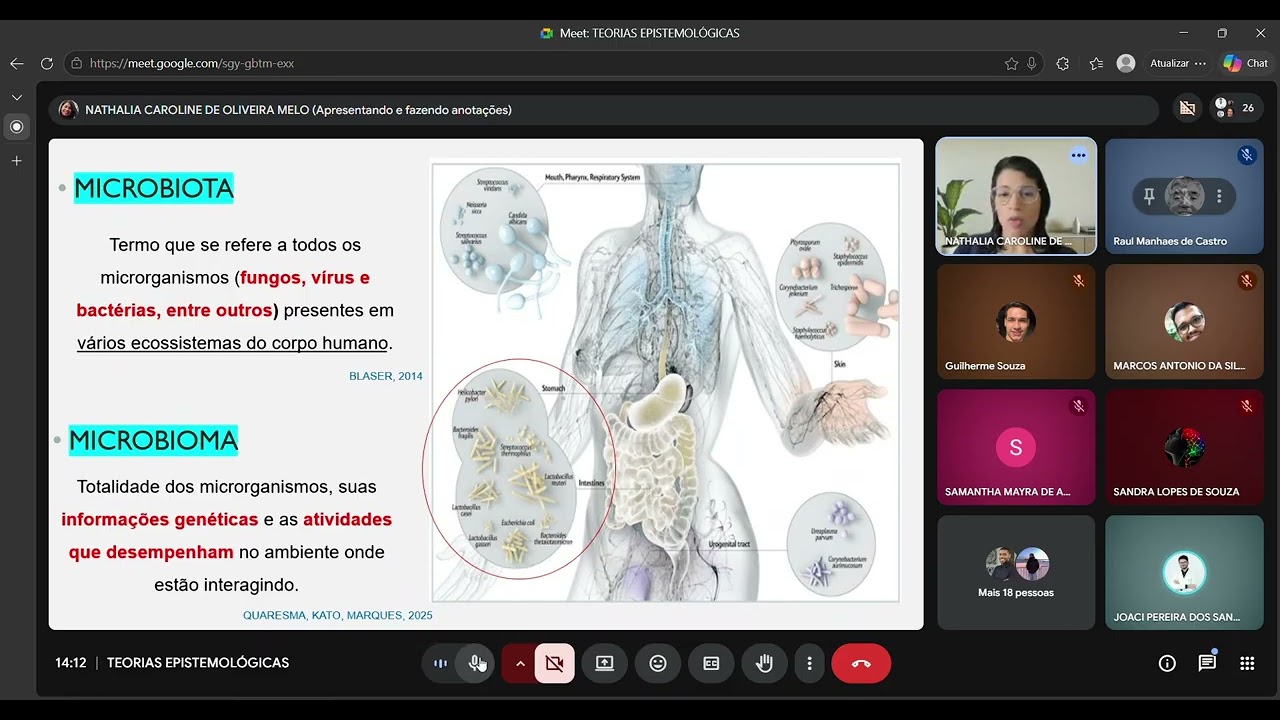
- Definition of microbiota and microbiome, and their distinction.
- Types of microbial relationships: commensal, opportunistic, pathogenic, probiotic.
- Human body carries more bacterial cells than human cells; majority in gut.
- Spatial distribution of microbiota along the intestinal tract.
- Functions of gut microbiota: SCFA production, vitamin synthesis, immune modulation.
- Introduction to DOHaD concept and critical developmental windows.
- 2018 Lancet article extending critical window to periconceptional period.
- Factors influencing microbiota colonization, including maternal microbiome.
- Challenge to sterile uterus paradigm; microbial translocation from mother to fetus.
- Epistemological challenges in microbiota research: causality, complexity.
Cited Sources
- Lancet 2018 article on periconceptional programming — Mentioned as a landmark publication extending the critical window for DOHaD to the periconceptional period.
Concurring Sources
- Lancet 2018 article on periconceptional programming — Supports the extension of critical developmental windows to include the periconceptional period.
Contribution & Novelties
The lecture provides a clear synthesis of the current understanding of microbiota and DOHaD, emphasizing the importance of the periconceptional period and the role of maternal microbiota. It highlights the shift from the sterile uterus paradigm and discusses epistemological challenges, such as establishing causality in complex microbial-host interactions. The speaker’s perspective as a nutritionist adds practical insights into clinical applications.
Pour aller plus loin :
- Developmental Origins of Health and Disease (DOHaD) — Overview of the DOHaD hypothesis.
- Gut microbiota — Comprehensive information on gut microbiota composition and functions.
- Microbiome — Definition and significance of the microbiome.
- Epigenetics — Mechanisms linking early exposures to long-term health outcomes.
- Short-chain fatty acids — Key metabolites produced by gut microbiota.
117 words
Radar Profile
The radar profile shows a balanced performance with high scores in information quantity and quality, moderate technical level, and good overall reliability. This indicates a comprehensive and reliable lecture, though with room for deeper technical depth and more explicit source citation.