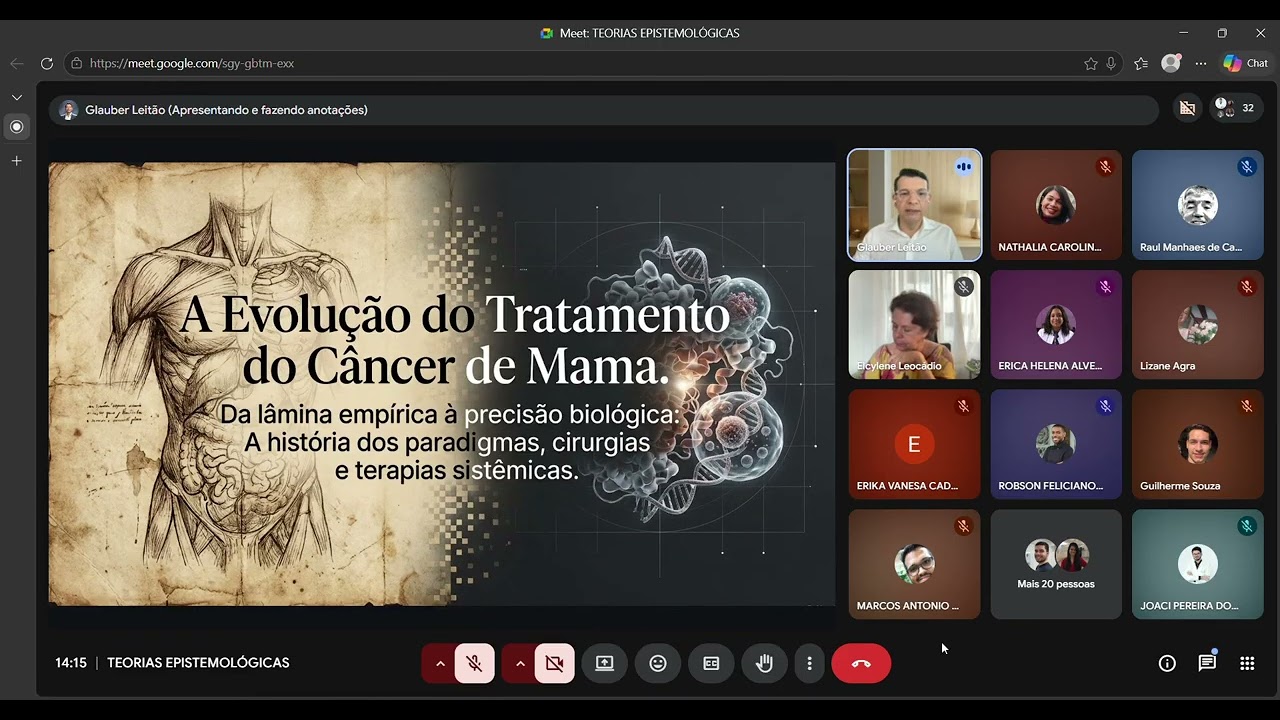
TEORIAS EPISTEMOLÓGICAS: aula - Câncer de mama: avanços científicos e epistemológicos
Keywords
Summary
151 words
Critical Evaluation
Value of the Information & Strength of the Argument
The lecture provides valuable insights into the historical and epistemological development of breast cancer understanding, effectively linking past theories to current practices. The argumentation is solid, supported by epidemiological data and historical references, though it could benefit from more direct citations to specific studies. The speaker’s expertise adds credibility, and the narrative is compelling, illustrating how scientific paradigms shift over time.
Scientific Rigor, Source Quality, Title Accuracy
The scientific rigor is high, with references to GLOBOCAN, INCA, and historical figures like Halsted and Fisher. The title accurately reflects the content, which covers both scientific and epistemological aspects. The lecture is well-structured and evidence-based, though it lacks explicit citations to recent studies. The absence of comments prevents analysis of public reception.
129 words
Title / Content Match
The title accurately reflects the content, which covers both scientific advances and epistemological shifts in breast cancer understanding.
Quality & Reliability
8/10
The lecture is delivered by a qualified oncologist and professor, with references to major epidemiological data (GLOBOCAN, INCA) and historical milestones. The content is well-structured and evidence-based, though it lacks direct citations to specific studies during the talk.
Key Moments
Markers derived by PSI from the transcript: the creator did not define chapters.
- Introduction of the speaker and topic.
- Epidemiological data on breast cancer incidence and mortality.
- Historical theories: humoral theory of Hippocrates and Galen.
- Renaissance and anatomical theory, rise of radical surgery.
- Halsted's radical mastectomy and its impact.
- Bernard Fisher's paradigm shift towards less radical surgery and systemic disease.
- Modern precision medicine, biomarkers, and targeted therapies.
Cited Sources
- GLOBOCAN — Cited for global cancer statistics.
- INCA — Cited for Brazilian cancer statistics.
Concurring Sources
- GLOBOCAN — Supports epidemiological data presented.
- INCA — Supports Brazilian incidence and mortality data.
Contribution & Novelties
The lecture provides a unique epistemological perspective on breast cancer, tracing the evolution of scientific theories and their impact on clinical practice. It emphasizes the shift from local to systemic understanding, which is crucial for medical education.
Pour aller plus loin :
- History of cancer — Provides broader context on cancer’s historical understanding.
- Bernard Fisher — Key figure in the paradigm shift discussed.
- Precision medicine — Relevant to modern approaches mentioned.
71 words
Radar Profile
The radar profile shows high scores in information quantity, quality, and reliability, with a slightly lower technical level, indicating a comprehensive and trustworthy lecture that is accessible to a broad audience.